


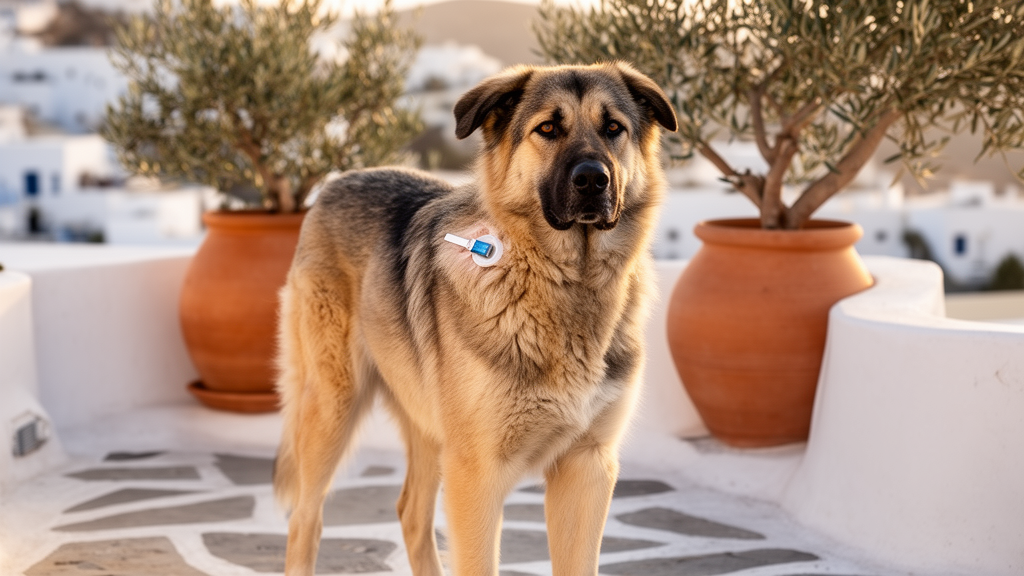
A spot-on insecticide applied every four weeks prevented every case of Leishmania infantum transmission in dogs living through a full sand fly season in a highly endemic region of Greece, according to a 12-month controlled study published in Parasites & Vectors. In the trial, none of the 20 Beagle dogs treated with imidacloprid 10%/permethrin 50% (Advantix, Elanco) became infected, while 8 of 20 untreated control dogs—40 percent—turned positive across multiple diagnostic tests and developed clinical signs of leishmaniosis.
Canine leishmaniosis is a potentially fatal, sand fly-borne zoonosis caused by the protozoan parasite Leishmania infantum. Regular use of repellent insecticides is one established way to lower the risk, but rigorous field-level evidence under natural exposure conditions remains valuable for quantifying how well such products actually perform.
The study enrolled 40 purpose-bred Beagle dogs and allocated them to two equal groups. Group 1 received Advantix as a spot-on treatment every four weeks, while Group 2 was left untreated. The animals were housed in an open-air kennel designed in two phases. Phase 1, running from Day 0 to Day 224 (April through November), coincided with the sand fly season and allowed natural Leishmania transmission to occur. Phase 2, from Day 225 to Day 341 (November through March), took place after the sand fly season in an insect-proof environment with licensed preventative treatment, giving the researchers time to observe seroconversion and disease development.
Monitoring was intensive throughout. Clinical examinations with scoring, SNAP serology, and PCR testing of conjunctival swabs were performed every four weeks. IFAT serology, haematology, blood biochemistry, and urinalysis were carried out at the start and end of the study, and bone marrow PCR was performed at study end. Sand fly activity was recorded every four weeks by trapping; collected flies were morphologically identified and screened by PCR for L. infantum infection.
The results were unambiguous on the treated side. Four-weekly Advantix application over the entire sand fly season in the highly endemic region produced a 100 percent reduction in L. infantum transmission. The incidence of infection in treated dogs was significantly lower than in control dogs, with a reported P value of 0.003. Treated dogs remained clinically healthy throughout, stayed sero- and PCR-negative, and showed no haematological or biochemical deviations indicative of infection.
The untreated control group told the opposite story. Control dogs began testing positive for L. infantum from Day 196 onward. By the end of the observation period, 8 of 20 dogs—40 percent—had developed positive SNAP tests, positive IFAT results, and positive conjunctival and bone marrow PCR.
Sand fly surveillance confirmed that the exposure risk was real. In total, 1,948 sand flies were collected during the study, comprising 1,278 females and 670 males.
The authors conclude that four-weekly application of Advantix throughout the sand fly season was highly efficacious—100 percent—in preventing L. infantum transmission to dogs by infected sand flies under natural conditions. The contrast with the control group, where 40 percent of dogs became positive in diverse test systems and showed signs of leishmaniosis, underscores the magnitude of the protective effect in this setting.
The open-air kennel in a highly endemic area meant exposure occurred through natural sand fly bites rather than artificial laboratory challenge. The two-phase structure separated the transmission window from the diagnostic window, allowing infections acquired during the season to become detectable.
The article was published as an open-access research paper, with the version shared early to provide faster access to peer-reviewed, accepted research; it is citable and carries a permanent DOI, subject to further edits before the final Version of Record.
Subject of Research: Efficacy of a permethrin/imidacloprid spot-on treatment in preventing Leishmania infantum transmission to naturally exposed dogs in Greece
Article Title: Efficacy of permethrin/imidacloprid (Advantix®) in preventing Leishmania infantum transmission in naturally exposed dogs in Greece
Article References: Papadopoulos, E., Webb, L. A., Sioutas, G., Madder, M., Schunack, B., Krämer, F., Patel, K., Wiseman, S., Anderson, W., Altreuther, G., & Hayes, B. (2026). Efficacy of permethrin/imidacloprid (Advantix®) in preventing Leishmania infantum transmission in naturally exposed dogs in Greece. Parasites & Vectors. https://doi.org/10.1186/s13071-026-07664-y
Image Credits: AI Generated
DOI: 10.1186/s13071-026-07664-y
Keywords: canine leishmaniosis, Leishmania infantum, Advantix, permethrin, imidacloprid, sand flies, dogs, Greece, vector-borne disease, spot-on treatment, transmission prevention, controlled trial
News Source: William Thompson. (October 30, 2026). Spot-on treatment blocked all Leishmania infections in exposed dogs in Greek trial. Scienmag.



