Credit: Dan Addison | UVA Communications
Two top scientists at the University of Virginia School of Medicine are seeking answers to questions about spinal cord injuries that have long frustrated the development of effective treatments.
The scientists, Jonathan Kipnis, PhD, and Kodi Ravichandran, PhD, are teaming up to understand why critical nerve cells called neurons continue to die after spinal cord injuries. So little is known that doctors aren’t even certain if the body’s immune response is beneficial or harmful.
By understanding that process, Kipnis and Ravichandran hope to pave the way for more effective treatments, either by enhancing or limiting the immune response. Their work has received $350,000 in backing from the philanthropic Chan Zuckerberg Initiative.
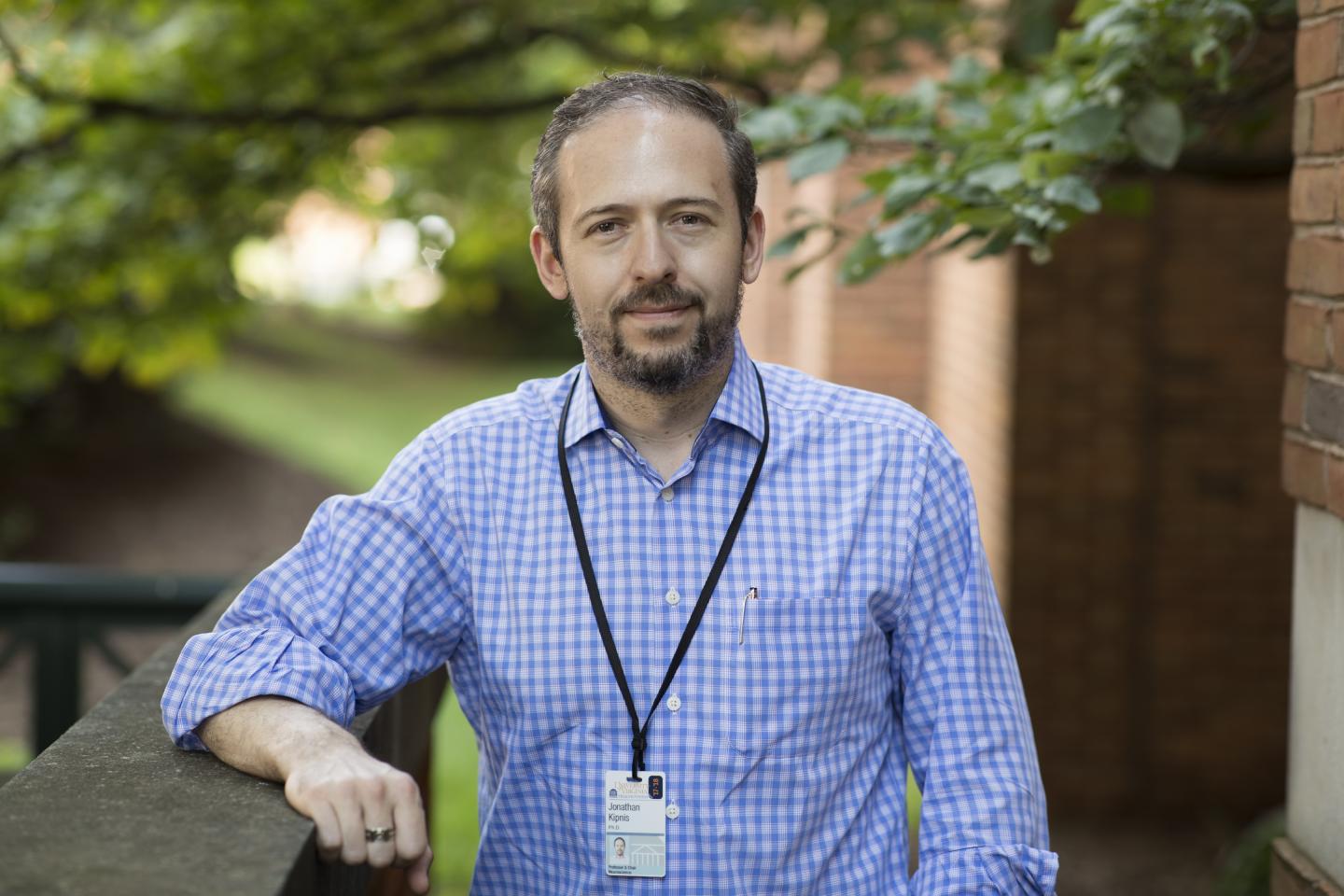
“Bringing someone of Ravi’s caliber, who is a world expert in phagocytic clearance, to study questions related to brain and spinal cord injuries is exactly what this CZI initiative is about,” said Kipnis, chairman of UVA’s Department of Neuroscience and director of UVA’s Brain Immunology and Glia (BIG) Center. “Merging complementary expertise and focusing on one common goal could lead to a real scientific breakthrough.”
Shining a Light on Spinal Cord Injury
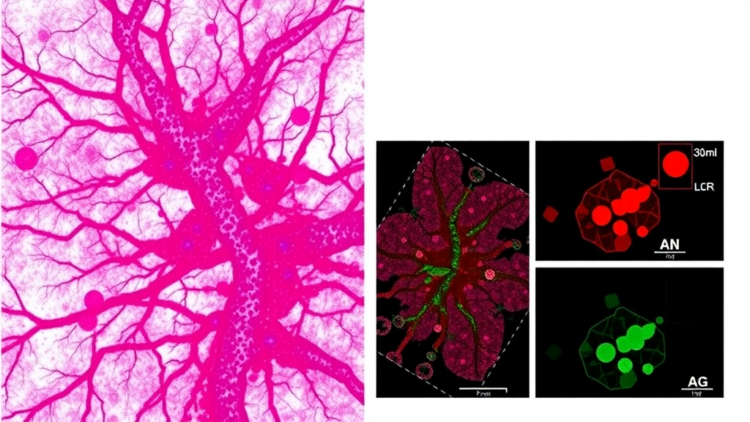
The researchers aim to understand what happens after spinal cord injury at the level of individual cells. They’ll do this using a new probe developed by Ravichandran that causes dying cells to glow under the microscope. He and Kipnis will be able to track the dead cells as they are swallowed up by immune cells, called phagocytes, that remove them from the body.
This will provide important insights into how the body responds to spinal cord injury. For example, the researchers will seek to determine if neurons are dying because immune cells called microglia aren’t up to the task of removing harmful debris. Or if other immune cells, called macrophages, can’t get to where they’re needed.
By determining what types of cells are involved in the injury response, and exactly what those cells are doing, the researchers will identify potential avenues to improve the treatment of spinal cord injuries.
“Knowing what cell type is the phagocyte at the site of damage would allow us to specifically target that cell type or subtype of cells to eat more of the cellular debris after the brain or spinal cord injury,” explained Ravichandran, chairman of the Department of Microbiology, Immunology and Cancer Biology. “Plus, via these single-cell analyses, we will also learn how the genetic program of the ‘cleaning crew’ changes at the injury site over time, and this would help us to mold the response toward better tissue repair.”
Ravichandran said he is excited by the opportunity to explore new territory. “This is a fun collaboration because Jony is highly creative, and we get to take approaches and pursue a topic that each of us may not have normally done on our own,” he said.
A $14 Million Effort
The financial backing from the Chan Zuckerberg Initiative is part of $14 million in funding the group is awarding to 29 interdisciplinary teams to explore the role of inflammation in disease.
“Knowing more about inflammation at the level of affected cells and tissues will increase our understanding of many diseases and improve our ability to cure, prevent or manage them,” said CZI Head of Science Cori Bargmann. “We look forward to collaborating with these interdisciplinary teams of researchers studying inflammation.”
###
To learn more, visit https:/
A full list of funding recipients is available at https:/
To keep up with the latest medical research news from UVA, subscribe to the Making of Medicine blog at http://makingofmedicine.
Media Contact
Josh Barney
[email protected]
Original Source
https:/