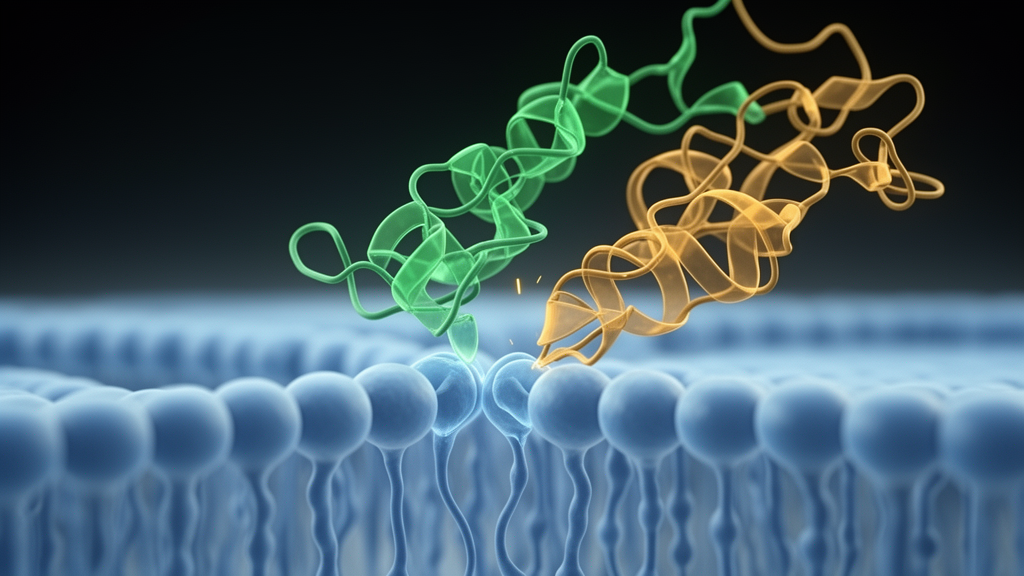
Biochemical researchers exploring the natural chemical arsenal of the Mexican redknee tarantula, Brachypelma smithi, have discovered that minor alterations in the C-terminal loops of homologous venom peptides create striking differences in insecticidal potency across diverse insect species. The investigation focused on two cloned neurotoxic peptides, designated Bs2 and Bs3, which share 90.2 percent sequence identity yet display distinct disulfide connectivity and structural configurations at their terminal loops. When evaluated in controlled laboratory bioassays across three distinct insect orders, recombinant forms of these molecules demonstrated contrasting targets of maximum efficacy. The recombinant peptide rBs2 exhibited significantly higher insecticidal activity against the larval caterpillars of the wax moth Galleria mellonella, whereas rBs3 proved significantly more potent against Acheta domesticus house cricket nymphs and showed enhanced activity in Gromphadorhina portentosa cockroaches. These findings highlight how subtle structural shifts arising through natural evolutionary processes can redirect the targeting efficiency of arachnid venom components without requiring wholesale genetic remodeling.
The study organism, Brachypelma smithi, is an endemic theraphosid spider originating from Guerrero, Mexico, historically cataloged as Eurypelma smithi before being transferred to its modern genus. Like many predatory arachnids that rely on ambushing or mechanical restraint, this species produces venom packed with complex molecular mixtures designed to paralyze prey rapidly before ingestion. While generalist predators encounter varied insect prey that require broad-spectrum neurotoxins, specialists often depend on prey-specific molecules. Spider venoms typically deploy acyl-polyamines for immediate, transient immobilization alongside structured peptide neurotoxins that induce prolonged paralysis and eventual mortality. Prior research on Brachypelma smithi venom identified Bs1, a 41-residue peptide containing six half-cystines forming three internal disulfide bridges arranged in an inhibitor cystine knot motif.
To isolate additional insecticidal constituents from the venom, the research team collected crude secretions through electrical stimulation from a pooled sample comprising six male and female adult Brachypelma smithi specimens. The harvested venom was immediately lyophilized, dissolved in water acidified with 0.1 percent trifluoroacetic acid, and clarified by high-speed centrifugation at 14,000 g for five minutes to eliminate insoluble debris. Soluble venom fractions were then systematically resolved using analytical reversed-phase high-performance liquid chromatography over a C18 column run across a linear acetonitrile gradient from zero to 60 percent. Individual elution fractions monitored spectrophotometrically at 230 nanometers were collected, concentrated under high vacuum, and screened through in vivo paralytic assays in cricket nymphs. This fractionation process confirmed three active peptide fractions, designated Bs1, Bs2, and Bs3, possessing experimental molecular masses of 4,916.6 Da, 4,845.5 Da, and 4,844.5 Da, respectively, providing the biological foundation for comprehensive genetic cloning.
Direct Edman degradation and N-terminal sequencing of the isolated natural toxins revealed that Bs1, Bs2, and Bs3 share an identical initial twelve-amino-acid sequence of Cys-Leu-Gly-Glu-Asn-Val-Pro-Cys-Asp-Lys-Asp-Arg. Leveraging this conserved N-terminal motif, the authors synthesized degenerate forward oligonucleotides to probe a full-length cDNA plasmid library constructed using messenger RNA extracted from the venom glands of a single Brachypelma smithi specimen. Rapid amplification of cDNA ends and DNA sequencing yielded the full-length coding transcripts for Bs2 and Bs3. Translated sequence analysis revealed that Bs2 comprises 41 amino acid residues, displaying 80.5 percent identity to Bs1 and differing by only two residues from Tal1, a peptide isolated from Tliltocatl albopilosus. Bs3 contains 42 residues, exhibits 70.7 percent identity to Bs1, and possesses an amino acid sequence identical to the neurotoxin Asp3a from Aphonopelma species. Comparison of the Bs2 and Bs3 transcripts identified six nucleotide substitutions alongside an insertion or stop-codon substitution, supporting the hypothesis that these genes arose via duplication events within theraphosid evolutionary history.
Each construct incorporated an amino-terminal hexahistidine affinity tag and a Factor Xa protease cleavage site upstream of the mature peptide sequence, resulting in precursor fusion proteins of 57 residues for rBs2 and 58 residues for rBs3, with predicted molecular masses of 6,700.5 Da and 6,698.5 Da. Bacterial cultures grown in Luria-Bertani broth were induced with 0.5 millimolar isopropyl-beta-D-thiogalactopyranoside at an optical density of 0.8 and incubated for 20 hours at 16 degrees Celsius. Following cell disruption under high pressure at 30 kpsi, the recombinant peptides were recovered from insoluble inclusion bodies using six molar guanidinium chloride in alkaline Tris buffer.
Purification of the denatured proteins was accomplished through immobilized metal affinity chromatography on nickel-nitrilotriacetic acid columns, followed by reversed-phase high-performance liquid chromatography. The recombinant products were subsequently reduced using 50 millimolar dithiothreitol and subjected to in vitro oxidative folding in 300 millimolar Tris-base buffer at pH 8.0 containing a controlled redox couple of 1.0 millimolar reduced glutathione and 0.1 millimolar oxidized glutathione. High-performance liquid chromatography profiles of refolded rBs2 and rBs3 revealed multiple chromatographic fractions representing conformational isomers with scrambled disulfide bridges, but in each case, only a single peak exhibited insecticidal activity at 150 micrograms per gram. Final yields reached 1.8 milligrams per liter for rBs2 and 2.5 milligrams per liter for rBs3 following secondary repurification on an analytical biphenyl column, providing structurally uniform material verified by ion trap mass spectrometry.
Circular dichroism spectroscopy was employed to assess the secondary structural composition of refolded rBs2 and rBs3 in comparison with native Bs1. Measurements conducted in quartz cells containing 60 percent trifluoroethanol across the ultraviolet range of 190 to 260 nanometers showed pronounced beta-strand content and lower alpha-helical architecture, typical of the inhibitor cystine knot neurotoxin superfamily. Computational deconvolution of the circular dichroism spectra using the K2D3 web server indicated that native Bs1 comprises 13.2 percent alpha-helix, 18.2 percent beta-strand, 12.9 percent beta-turn, and 47.5 percent other structures. Recombinant rBs2 exhibited 12.8 percent alpha-helix, 30.1 percent beta-strand, 14.3 percent beta-turn, and 40.9 percent unclassified structures. In contrast, rBs3 displayed 20.3 percent alpha-helix, 11.6 percent beta-strand, 14.6 percent beta-turn, and 45.3 percent other conformations, verifying that both recombinant peptides properly adopted stable secondary folds while confirming measurable differences in their overall structural proportions.
The biological activity of each recombinant peptide was evaluated in vivo through microinjections into third-instar larvae of the wax moth Galleria mellonella, representing the insect order Lepidoptera. Insects with an average body mass of 167 milligrams received doses spanning 50 to 300 micrograms per gram body weight administered directly into the pronotum, with sterile distilled water serving as the vehicle control. Administration of rBs2 at 50 micrograms per gram induced paralysis in 12.5 percent of larvae that persisted throughout a three-hour monitoring window, while 100 micrograms per gram produced 50 percent paralysis that waned over time. Doses of 200, 250, and 300 micrograms per gram resulted in 100 percent paralysis and mortality lasting three hours, yielding an estimated paralyzing dose fifty of 128.9 plus or minus 17.2 micrograms per gram. Conversely, rBs3 produced transient paralysis at lower doses, requiring higher concentrations to maintain immobilization, resulting in an estimated paralyzing dose fifty of 169.4 plus or minus 40.2 micrograms per gram. A paired t-test confirmed that rBs2 was significantly more active against Galleria mellonella than rBs3, with a t-statistic of 2.52 and a p-value of 0.0453.
A remarkably contrasting potency pattern emerged when the recombinant toxins were tested in orthopteran subjects using fifth-instar Acheta domesticus house cricket nymphs weighing approximately 100 milligrams. Test subjects received intrathoracic injections between the second and third walking legs across a dosage range extending from 50 to 300 micrograms per gram. When challenged with rBs2, crickets exhibited no signs of paralysis at 50 or 100 micrograms per gram, while 150 and 200 micrograms per gram paralyzed 33 percent of subjects, and 250 to 300 micrograms per gram produced complete paralysis and death, establishing a paralyzing dose fifty of 202.8 plus or minus 67 micrograms per gram. In sharp contrast, rBs3 caused 66 percent initial paralysis at 100 micrograms per gram, 66 percent sustained paralysis at 150 micrograms per gram, and 100 percent complete paralysis and mortality at 200, 250, and 300 micrograms per gram, resulting in a significantly lower paralyzing dose fifty of 121.7 plus or minus 32.7 micrograms per gram. Statistical comparison via a paired t-test confirmed that rBs3 was significantly more potent against house crickets than rBs2, yielding a t-statistic of 2.376 and a p-value of 0.0492.
The comparative evaluation extended to blattodean models using fourth-instar Gromphadorhina portentosa Madagascar hissing cockroaches averaging 100 milligrams in mass, which received abdominal injections across identical concentration gradients. Administration of rBs2 showed no effect at 50 micrograms per gram and 33 percent sustained paralysis at 100 and 150 micrograms per gram, establishing a paralyzing dose fifty of 218.0 plus or minus 114.9 micrograms per gram. Administration of rBs3 generated 33 percent paralysis at 50 micrograms per gram, 66 percent sustained paralysis at 100 and 150 micrograms per gram, and total paralysis and death at 200 micrograms per gram, corresponding to a paralyzing dose fifty of 170.7 plus or minus 68.2 micrograms per gram. Although rBs3 showed a trend toward greater paralytic effectiveness, a paired t-test indicated that the difference in terminal lethality between rBs2 and rBs3 was not statistically significant in Gromphadorhina portentosa, with a t-statistic of 1.0 and a p-value of 0.3506. Furthermore, an ordinary one-way analysis of variance demonstrated no significant variation in individual potency across insect species for rBs2 alone or rBs3 alone, confirming that the molecules operate within comparable overall toxicity thresholds.
To elucidate the physical mechanisms underlying these functional divergences, the researchers constructed three-dimensional molecular models using advanced computational algorithms, including AlphaFold, Rosetta-Fold, I-Tasser, and Modeller. Both structural models confirmed classical inhibitor cystine knot topologies comprised of three antiparallel beta-sheets stabilized by three conserved disulfide bridges linking Cys1-Cys4, Cys2-Cys5, and Cys3-Cys6. However, the connectivity of the final cysteine diverges dramatically between the two sequences: Bs2 incorporates a disulfide bridge connecting residues Cys15 and Cys36, whereas Bs3 forms a bridge connecting residues Cys15 and Cys30, shifting the position of the terminal loop.
Superimposition of the modeled three-dimensional structures using PyMOL revealed an overall root-mean-square deviation of nine angstroms between Bs2 and Bs3, indicating substantial regional divergence despite their 83 percent global structural alignment. The shift of the sixth cysteine residue profoundly alters the conformational flexibility of the carboxyl terminus, leaving residues Tyr30 through Leu42 in Bs3 largely disordered and devoid of defined secondary structure. Electrostatic surface potential calculations further revealed that this rearrangement alters the spatial distribution of critical basic residues required for receptor recognition. Conversely, in Bs3, the lysine cluster spanning residues 38 to 40 is oriented in the opposite spatial direction, accompanied by an unstructured terminal tail that likely influences receptor binding kinetics. These molecular distinctions demonstrate that natural modifications in peripheral loop connectivity can fine-tune spider venom neurotoxins for distinct ecological targets, offering valuable structural templates for the future rational engineering of selective biopesticides.
Subject of Research: Structural variations and insecticidal activities of tarantula venom peptides
Article Title: Spider peptides from Brachypelma smithi with slightly different amino acids at their C-terminal loops exert different insecticidal activities
Article References: Clement, H., Corrales-García, L., Carpanta, V., Jaimes, G., Montero-Domínguez, P. A., Diego-García, E., & Corzo, G. (2026). Spider peptides from Brachypelma smithi with slightly different amino acids at their C-terminal loops exert different insecticidal activities. Amino Acids, 58(1), Article 39. https://doi.org/10.1007/s00726-026-03521-5
Image Credits: AI Generated
DOI: 10.1007/s00726-026-03521-5
Keywords: Brachypelma smithi, spider venom, insecticidal peptides, peptide toxins, inhibitor cystine knot, disulfide bonds, Galleria mellonella, Acheta domesticus, Gromphadorhina portentosa, recombinant expression, circular dichroism, paralyzing dose, protein modeling, electrostatic potential, biopesticides, theraphosid spiders, gene duplication
News Source: Drew Townsend. (November 12, 2026). Spider Venom Peptides Display Divergent Insecticidal Potency Through Shifting Loop Architecture. Scienmag.