SARS-CoV-2 exploits extracellular low-density lipoprotein to accelerate viral ribonucleic acid replication within infected host tissues, operating through the viral accessory protein ORF3a. In cell culture systems, human airway organoid models, and small animal infection studies, researchers established that circulating cholesterol directly stimulates viral genome synthesis rather than viral attachment, entry, or structural assembly. The investigation demonstrated that elevated levels of low-density lipoprotein, commonly referred to as bad cholesterol, provide essential lipids that the pathogen repurposes to construct specialized intracellular replication organelles. While previous epidemiological observations noted that individuals with pre-existing metabolic conditions suffered significantly worse disease trajectories, the molecular mechanisms connecting circulating lipoproteins to viral replication efficiency had remained largely unexplained. By tracing the cellular uptake of labeled cholesterol particles and tracking viral double-stranded ribonucleic acid accumulation, the investigators showed that extracellular cholesterol availability directly dictates the speed and magnitude of coronaviral genomic replication across human airway cells.
Metabolic comorbidities such as advanced age, obesity, and type 2 diabetes have consistently correlated with severe COVID-19 manifestations and increased patient mortality throughout the global pandemic. Prior clinical reports documented that patients receiving statin therapy to lower circulating low-density lipoprotein exhibited milder disease progressions, whereas individuals possessing the apolipoprotein E4 genetic variant, which elevates circulating low-density lipoprotein concentrations, suffered heightened morbidity. Additionally, clinical evaluations of fenofibrate, a therapeutic agent that stimulates lipoprotein lipase activity, reported reduced intracellular lipid accumulation and improved survival among infected individuals. Animal experiments utilizing diet-induced obesity in rodents similarly corroborated the pathological contribution of circulating lipids to coronavirus pathogenesis. However, whether extracellular lipoproteins actively participated in biochemical events within infected cells remained an unresolved question. Because respiratory tissues rely on circulating lipoprotein complexes to supply approximately eighty percent of their cellular cholesterol requirements, researchers hypothesized that host cholesterol scavenging pathways might directly nourish the replicative cycle of SARS-CoV-2.
To evaluate how specific extracellular lipids influence infection dynamics, the research team exposed cultured human lung cells and organoids to purified lipid fractions prior to viral inoculation. Experiments utilizing A549 lung carcinoma cells overexpressing the human ACE2 receptor and primary human airway organoids revealed that low-density lipoprotein supplementation significantly elevated viral ribonucleic acid synthesis. Quantifying viral nucleocapsid and envelope genes via reverse transcription quantitative polymerase chain reaction confirmed elevated intracellular viral transcripts. Furthermore, low-density lipoprotein and very low-density lipoprotein treatments expanded the proportion of infected cells displaying double-stranded viral ribonucleic acid, whereas high-density lipoprotein or oleic acid supplementation produced no measurable enhancement. Because oleic acid stimulated triglyceride synthesis without driving infection, and high-density lipoprotein operates primarily in cholesterol efflux rather than massive import, the authors deduced that targeted cholesterol internalization was specifically required. Pharmacological inhibition of PCSK9 using the small molecule (R)-IMPP increased low-density lipoprotein receptor abundance, which subsequently amplified viral infection rates in treated cellular cultures.
To pinpoint the exact phase of the viral lifecycle supported by cholesterol, the scientists deployed several specialized subgenomic model systems. First, pseudotyped lentiviral particles displaying the SARS-CoV-2 spike glycoprotein and carrying luciferase reporter genes were used to isolate viral entry mechanisms. Adding low-density lipoprotein failed to alter luciferase signal in target cells expressing ACE2 alone or cells co-expressing ACE2 and the transmembrane serine protease TMPRSS2, indicating that cholesterol does not directly facilitate receptor-mediated viral entry. Next, virus-like particles containing all viral structural proteins were utilized to assess viral assembly and egress; low-density lipoprotein treatment again produced no measurable change in particle generation or luciferase transfer. In sharp contrast, single-round replicon systems lacking the envelope gene and harboring a secreted nanoluciferase reporter demonstrated substantial luminescence increases following low-density lipoprotein administration. These replicon findings established that the primary benefit of extracellular cholesterol occurs downstream of entry during intracellular genomic replication.
Microscopic examinations confirmed that extracellular cholesterol actively fuels the physical assembly of intracellular replication complexes. Staining experiments demonstrated that replicon-bearing cells treated with low-density lipoprotein developed significantly larger double-stranded ribonucleic acid foci and higher overall viral transcript levels. When investigators exposed lung cells to infectious virus for one hour, washed away unattached virions, and then introduced low-density lipoprotein, viral replication surged three-fold for the ancestral WA1 strain and four-fold for the Beta variant over seventy-two hours. Correlative light and electron microscopy of infected Vero cells further illuminated dramatic ultrastructural reorganizations occurring within host cytoplasm. Cells cultured in the presence of low-density lipoprotein displayed an elevated abundance and packing density of double-membrane vesicles, which serve as protective membrane hubs for viral replication, alongside numerous open double-membrane spherules.
To identify which viral component orchestrates this lipid scavenging program, the researchers systematically screened individual viral proteins expressed within human lung cells. Using fluorescent DiI-labeled low-density lipoprotein to quantify particle uptake, they found that authentic viral infection increased cellular low-density lipoprotein uptake by approximately twenty percent. Strikingly, expressing the accessory protein ORF3a alone increased particle internalization by more than thirty percent relative to empty vector controls. Other viral proteins, including non-structural proteins NSP1, NSP2, NSP6, and NSP12, significantly suppressed lipoprotein uptake, highlighting that ORF3a exerts a dominant activating role during authentic infection. Lipid profiling via thin-layer chromatography corroborated that infected cells accumulated substantial stores of cholesterol esters, the principal intracellular storage format for imported cholesterol. Quantitative polymerase chain reaction further verified that infection upregulated critical host uptake factors, including the low-density lipoprotein receptor and NPC1, illustrating that the virus systematically drives cellular machinery to replenish intracellular cholesterol reserves.
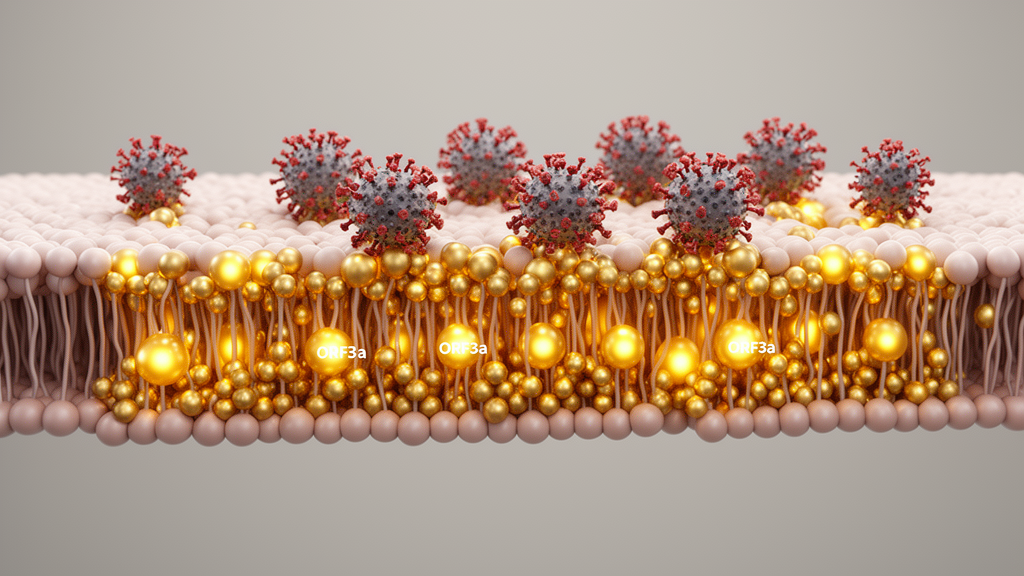
Mechanistic investigations revealed that ORF3a directly interacts with and stabilizes the host low-density lipoprotein receptor within intracellular endosomes. Confocal microscopy demonstrated that FLAG-tagged ORF3a co-localized extensively with green fluorescent protein-tagged low-density lipoprotein receptors in cultured cells, while co-immunoprecipitation confirmed their physical association. Notably, ORF3a expression led to the preferential enrichment of higher molecular weight bands representing mature receptors rather than newly synthesized precursors located in the endoplasmic reticulum. By binding to mature receptors within endosomes, ORF3a hindered the association between the receptor and PCSK9, a regulatory chaperone that normally triggers receptor breakdown within lysosomes. Cycloheximide chase experiments confirmed that ORF3a expression prolonged receptor half-life in host cells. Flow cytometry showed that surface receptor presentation and recycling via CCC and WASH protein complexes remained intact. CRISPR-Cas9 knockouts targeting the low-density lipoprotein receptor, NPC1, or NPC2 severely impaired viral infection, proving that intact host cholesterol uptake machinery is vital for the viral cycle.
To validate whether ORF3a drives cholesterol-dependent pathogenesis in living organisms, the researchers conducted in vivo infection experiments using Golden Syrian hamsters. Male hamsters were preconditioned for two weeks on either a standard laboratory rodent chow or a high-cholesterol diet formulated with fifteen percent lard and zero-point-five percent cholesterol. Animals were then intranasally inoculated with ancestral WA1 virus or an engineered mutant possessing a premature stop codon at the initial amino acid position of ORF3a, designated ORF3a-STOP. In hamsters infected with the ancestral strain, consuming a high-cholesterol diet produced a statistically significant increase in infectious virion titers and elevated nucleocapsid antigen staining across lung tissues. In marked contrast, hamsters infected with the ORF3a-STOP mutant displayed no increase in viral titers or lung tissue pathology when fed the high-cholesterol diet.
The investigation further unraveled an evolutionary divergence between viral lineages, explaining why the Beta variant responded with the strongest replication enhancement upon low-density lipoprotein exposure. The Beta genome carries two specific point mutations in ORF3a: Q57H and S171L. While ancestral ORF3a binds host VPS39, a component of the HOPS tethering complex, affinity purification mass spectrometry and co-immunoprecipitation demonstrated that the S171L mutation markedly abrogates this interaction. Ancestral ORF3a deacidifies endosomes through its VPS39 interaction, inadvertently impairing acid-dependent cholesterol ester hydrolysis from internalized particles. Conversely, Beta ORF3a maintains endosomal acidification, as demonstrated by elevated fluorescence in LDL-pHrodo Red live imaging assays. By preserving luminal acidification while continuing to stabilize the low-density lipoprotein receptor, Beta ORF3a optimizes both particle endocytosis and subsequent enzymatic cholesterol liberation. Stable expression of Beta ORF3a or the single S171L mutant in Calu-3 cells rescued replication of the ORF3a-STOP virus to a substantially greater extent than ancestral ORF3a.
In contrast to the Beta lineage, the Omicron variant exhibited diminished sensitivity to extracellular low-density lipoprotein, aligning with its altered clinical profile. Genomic sequencing shows that Omicron BA.1 carries ancestral-like ORF3a sequences lacking the Beta mutations, while earlier studies documented that Omicron expresses lower overall levels of ORF3a messenger RNA and protein. Although these findings explain why hypercholesterolemic hosts faced heightened disease severity during ancestral and Beta variant waves, several mechanistic questions remain open. The authors emphasized that several viral proteins, including NSP3, NSP9, NSP11, NSP16, and ORF7a, have not yet been evaluated for their individual effects on host lipid uptake. Furthermore, while the study establishes a direct biochemical link between circulating cholesterol, receptor stabilization, and double-membrane vesicle formation, translating these cell and animal findings into human antiviral therapies requires targeted clinical investigation before specific cholesterol-modulating protocols can be validated.
Subject of Research: Viral hijacking of host low-density lipoprotein uptake to fuel SARS-CoV-2 RNA replication
Article Title: Circulating cholesterol fuels SARS-CoV-2 replication via ORF3a
Article References: Hayashi, J. M., Taha, T. Y., Chen, I. P., Suryawanshi, R. K., Swaney, D. L., McCavitt-Malvido, M., Montano, M., Syed, A. M., Khalid, M. M., Simoneau, C. R., Chen, P.-Y., Leon, K. E., Tsou, C.-L., Stevenson, E., Gordon, M., Chaplin, N. R., Jorgens, D. M., Wang, Z., Puschnik, A. S., … Ott, M. (2026). Circulating cholesterol fuels SARS-CoV-2 replication via ORF3a. EMBO Reports, 27(20), 5991-6017. https://doi.org/10.1038/s44319-026-00907-0
Image Credits: AI Generated
DOI: 10.1038/s44319-026-00907-0
Keywords: SARS-CoV-2, ORF3a, low-density lipoprotein, cholesterol uptake, LDLR, PCSK9, double-membrane vesicles, viral RNA replication, Beta variant, S171L mutation, VPS39, endosomal acidification, Golden Syrian hamster, human airway organoids, replicon assay, hypercholesterolemia, correlative light and electron microscopy
News Source: Drew Townsend. (November 14, 2026). Circulating Cholesterol Fuels SARS-CoV-2 Replication Through Viral ORF3a Receptor Stabilization. Scienmag.