• HOME
  • NEWS
  • EXPLORE
    • CAREER
      • Companies
      • Jobs
    • EVENTS
    • iGEM
      • News
      • Team
    • PHOTOS
    • VIDEO
    • WIKI
  • BLOG
  • COMMUNITY
    • FACEBOOK
    • INSTAGRAM
    • TWITTER
Friday, May 15, 2026
BIOENGINEER.ORG
No Result
View All Result
  • Login
  • HOME
  • NEWS
  • EXPLORE
    • CAREER
      • Companies
      • Jobs
        • Lecturer
        • PhD Studentship
        • Postdoc
        • Research Assistant
    • EVENTS
    • iGEM
      • News
      • Team
    • PHOTOS
    • VIDEO
    • WIKI
  • BLOG
  • COMMUNITY
    • FACEBOOK
    • INSTAGRAM
    • TWITTER
  • HOME
  • NEWS
  • EXPLORE
    • CAREER
      • Companies
      • Jobs
        • Lecturer
        • PhD Studentship
        • Postdoc
        • Research Assistant
    • EVENTS
    • iGEM
      • News
      • Team
    • PHOTOS
    • VIDEO
    • WIKI
  • BLOG
  • COMMUNITY
    • FACEBOOK
    • INSTAGRAM
    • TWITTER
No Result
View All Result
Bioengineer.org
No Result
View All Result
Home NEWS Science News Biology

‘Specialized’ microbes within plant species promote diversity

Bioengineer by Bioengineer
March 7, 2019
in Biology
Reading Time: 2 mins read
0
IMAGE
Share on FacebookShare on TwitterShare on LinkedinShare on RedditShare on Telegram

Tree seedlings grow less effectively in soil located below their ‘mother’ tree
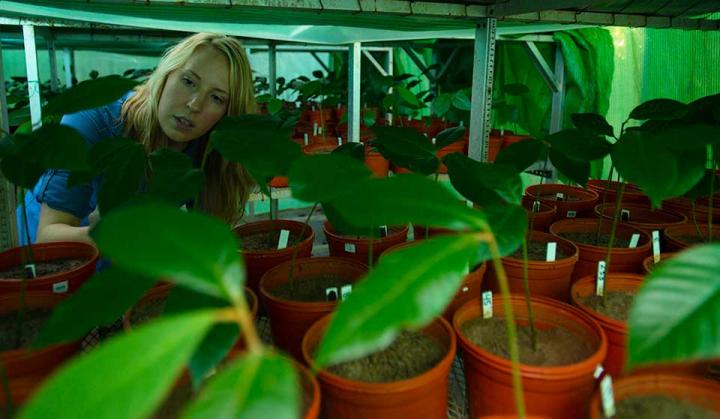
IMAGE

Credit: Sean Mattson

It’s widely accepted within agriculture that maintaining genetic diversity is important. In areas where crop plants are more diverse, pathogens might kill some plants but are less likely to wipe out an entire crop.

Few studies, however, have focused on such highly specialized pathogens in natural plant communities. In diverse plant communities, pathogens are thought to maintain diversity by killing common species, making room for rare ones. But what happens to diversity if, like in agriculture, pathogens harm some plants within a species, but not all?

A Yale-led research team has found that tree seedlings grew less effectively in soil located below their mother tree than in soil found under a different individual of the same species. After ruling out other potential drivers, they concluded that the differences in growth were most likely due to microbial pathogens that specialize at the genotype level. Theoretical models revealed that such highly specialized pathogens could help maintain diversity in tree communities and promote increased seed dispersal over evolutionary timescales.

“We often think of pathogens as pests,” said Jenalle Eck, a postdoctoral researcher at the University of Zurich and a former visiting doctoral student at the Yale School of Forestry & Environmental Studies (F&ES), “but we’re finding that they play a key role in a highly diverse ecosystem.”

The study was published in the Proceedings of the National Academy of Sciences. The senior author of the paper was Liza Comita, an assistant professor of tropical forest ecology at F&ES.

For the study, Eck conducted a shadehouse experiment, potting more than 200 seedlings of the tropical tree Virola surinamensis grown from seeds collected in a diverse tropical forest in Panama. The soil for the pots was sourced from either the seedlings’ maternal tree or other trees of the same species.

The researchers showed that the difference in performance between seedlings growing in “maternal” soil and “non-maternal” soil was not the result of variations in soil nutrients or beneficial symbiotic relationships with fungi, thanks to lab work conducted at Yale by Camille Delavaux ’16 M.E.Sc., currently a doctoral student at the University of Kansas.

Using computer simulation models designed by Simon Stump, a postdoctoral associate at F&ES, the team then found that these pathogens can promote species coexistence and can lead to increased seed dispersal, which creates landscapes that allow pathogens to more effectively promote diversity.

“These results suggest that highly specialized pathogens are potentially an important, but largely overlooked driver of plant population and community dynamics,” said Comita. “Our findings underscore the importance of conserving both species and genetic diversity in tropical forests.”

###

Media Contact
Joshua Anusewicz
[email protected]

Original Source

https://environment.yale.edu/news/article/specialized-microbes-within-plant-species-promote-diversity-study-finds/

Related Journal Article

http://dx.doi.org/10.1073/pnas.1810767116

Tags: BiodiversityBiologyEcology/EnvironmentEvolutionForestryPlant Sciences
Share12Tweet8Share2ShareShareShare2

Related Posts

Supercomputer Simulations Uncover How Bacterial Enzyme Pumps Sodium Ions, Opening Doors to Novel Antibiotics — Biology

Supercomputer Simulations Uncover How Bacterial Enzyme Pumps Sodium Ions, Opening Doors to Novel Antibiotics

May 15, 2026
New Astrobiology Special Collection Highlights Emerging Evidence Supporting Land-Based Origins of Life — Biology

New Astrobiology Special Collection Highlights Emerging Evidence Supporting Land-Based Origins of Life

May 14, 2026

Revolutionizing Textiles: Engineered Protein Fibers Pave the Way for Sustainable, Recyclable Fabrics

May 14, 2026

URI Master’s Student Emilio Pedroza Lopez Awarded Prestigious NSF Graduate Research Fellowship

May 14, 2026
Please login to join discussion

POPULAR NEWS

  • Research Indicates Potential Connection Between Prenatal Medication Exposure and Elevated Autism Risk

    843 shares
    Share 337 Tweet 211
  • New Study Reveals Plants Can Detect the Sound of Rain

    729 shares
    Share 291 Tweet 182
  • Salmonella Haem Blocks Macrophages, Boosts Infection

    62 shares
    Share 25 Tweet 16
  • Breastmilk Balances E. coli and Beneficial Bacteria in Infant Gut Microbiomes

    58 shares
    Share 23 Tweet 15

About

We bring you the latest biotechnology news from best research centers and universities around the world. Check our website.

Follow us

Recent News

Scientists Create Ceramic Implants That Replicate Natural Bone Through 3D Printing

Paraprobiotics Mitigate BPA-Induced Damage to Male Fertility Linked to Plastic Exposure

Digital Health Fear Patterns in Older Cancer Patients

Subscribe to Blog via Email

Enter your email address to subscribe to this blog and receive notifications of new posts by email.

Join 82 other subscribers
  • Contact Us

Bioengineer.org © Copyright 2023 All Rights Reserved.

Welcome Back!

Login to your account below

Forgotten Password?

Retrieve your password

Please enter your username or email address to reset your password.

Log In
No Result
View All Result
  • Homepages
    • Home Page 1
    • Home Page 2
  • News
  • National
  • Business
  • Health
  • Lifestyle
  • Science

Bioengineer.org © Copyright 2023 All Rights Reserved.