Credit: Scott Evans
Riverside Calif. –Hundreds of millions of years before there was a chicken or an egg to debate, the first complex animals were evolving in parallel with Earth's rising oxygen levels.
But what came first — animals or oxygen?
That question is the central theme of a special issue of Emerging Topics in Life Sciences published Sept. 28 by Portland Press. Titled "Early Earth and the Rise of Complex Life," the issue was edited by UC Riverside's Timothy Lyons, a distinguished professor of biogeochemistry, along with UCR professor Mary Droser and postdoctoral researcher Kimberly Lau, and Susannah Porter, a professor at UC Santa Barbara. Several of the 18 articles included in the collection were authored or co-authored by UCR researchers.
While geological and fossil records suggest the formation of complex life and oxygenation of the planet progressed hand-in-hand, the details about the possible cause-and-effect relationship are still murky and debated. Did rising oxygen levels in the oceans and atmosphere drive the formation of complex life, were they unrelated, or did the eventual emergence and proliferation of complex life instead cause a rise in oxygen?
"While those questions remain largely unanswered at this time, this curated collection offers an up-to-date look at the relationship between early organisms and their environments through the lens of a diverse group of scientists using a variety of cutting-edge methods," Lyons said.
Oxygen began to accumulate in the oceans and atmosphere 2.3-2.4 billion years ago during the Great Oxidation Event. By 1.8 million years ago, oxygen levels had fallen to intermediate levels, where they remained stable for another billion years — dubbed 'the boring billion' by scientists. Around 800 million years ago, the levels likely increased again, and the first animals evolved soon after.
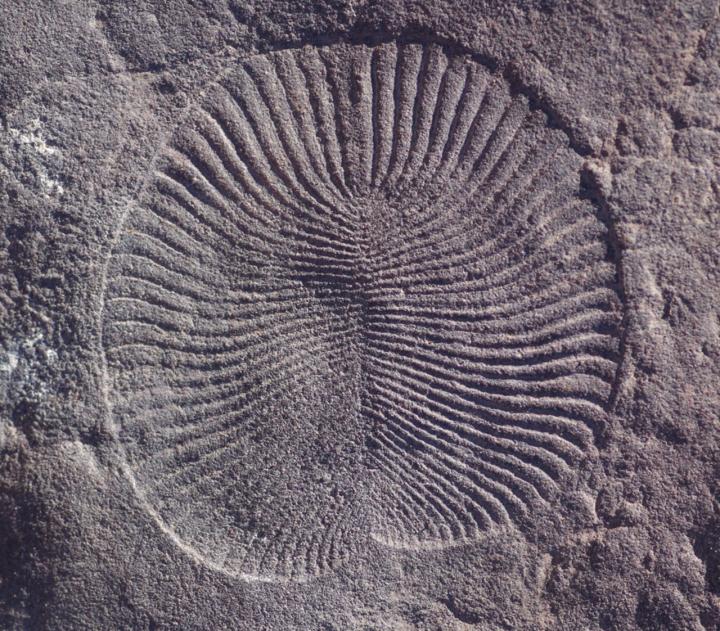
A paper by Scott Evans, a graduate student in Droser's lab, presents evidence suggesting another rise of oxygen catalyzed innovation in animal life. By studying fossil animals from between 550-560 million years ago, during the so-called Ediacaran era, Evans showed that Earth's early animals, which were ocean-dwelling creatures that "breathed" by diffusion, evolved to be larger. This meant a lower fraction of their cells came in contact with the surrounding waters during a period of increased oxygen and became smaller again during a transient decrease.
"This relationship suggests that a rise in oxygen levels may have provided the environment necessary for the diversification of complex body plans and energetically demanding ecologies," Lyons said.
Not everyone in the series agrees that a rise in oxygen was key to our early ancestors' success. Daniel Mills at the University of Southern Denmark cautions the relationship between the evolution of complex life and increasing oxygenation remains open to question. Perhaps, he suggests, the emergence of animals might have been based on "internal developmental constraints," meaning the time it took for animals with sophisticated cellular machinery governed by complex genetics to evolve independently of environmental changes.
"Readers will not leave this collection with a clear single answer," Lyons said. "Instead, our goal was to give them an up-to-date view of the key debates about evolving early complex life and environmental change, the full context that lies behind the questions and uncertainties, and the work left to do."
###
Support for this series came from NASA and the National Science Foundation through a 2014 joint workshop, "Beyond Habitability: Coevolution of Life and the Early Earth," held at the Smithsonian Institution and organized by Lyons, Doug Erwin of the Smithsonian, and NASA's Lindsay Hays.
Media Contact
Sarah Nightingale
[email protected]
951-827-4580
@UCRiverside
http://www.ucr.edu
Original Source
https://news.ucr.edu/articles/2018/10/22/special-journal-issue-looks-new-clues-about-old-life http://dx.doi.org/10.1042/ETLS20180093