Researchers applying spatial transcriptomics to the pig intestinal epithelium have established a comprehensive spatiotemporal atlas detailing cellular organization and maturation across multiple segments and developmental stages.
The domestic pig, Sus scrofa, represents a widely studied large-animal model for human gastrointestinal biology, gut physiology, pathology, and disease, although the spatial and developmental organization of the porcine intestine has remained incompletely understood.
To define this architecture, the research team profiled three intestinal segments across five developmental stages, along with four additional intestinal segments examined at the adult stage.
The transcriptomic profiling revealed spatial separation among enterocytes, plasma cells, and stem cells, with spatial partitioning observed to be more pronounced in the small intestine than in the large intestine.
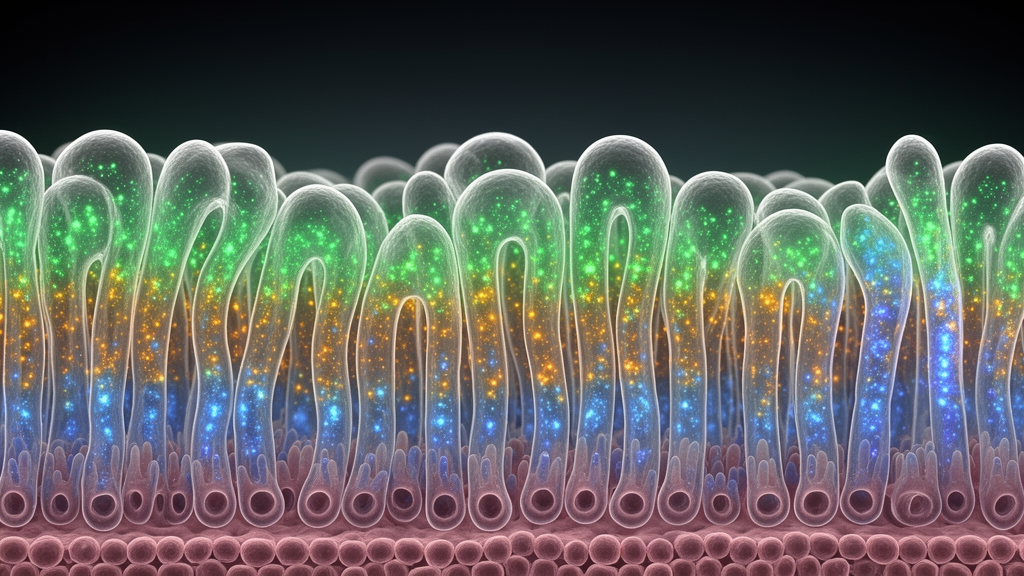
Pseudotime trajectory analysis of enterocyte-enriched regions demonstrated a differentiation gradient along the crypt-villus or crypt axis detectable as early as post-conception day 70 in the jejunum.
This spatial gradient became fully evident across all examined intestinal segments by birth in the large intestine, with all three primary segments reaching a mature state by postnatal day 33.
Enterocyte maturation during migration along the crypt-villus axis engaged transcriptional programs similar to those directing enterocyte maturation across developmental stages, indicating conserved molecular mechanisms between spatial and temporal differentiation.
In the large intestine, the expression of genes related to nutrient transport declined progressively over the course of development, shifting from early jejunum-like expression levels to markedly reduced levels in adulthood in line with segmental functional specialization.
The investigators conclude that this high-resolution spatiotemporal framework provides a valuable resource for comparative biology and translational research.
Subject of Research: Spatiotemporal transcriptomic dynamics of pig intestinal epithelial development
Article Title: Spatial transcriptomics defines segmental and temporal dynamics of pig intestinal epithelium
Article References: Tang, Q., Tang, Y., Liu, Q., Fan, X., Huang, H., Wang, Y., Li, X., Xu, J., Ding, Y., Yang, J., Kong, F., & Li, M. (2026). Spatial transcriptomics defines segmental and temporal dynamics of pig intestinal epithelium. Genome Biology. https://doi.org/10.1186/s13059-026-04337-y
Image Credits: AI Generated
DOI: 10.1186/s13059-026-04337-y
Keywords: spatial transcriptomics, pig intestinal epithelium, Sus scrofa, gut development, enterocyte maturation, crypt-villus axis, plasma cells, stem cells, jejunum, small intestine, large intestine, pseudotime analysis, nutrient transport, functional specialization, spatiotemporal atlas, post-conception day 70, postnatal day 33, comparative biology
News Source: Brooke Gardner. (November 12, 2026). Spatial Transcriptomics Reveals Spatiotemporal Dynamics of Developing Pig Intestinal Epithelium. Scienmag.