

• HOME
  • NEWS
  • EXPLORE
    • CAREER
      • Companies
      • Jobs
    • EVENTS
    • iGEM
      • News
      • Team
    • PHOTOS
    • VIDEO
    • WIKI
  • BLOG
  • COMMUNITY
    • FACEBOOK
    • INSTAGRAM
    • TWITTER
Monday, May 18, 2026
BIOENGINEER.ORG
No Result
View All Result
  • Login
  • HOME
  • NEWS
  • EXPLORE
    • CAREER
      • Companies
      • Jobs
        • Lecturer
        • PhD Studentship
        • Postdoc
        • Research Assistant
    • EVENTS
    • iGEM
      • News
      • Team
    • PHOTOS
    • VIDEO
    • WIKI
  • BLOG
  • COMMUNITY
    • FACEBOOK
    • INSTAGRAM
    • TWITTER
  • HOME
  • NEWS
  • EXPLORE
    • CAREER
      • Companies
      • Jobs
        • Lecturer
        • PhD Studentship
        • Postdoc
        • Research Assistant
    • EVENTS
    • iGEM
      • News
      • Team
    • PHOTOS
    • VIDEO
    • WIKI
  • BLOG
  • COMMUNITY
    • FACEBOOK
    • INSTAGRAM
    • TWITTER
No Result
View All Result
Bioengineer.org
No Result
View All Result
Home NEWS Science News Biology

Southeast Asian forest loss greater than expected, with negative climate implications

Bioengineer by Bioengineer
July 3, 2018
in Biology
Reading Time: 2 mins read
0
Share on FacebookShare on TwitterShare on LinkedinShare on RedditShare on Telegram
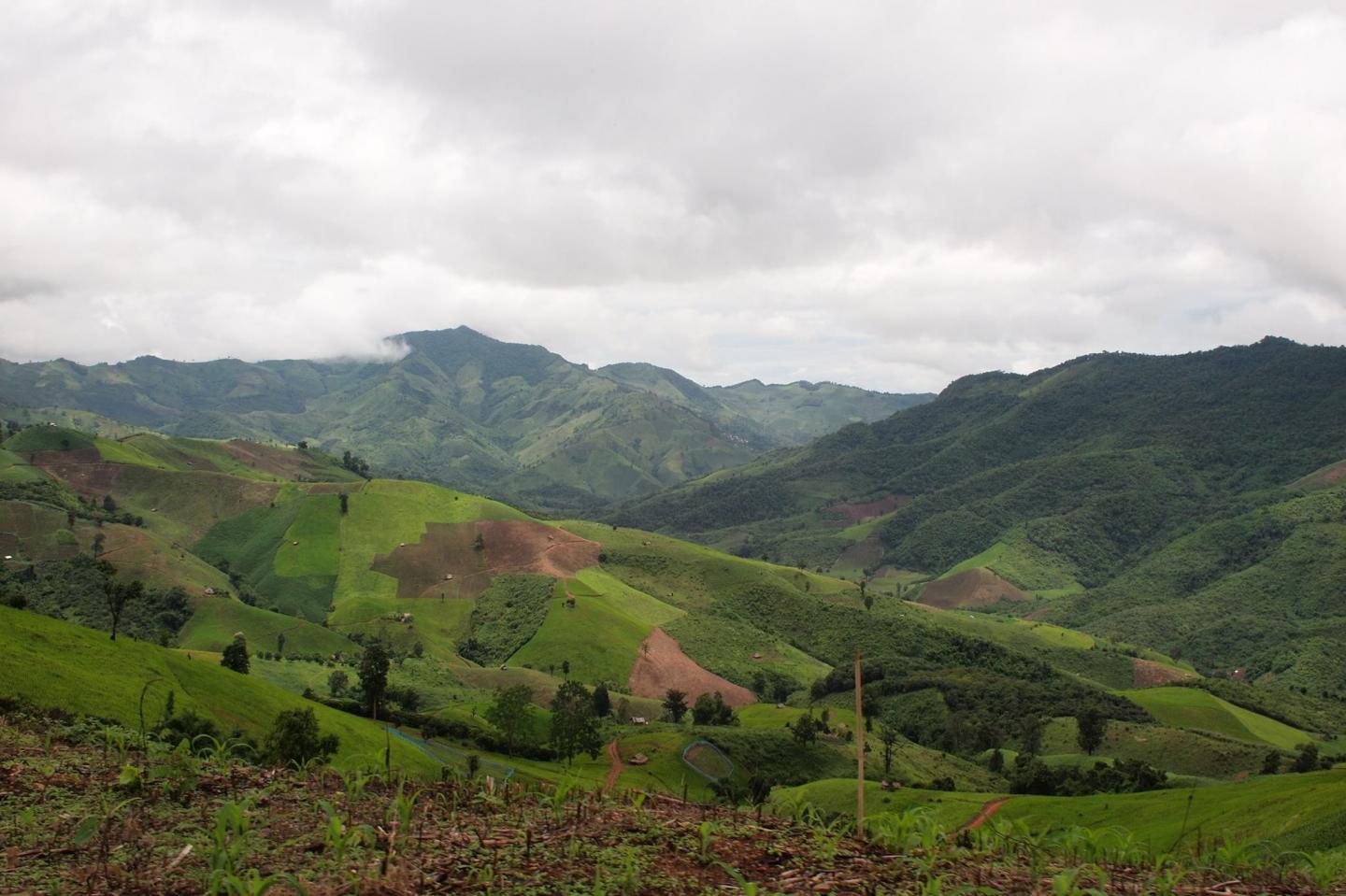
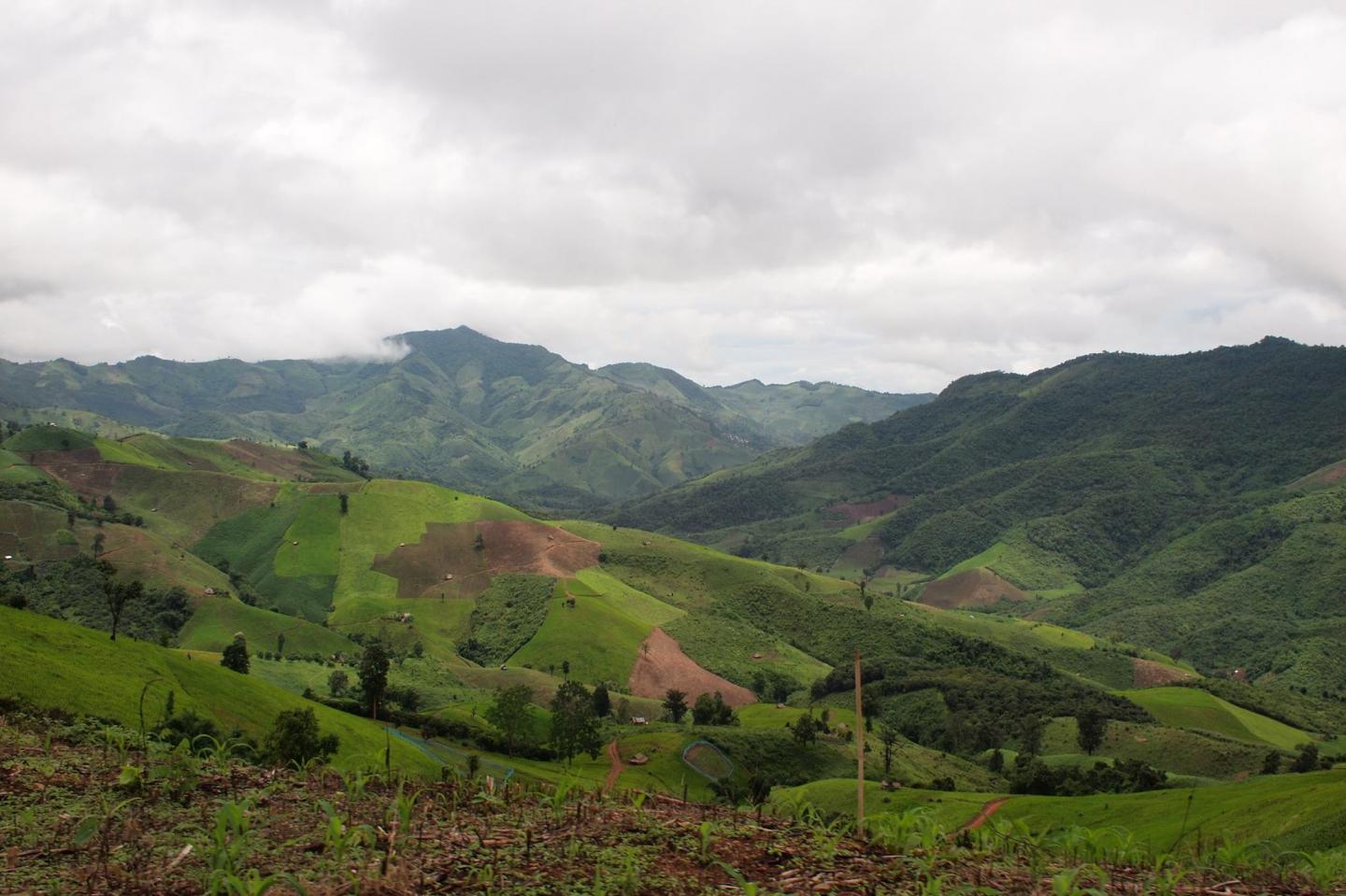
IMAGE

Credit: the researchers

Researchers using satellite imaging have found much greater than expected deforestation since 2000 in the highlands of Southeast Asia, a critically important world ecosystem. The findings are important because they raise questions about key assumptions made in projections of global climate change as well as concerns about environmental conditions in Southeast Asia in the future.

Zhenzhong Zeng, a postdoctoral researcher at Princeton University and the lead author of a July 2 article describing the findings in Nature Geoscience, said the researchers used a combination of satellite data and computational algorithms to reach their conclusions. The report shows a loss of 29.3 million hectares of forest (roughly 113,000 square miles or about twice the size of New York State) between 2000 and 2014. Zeng said that represents 57 percent more loss than current estimations of deforestation made by the International Panel on Climate Change. He said most of the forest has been cleared for crops.

Because forests absorb atmospheric carbon, and burning forests contribute carbon to the atmosphere, loss of forests could be devastating. An accurate estimation of forest cover also is critical for assessments of climate change. Zeng also said transformation of mountainous regions from old forest to cropland can have widespread environmental impacts from soil retention to water quality in the region.

Eric Wood, the Susan Dod Brown Professor of Civil and Environmental Engineering and a member of the research team, said the results were troubling in that farmers are carving new agricultural frontiers from the highland forests of mainland Southeast Asia. "These forests are an important source for sequestering carbon as well as critical water sources for adjacent lowlands," he said.

###

In addition to Wood and Zeng, researchers involved in the project included: Lyndon Estes, of Clark University; Alan Ziegler, of the National University of Singapore; Anping Chen, of Purdue University; Timothy Searchinger, a research scholar at Princeton's Woodrow Wilson School; Fangyuan Hua, of the University of Cambridge; Kaiyu Guan, of the University of Illinois at Urbana Champaign; and Attachai Jintrawet, of Chiang Mai University. Support for the project was provided in part by Lamsam-Thailand Sustain Development.

Media Contact

Steven Schultz
[email protected]
609-258-3617
@eprinceton

School of Engineering and Applied Science

Original Source

http://engineering.princeton.edu/news/2018/07/03/southeast-asian-forest-loss-much-greater-expected-negative-implications-climate


Share12Tweet8Share2ShareShareShare2

Related Posts

Uncovering C. elegans Immunity via Genetic Screens — Biology

Uncovering C. elegans Immunity via Genetic Screens

May 16, 2026
Single mother must adapt swiftly — the survival of her colony depends on it — Biology

Single mother must adapt swiftly — the survival of her colony depends on it

May 15, 2026

Why Are Nearly Everyone Right-Handed? It Might Be Linked to How We Learned to Walk

May 15, 2026

Excessive Neuronal Activity Initiates Severe Autoimmune Brain Disorder

May 15, 2026
Please login to join discussion

POPULAR NEWS

  • Research Indicates Potential Connection Between Prenatal Medication Exposure and Elevated Autism Risk

    844 shares
    Share 338 Tweet 211
  • New Study Reveals Plants Can Detect the Sound of Rain

    731 shares
    Share 292 Tweet 182
  • Salmonella Haem Blocks Macrophages, Boosts Infection

    62 shares
    Share 25 Tweet 16
  • Breastmilk Balances E. coli and Beneficial Bacteria in Infant Gut Microbiomes

    58 shares
    Share 23 Tweet 15

About

We bring you the latest biotechnology news from best research centers and universities around the world. Check our website.

Follow us

Recent News

New Survey Finds Just One-Third of Teens Have Private Healthcare Consultations, According to Parents

Micronutrients Linked to Mood and Psychotic Disorders

AI Tool in Radiotherapy Advances Global Fight to Eradicate Cervical Cancer

Subscribe to Blog via Email

Enter your email address to subscribe to this blog and receive notifications of new posts by email.

Join 82 other subscribers
  • Contact Us

Bioengineer.org © Copyright 2023 All Rights Reserved.

Welcome Back!

Login to your account below

Forgotten Password?

Retrieve your password

Please enter your username or email address to reset your password.

Log In
No Result
View All Result
  • Homepages
    • Home Page 1
    • Home Page 2
  • News
  • National
  • Business
  • Health
  • Lifestyle
  • Science

Bioengineer.org © Copyright 2023 All Rights Reserved.