• HOME
  • NEWS
  • EXPLORE
    • CAREER
      • Companies
      • Jobs
    • EVENTS
    • iGEM
      • News
      • Team
    • PHOTOS
    • VIDEO
    • WIKI
  • BLOG
  • COMMUNITY
    • FACEBOOK
    • INSTAGRAM
    • TWITTER
Wednesday, October 7, 2026
BIOENGINEER.ORG
No Result
View All Result
  • Login
  • HOME
  • NEWS
  • EXPLORE
    • CAREER
      • Companies
      • Jobs
        • Lecturer
        • PhD Studentship
        • Postdoc
        • Research Assistant
    • EVENTS
    • iGEM
      • News
      • Team
    • PHOTOS
    • VIDEO
    • WIKI
  • BLOG
  • COMMUNITY
    • FACEBOOK
    • INSTAGRAM
    • TWITTER
  • HOME
  • NEWS
  • EXPLORE
    • CAREER
      • Companies
      • Jobs
        • Lecturer
        • PhD Studentship
        • Postdoc
        • Research Assistant
    • EVENTS
    • iGEM
      • News
      • Team
    • PHOTOS
    • VIDEO
    • WIKI
  • BLOG
  • COMMUNITY
    • FACEBOOK
    • INSTAGRAM
    • TWITTER
No Result
View All Result
Bioengineer.org
No Result
View All Result
Home NEWS Science News Chemistry

Sophisticated molecular machines in action

Bioengineer by Bioengineer
July 22, 2019
in Chemistry
Reading Time: 2 mins read
0
IMAGE
Share on FacebookShare on TwitterShare on LinkedinShare on RedditShare on Telegram

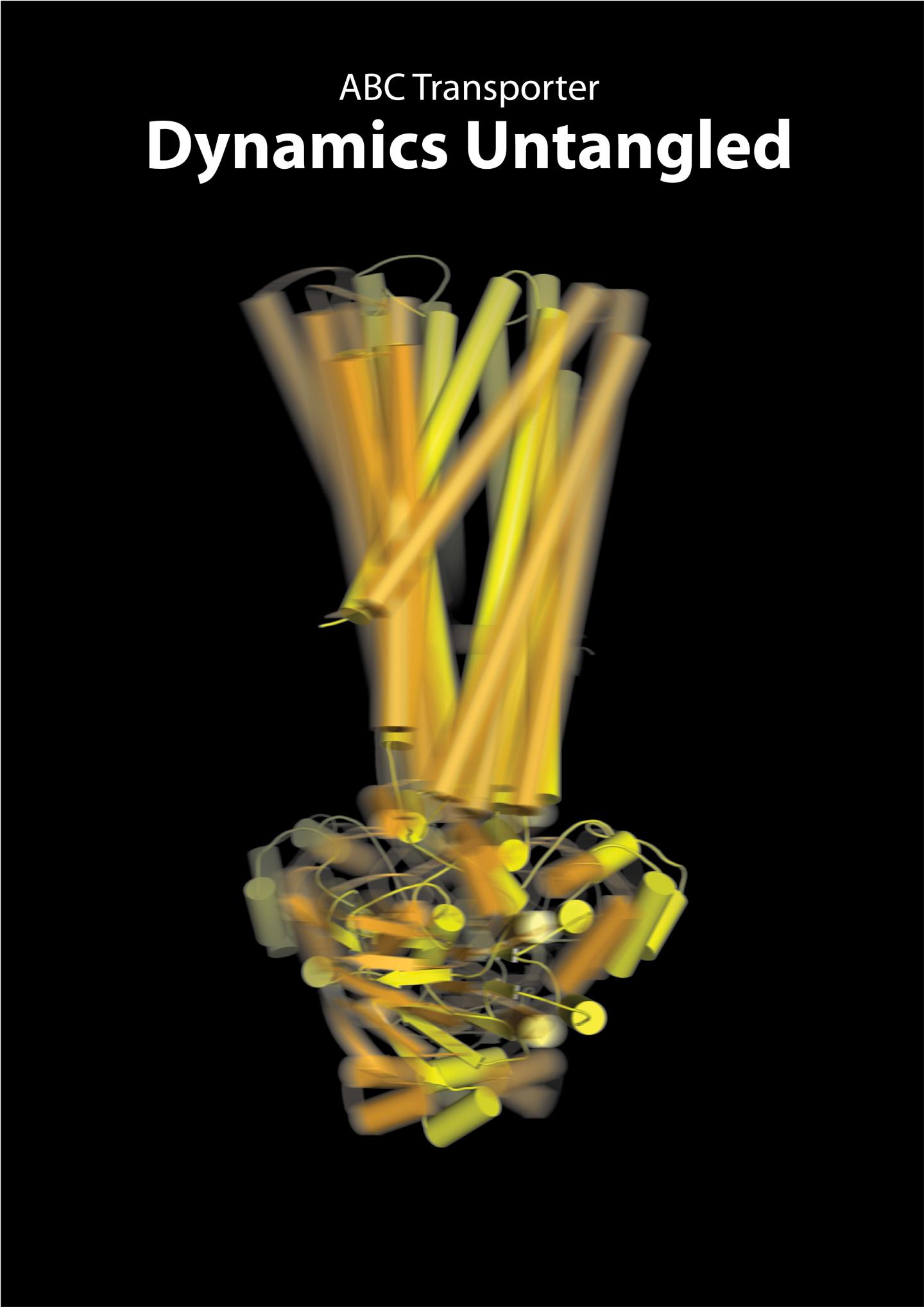
Frankfurt researchers solve mechanism of ABC transporter in detail; cover story in Nature
IMAGE

Credit: Christoph Thomas & Robert Tampé (Institute of Biochemistry, Goethe University Frankfurt)

Almost all living organisms – from bacteria to humans – have gate-like protein complexes in their cell membranes that get rid of unwanted or life-threatening molecules. This is not always to human advantage, since in the case of bacteria or cancer cells these complexes, known as ABC transporters, are also responsible for resistance to antibiotics or chemotherapy. Researchers at Goethe University Frankfurt, together with the Max Planck Institute of Biophysics, which is also located in Frankfurt, have now succeeded in decrypting all the stages of the transport mechanism.

Over the past five years, the research group led by Robert Tampé at the Institute of Biochemistry of Goethe University Frankfurt has invested considerable effort in preparing samples of sensitive membrane protein complexes in such a way that they can be examined in membrane environment by means of cryo-electron microscopy. Cryo-electron microscopy delivers high-resolution images by freezing the molecules so that blurring is reduced to a minimum when they are in motion.

If the aim is not only to produce clear images of complex molecules, such as ABC transporters, but also to observe them at work, snapshots of different stages are required. The team of biochemists led by Tampé was able to trigger these stages deliberately by supplying the transporter with different concentrations of ATP and ADP. Without the energy supply of ATP, the transporter is unable to translocate molecules against the concentration gradient between the cell interior and its surroundings.

In the current issue of the journal Nature, Tampé and his colleagues show eight high-resolution conformations of an ABC export complex composed of two different protein subunits. The researchers were also able to make intermediate stages of the transport process visible for the first time. The publishers of Nature have selected this important discovery as the cover story for the current issue.

“Our work could lead to a paradigm shift in structural biology, since it was possible to display all the motions of a cellular machine in almost atomic resolution,” explains Professor Tampé. “Thanks to this unexpected discovery, we can now answer questions about the transport mechanism of ABC transporters which were previously the subject of controversial debate and are highly relevant for medicine.” In addition, the researchers were able to observe for the first time how the gates open inwards or outwards. The resolution of 2.8 Angstrom (1 Angstrom = a ten millionth of a millimeter) is the highest resolution ever achieved in the imaging of an ABC transporter structure with the help of cryo-electron microscopy.

###

Media Contact
Robert Tampé
[email protected]

Related Journal Article

http://dx.doi.org/10.1038/s41586-019-1391-0

Tags: BiochemistryBiologyCell Biology
Share12Tweet8Share2ShareShareShare2

Related Posts

Titanium Dioxide Nanofillers Turn Out to Be Surprisingly Inert in Polymer Battery Electrolytes

Titanium Dioxide Nanofillers Turn Out to Be Surprisingly Inert in Polymer Battery Electrolytes

October 7, 2026
Methanol Catalyst Defies Textbook Rules as Its Crystals Grow Faster Than Theory Predicts

Methanol Catalyst Defies Textbook Rules as Its Crystals Grow Faster Than Theory Predicts

October 7, 2026

Ice Water Beats Room Temperature: Simple Cooling Trick Supercharges Shape Memory Rubber

October 7, 2026

Ghana’s rivers, hospitals and landfills are steeped in antibiotic pollution, review finds

October 7, 2026
Please login to join discussion

POPULAR NEWS

  • Alloys That Shrink Their Own Grains: New PIX Mechanism Refines Metals With Heat Alone

    Alloys That Shrink Their Own Grains: New PIX Mechanism Refines Metals With Heat Alone

    29 shares
    Share 12 Tweet 7
  • Endurance Exercise Reshapes the Liver in Males and Females Through Distinct Molecular Routes

    29 shares
    Share 12 Tweet 7
  • Single Transcription Factor PU.1 Rapidly Converts Fibroblasts into Macrophage-Lineage Cells

    29 shares
    Share 12 Tweet 7
  • New Scale Measures How Ready Nurse Educators Really Are for the AI Era

    29 shares
    Share 12 Tweet 7

About

We bring you the latest biotechnology news from best research centers and universities around the world. Check our website.

Follow us

Recent News

Alloys That Shrink Their Own Grains: New PIX Mechanism Refines Metals With Heat Alone

Endurance Exercise Reshapes the Liver in Males and Females Through Distinct Molecular Routes

Single Transcription Factor PU.1 Rapidly Converts Fibroblasts into Macrophage-Lineage Cells

Subscribe to Blog via Email

Success! An email was just sent to confirm your subscription. Please find the email now and click 'Confirm' to start subscribing.

Join 85 other subscribers
  • Contact Us

Bioengineer.org © Copyright 2023 All Rights Reserved.

Welcome Back!

Login to your account below

Forgotten Password?

Retrieve your password

Please enter your username or email address to reset your password.

Log In
No Result
View All Result
  • Homepages
    • Home Page 1
    • Home Page 2
  • News
  • National
  • Business
  • Health
  • Lifestyle
  • Science

Bioengineer.org © Copyright 2023 All Rights Reserved.