• HOME
  • NEWS
  • EXPLORE
    • CAREER
      • Companies
      • Jobs
    • EVENTS
    • iGEM
      • News
      • Team
    • PHOTOS
    • VIDEO
    • WIKI
  • BLOG
  • COMMUNITY
    • FACEBOOK
    • INSTAGRAM
    • TWITTER
Monday, May 25, 2026
BIOENGINEER.ORG
No Result
View All Result
  • Login
  • HOME
  • NEWS
  • EXPLORE
    • CAREER
      • Companies
      • Jobs
        • Lecturer
        • PhD Studentship
        • Postdoc
        • Research Assistant
    • EVENTS
    • iGEM
      • News
      • Team
    • PHOTOS
    • VIDEO
    • WIKI
  • BLOG
  • COMMUNITY
    • FACEBOOK
    • INSTAGRAM
    • TWITTER
  • HOME
  • NEWS
  • EXPLORE
    • CAREER
      • Companies
      • Jobs
        • Lecturer
        • PhD Studentship
        • Postdoc
        • Research Assistant
    • EVENTS
    • iGEM
      • News
      • Team
    • PHOTOS
    • VIDEO
    • WIKI
  • BLOG
  • COMMUNITY
    • FACEBOOK
    • INSTAGRAM
    • TWITTER
No Result
View All Result
Bioengineer.org
No Result
View All Result
Home NEWS Science News Biology

Some birds better than others at adjusting to habitat degradation

Bioengineer by Bioengineer
August 30, 2017
in Biology
Reading Time: 2 mins read
0
Share on FacebookShare on TwitterShare on LinkedinShare on RedditShare on Telegram
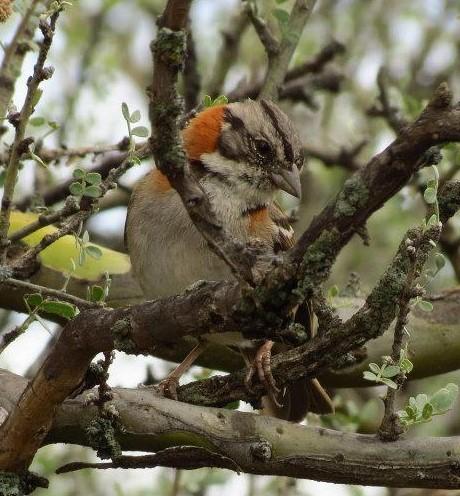
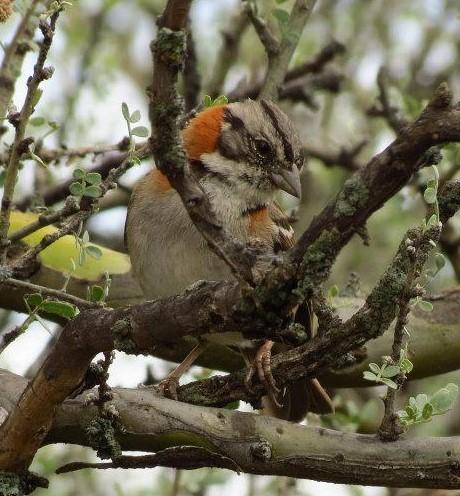
IMAGE

Credit: M.C. Sagario

Before habitat degradation from impacts like grazing begins to cause population declines, the first response by wildlife usually comes in the form of behavioral changes–for example, switching their diets in response to changes in food availability. A new study from The Condor: Ornithological Applications looks at the diets of seed-eating birds in a South American desert and finds that while some can switch between seed types when grazing alters local plant communities, others continue to stick to old favorites, limiting their options.

Luis Marone of the Argentine Arid Zones Research Institute (IADIZA-CONICET) and his colleagues collected soil samples at grazed and ungrazed sites in Argentina's Monte Desert to assess the composition of the seed bank in each area, finding fewer of the large grass seeds that birds prefer in the grazed areas. Flushing the digestive tracts of captured birds revealed that two seed generalists, Common Diuca-Finch and Rufous-collared Sparrow, adjusted their diet accordingly and ate more forb seeds at grazed sites, while grass seed specialists Many-colored Chaco Finch and Ringed Warbling-Finch did not.

Studies like this one could enable us to predict which species will be most vulnerable to population declines due to habitat changes, as the inflexible specialist species are more likely to suffer when they can't find enough of their preferred food. "Given that cattle breeders usually sow grass species as fodder, our results should be used for managing cattle stocks with bird conservation in mind by selecting the fodder species that are most consumed by the most specialized seed-eating birds," says Marone. "This kind of management could help prevent reductions of bird abundance in grazed areas."

"Although birds in this study were shown to compensate by switching to other seed types, the findings suggest that the capacity of grazed lands to support similar numbers of birds as ungrazed lands may be compromised," according to the Vermont Center for Ecostudies' Rosalind Renfrew, an expert on grassland bird conservation who was not involved in the study. "Grazed lands play a major, essential role in grassland bird conservation in South America, and this important research reveals that specialized birds may be limited by habitat quality. The findings underscore the need for a diverse approach to grassland bird conservation in Argentina that considers quality as well as area."

###

"Diet switching of seed-eating birds wintering in grazed habitats of the central Monte Desert, Argentina" will be available August 30, 2017, at http://www.bioone.org/doi/abs/10.1650/CONDOR-17-61.1 (issue URL http://www.bioone.org/toc/cond/119/4).

About the journal: The Condor: Ornithological Applications is a peer-reviewed, international journal of ornithology. It began in 1899 as the journal of the Cooper Ornithological Club, a group of ornithologists in California that became the Cooper Ornithological Society, which merged with the American Ornithologists' Union in 2016 to become the American Ornithological Society.

Media Contact

Rebecca Heisman
[email protected]

http://americanornithologypubs.org/

Share12Tweet8Share2ShareShareShare2

Related Posts

How Wasp Societies Conquer Intense Leadership Conflicts — Biology

How Wasp Societies Conquer Intense Leadership Conflicts

May 25, 2026
Tiny Blue Octopus from the Galápagos Islands: Small Enough to Fit in the Palm of Your Hand — Biology

Tiny Blue Octopus from the Galápagos Islands: Small Enough to Fit in the Palm of Your Hand

May 25, 2026

Rising Sightings of Blue and Fin Whales in the South East Atlantic

May 23, 2026

New Maps Reveal How European Landscapes Can Simultaneously Promote Climate Action and Biodiversity Conservation

May 22, 2026
Please login to join discussion

POPULAR NEWS

  • ESMO 2025: mRNA COVID Vaccines Enhance Efficacy of Cancer Immunotherapy

    315 shares
    Share 126 Tweet 79
  • New Study Reveals Plants Can Detect the Sound of Rain

    734 shares
    Share 293 Tweet 183
  • Research Indicates Potential Connection Between Prenatal Medication Exposure and Elevated Autism Risk

    847 shares
    Share 339 Tweet 212
  • Common Food Preservatives Associated with Elevated Blood Pressure and Increased Heart Disease Risk

    56 shares
    Share 22 Tweet 14

About

We bring you the latest biotechnology news from best research centers and universities around the world. Check our website.

Follow us

Recent News

AI-Guided Ileostomy Use Boosts Rectal Cancer Surgery

Screening Frailty in Elderly Dental Patients: FAST vs. FRAIL

Unified Deep Learning Model Deciphers Peptide Spectra

Subscribe to Blog via Email

Enter your email address to subscribe to this blog and receive notifications of new posts by email.

Join 82 other subscribers
  • Contact Us

Bioengineer.org © Copyright 2023 All Rights Reserved.

Welcome Back!

Login to your account below

Forgotten Password?

Retrieve your password

Please enter your username or email address to reset your password.

Log In
No Result
View All Result
  • Homepages
    • Home Page 1
    • Home Page 2
  • News
  • National
  • Business
  • Health
  • Lifestyle
  • Science

Bioengineer.org © Copyright 2023 All Rights Reserved.