

• HOME
  • NEWS
  • EXPLORE
    • CAREER
      • Companies
      • Jobs
    • EVENTS
    • iGEM
      • News
      • Team
    • PHOTOS
    • VIDEO
    • WIKI
  • BLOG
  • COMMUNITY
    • FACEBOOK
    • INSTAGRAM
    • TWITTER
Sunday, November 1, 2026
BIOENGINEER.ORG
No Result
View All Result
  • Login
  • HOME
  • NEWS
  • EXPLORE
    • CAREER
      • Companies
      • Jobs
        • Lecturer
        • PhD Studentship
        • Postdoc
        • Research Assistant
    • EVENTS
    • iGEM
      • News
      • Team
    • PHOTOS
    • VIDEO
    • WIKI
  • BLOG
  • COMMUNITY
    • FACEBOOK
    • INSTAGRAM
    • TWITTER
No Result
View All Result
Bioengineer.org
No Result
View All Result
Home NEWS Science News Biology

Soil bacterium yields amylase that destains cotton and clarifies juice

by
October 28, 2026
in Biology
Reading Time: 2 mins read
0
Soil bacterium yields amylase that destains cotton and clarifies juice

Soil bacterium yields amylase that destains cotton and clarifies juice

Share on FacebookShare on TwitterShare on LinkedinShare on RedditShare on Telegram

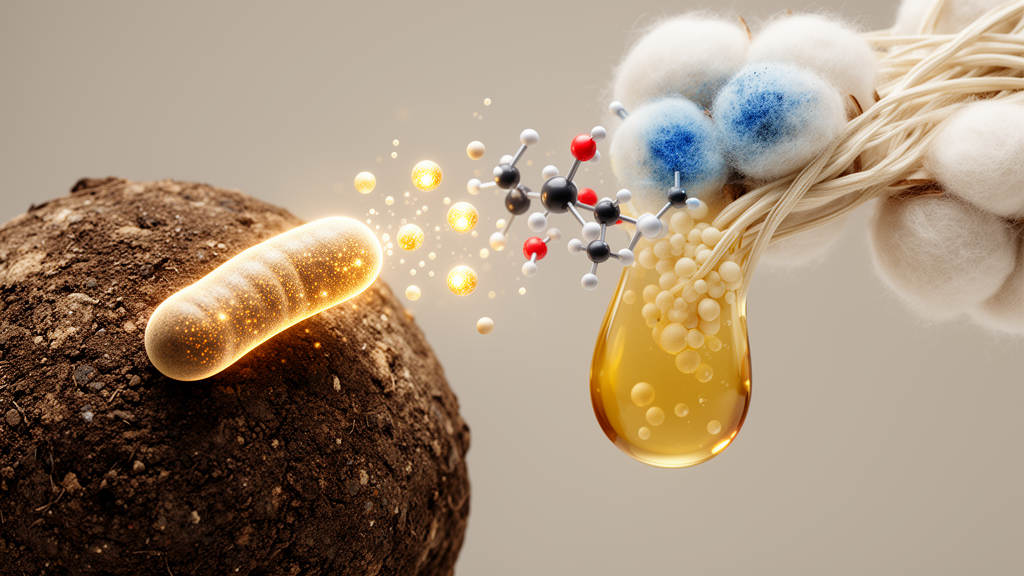
Researchers screening soil bacteria for industrial enzymes report that a strain of Bacillus cereus, designated E327, produced an alpha-amylase with strong performance in two very different applications: removing starch-based stains from dyed cotton fabric and clarifying fruit juice. The study, published in 3 Biotech, began with 236 bacterial isolates from soil samples, of which E327 showed the highest amylolytic activity, measured by an enzyme index of 2.2, and was identified through 16S rRNA sequencing.

The team then optimized enzyme production. Maximum alpha-amylase yield of 218 ± 3.7 units per millilitre was reached when the bacterium was grown at pH 7.0 and 37 °C over 48 hours of incubation.

For textile destaining, the researchers used a one-factor-at-a-time optimization approach and found the best conditions to be an enzyme concentration of 150 units per millilitre, a temperature of 50 °C, and a treatment time of 60 minutes. Under these conditions, starch stains on dyed cotton fabric were nearly completely removed, with a color difference value (ΔE) of 0.67 ± 0.02, where values close to zero indicate the treated fabric matches its original appearance.

To validate the destaining process under realistic washing conditions, the team used a Launder-O-Meter. The crude enzyme performed comparably to commercial stain-removal products on both starch stains and apple slurry stains, achieving ΔE values below 0.90 and whiteness recovery of up to 89.6 percent. This suggests the bacterial enzyme could compete with existing formulations in detergent-type applications.

The enzyme also showed promise in food processing. In juice clarification trials, the free enzyme produced the greatest reduction in turbidity compared with both commercial and immobilized alpha-amylase preparations.

The authors suggest that the amylase from Bacillus cereus E327 holds promise as a sustainable and cost-effective alternative for industrial textile cleaning and food applications. Because the tests reported in the abstract were laboratory-scale, including Launder-O-Meter validation rather than full industrial trials, further work would be needed to confirm performance and economics at production scale.

Subject of Research: Isolation and functional testing of a Bacillus cereus alpha-amylase for textile destaining and fruit juice clarification

Article Title: Production and functional assessment of Bacillus cereus E327 α-amylase for eco-friendly textile destaining and fruit juice clarification

Article References: Liaqat, F., Demirkan, E., Kut, D., Kara, H., & Khazi, M. I. (2026). Production and functional assessment of Bacillus cereus E327 α-amylase for eco-friendly textile destaining and fruit juice clarification. 3 Biotech, 16(11), Article 472. https://doi.org/10.1007/s13205-026-05102-5

Image Credits: AI Generated

DOI: 10.1007/s13205-026-05102-5

Keywords: Bacillus cereus, alpha-amylase, textile destaining, fruit juice clarification, cotton fabric, starch hydrolysis, industrial enzymes, 16S rRNA, Launder-O-Meter, turbidity, Production, functional

News Source: Morgan Morrow. (October 28, 2026). Soil bacterium yields amylase that destains cotton and clarifies juice. Scienmag.


Tags: 16S rRNAalpha-amylaseBacillus cereuscotton fabricfruit juice clarificationfunctionalindustrial enzymesLaunder-O-Meterproductionstarch hydrolysistextile destainingturbidity
Share12Tweet7Share2ShareShareShare1

Related Posts

Microbial Sources and Stress Shape the Hidden Endophytes of an Invasive Plant

Microbial Sources and Stress Shape the Hidden Endophytes of an Invasive Plant

October 30, 2026
Firebreaks Leave Lasting Scars in Grasslands While Wildfire Heals Fast

Firebreaks Leave Lasting Scars in Grasslands While Wildfire Heals Fast

October 30, 2026

Hidden Peptides in Non-Coding RNAs Reshape Cardiovascular Biology

October 30, 2026

Phage K Holin’s C-Terminal Region Shapes Antibacterial Activity, Study Finds

October 30, 2026

POPULAR NEWS

  • Microbial Sources and Stress Shape the Hidden Endophytes of an Invasive Plant

    Microbial Sources and Stress Shape the Hidden Endophytes of an Invasive Plant

    29 shares
    Share 12 Tweet 7
  • Firebreaks Leave Lasting Scars in Grasslands While Wildfire Heals Fast

    29 shares
    Share 12 Tweet 7
  • ZNF207 shields glutamine transporter ASCT2 from degradation to fuel liver cancer growth

    29 shares
    Share 12 Tweet 7
  • Systematic review maps sustainability tensions in offshore wind development

    29 shares
    Share 12 Tweet 7

About

We bring you the latest biotechnology news from best research centers and universities around the world. Check our website.

Follow us

Recent News

Microbial Sources and Stress Shape the Hidden Endophytes of an Invasive Plant

Firebreaks Leave Lasting Scars in Grasslands While Wildfire Heals Fast

ZNF207 shields glutamine transporter ASCT2 from degradation to fuel liver cancer growth

Subscribe to Blog via Email

Enter your email address to subscribe to this blog and receive notifications of new posts by email.

Join 86 other subscribers
  • Contact Us

Bioengineer.org © Copyright 2023 All Rights Reserved.

Welcome Back!

Login to your account below

Forgotten Password?

Retrieve your password

Please enter your username or email address to reset your password.

Log In
No Result
View All Result
  • Homepages
    • Home Page 1
    • Home Page 2
  • News
  • National
  • Business
  • Health
  • Lifestyle
  • Science

Bioengineer.org © Copyright 2023 All Rights Reserved.
