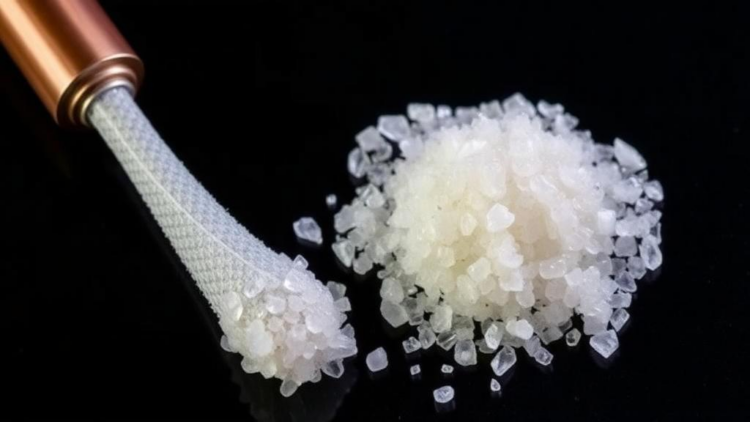
Vibration is one of the most stubborn enemies of modern engineering. It rattles precision instruments, fatigues aircraft components, degrades the performance of sensitive electronics, and even threatens the integrity of buildings during earthquakes. For decades, engineers have relied on springs, dampers, and metallic mounts to keep unwanted oscillations at bay. Now, a comprehensive critical review published in Polymer Bulletin by Devendra Y. Shahare, Y. M. Puri, and Avinash A. Thakre of Nagpur’s engineering institutions brings together the sprawling science of polymeric soft solids and argues that these squishy, molecularly intricate materials may hold the key to the next generation of vibration isolation. The review systematically maps how these materials are synthesized, how their mechanical behavior is measured, and where they are already quietly at work in the world around us.
What makes polymeric soft solids so special is a combination of properties that no metal or ceramic can match. Their elastic moduli typically fall between 10^2 and 10^7 pascals, meaning they can be thousands to millions of times softer than structural steel, yet they remain solid and load-bearing. More importantly, they are viscoelastic: when deformed, they do not simply store energy and give it back like an ideal spring. Instead, a significant fraction of the mechanical energy is converted into heat through internal friction. The review reports that well-designed polymeric damping materials achieve loss factors, expressed as the tangent of the phase angle delta, between 0.1 and 1.2, and can reduce transmitted vibration amplitudes by 30 to 80 percent in practical isolation systems. That range of effectiveness spans frequencies from roughly 1 to 1,000 hertz, covering everything from slow building sway to the buzz of rotating machinery.
The molecular origins of this damping behavior are as elegant as they are complex. The authors trace energy dissipation to three intertwined mechanisms: molecular relaxation, segmental motion, and internal friction within the polymer network. When a polymer chain is disturbed, its segments rotate, slide, and rearrange, and each of these motions takes time. If the frequency of an imposed vibration matches the timescale of these segmental motions, energy is dissipated most efficiently, which is why damping peaks near the glass transition temperature of a polymer. Crosslink density, the chemistry of the backbone, and the presence of side groups all tune where and how strongly these relaxation processes occur. This molecular picture explains why a rubber mount that works beautifully at room temperature may stiffen and lose its damping prowess in winter cold or under sustained high-frequency loading.
On the synthesis side, the review catalogues an impressive toolkit. Conventional routes such as solution polymerization, emulsion polymerization, and photoinitiated crosslinking allow chemists to build networks with precisely controlled architecture. Elastomers like natural rubber, nitrile butadiene rubber, ethylene propylene diene monomer rubber, and polyurethanes remain the workhorses of industrial vibration isolation. Polydimethylsiloxane, the silicone elastomer beloved of microfluidics researchers, offers thermal stability and optical clarity alongside its mechanical compliance. Beyond single networks, the field has embraced polymer blends and interpenetrating polymer networks, in which two crosslinked networks are threaded through one another to combine complementary damping windows. Polyurethane-epoxy interpenetrating networks, for example, have been engineered with beta-cyclodextrin chain extenders to broaden the high-damping temperature range, addressing one of the classic weaknesses of single-polymer dampers.
Nanocomposites represent another frontier. Dispersing carbon nanotubes, graphene nanoplatelets, cellulose nanocrystals, or layered silicates into a soft polymer matrix can dramatically alter both stiffness and dissipation. The review highlights work on epoxy systems reinforced with functionalized carbon nanotubes, multi-scale composites blending metal alloys with carbon nanomaterials, and silicone rubbers filled with hybrid carbonaceous fillers. Filler networking also introduces fascinating nonlinear phenomena, such as the Payne effect, in which the storage modulus of filled rubber drops sharply with increasing oscillation amplitude as filler-filler contacts break and reform. Intriguingly, recent research cited in the review suggests that porous nanoparticles can help overcome the traditional tradeoff between stiffness and damping, a long-standing frustration for materials designers who usually must sacrifice one to gain the other.
Hydrogels, long dismissed as too fragile for structural duty, have undergone a renaissance since the advent of double-network hydrogels, which pair a brittle first network with a stretchable second one to achieve remarkable toughness. The review assesses tough hydrogels built on dynamic hydrogen bonds, metal coordination, and physically crosslinked double networks, some of which exhibit self-healing and rapid self-strengthening triggered by bond scission. These multiscale energy dissipation mechanisms make hydrogels candidates not only for soft robotics and wearable electronics but also for specialized damping applications where aqueous environments or biocompatibility matter. The authors also point to hybrid elastomers combining hydrogen bonding with metal coordination that maintain high strength and dissipation across broad temperature ranges, a persistent challenge for conventional rubbers.
Measuring all of this behavior demands a sophisticated characterization arsenal. Dynamic mechanical analysis remains the cornerstone technique, yielding the storage modulus, loss modulus, and damping factor as functions of frequency and temperature. Rheometry, including large amplitude oscillatory shear, extends these measurements into the nonlinear regime where many real devices operate. Time-temperature superposition, formalized through the Williams-Landel-Ferry equation, allows researchers to collapse data collected at different temperatures into master curves spanning enormous effective frequency ranges. At the smallest scales, atomic force microscopy-based nanorheology now probes viscoelasticity continuously from 0.1 to 5,000 hertz, while nanoindentation instruments are being adapted to characterize materials under high-frequency vibration. The review also discusses how classical models, from the Maxwell and standard linear solid frameworks to modern fractional calculus and multiple natural configuration theories, are being matched against these experimental datasets to enable predictive design.
Perhaps the most visually striking development covered in the review is the rise of architected soft materials and soft metamaterials. Using additive manufacturing techniques such as stereolithography, fused deposition modeling, and direct ink writing, researchers can now print lattices, Kagome structures, and resonant unit cells whose geometry, not just chemistry, controls how vibrations propagate. Phononic crystals and locally resonant metamaterials create band gaps, frequency ranges within which vibrations simply cannot travel, and 3D-printed elastic metamaterials with surface resonant units have demonstrated low-frequency vibration isolation that would be impossible with homogeneous materials. Metadamping, an emergent phenomenon in which dissipation itself is engineered through the metamaterial architecture, points toward structures that combine geometric wave-blocking with intrinsic viscoelastic loss. Magnetorheological elastomers add another dimension of control, allowing stiffness and damping to be tuned in real time with a magnetic field, enabling adaptive vibration absorbers that track changing excitation conditions.
The applications landscape is correspondingly broad. High-damping rubber bearings already protect buildings and bridges from seismic shaking, and finite element models using hyper-viscoelastic material laws are refining their design. Constrained layer damping treatments quiet automotive panels and aircraft fuselages. Fiber-reinforced composites with embedded superelastic shape memory alloys, flax-epoxy laminates, and graphene-coated carbon fibers are pushing damping into lightweight structural roles. Quasi-zero-stiffness metamaterials promise isolation platforms that combine high static load capacity with ultra-low dynamic stiffness. Even skin-interfaced bioelectronics are beginning to employ selectively damping materials to suppress motion artifacts, and large-scale metamaterial arrays have been proposed as seismic shields for cities.
Yet the review is candid about the obstacles that remain. Long-term stability is a persistent concern: polymers age through oxidation, UV exposure, creep, and the Mullins softening effect under cyclic deformation, all of which erode damping performance over years of service. Environmental sensitivity means that humidity, temperature swings, and chemical exposure can shift the very relaxation processes responsible for damping. Fatigue of elastomeric components under millions of load cycles remains difficult to predict, and frequency-dependent performance complicates the design of isolators that must work across wide spectra. The authors argue that the path forward lies in structure-property-performance optimization, coupling molecular design, architected geometry, machine learning-assisted materials discovery, and multiscale modeling. If that integration succeeds, the humble polymer mount could evolve into a programmable, self-healing, broadband vibration shield, transforming everything from earthquake engineering to the quiet hum of the devices we carry every day.
Subject of Research: Viscoelastic polymeric soft solids for vibration isolation and damping applications
Article Title: Synthesis, mechanical characterization, and applications of polymeric soft solids for vibration isolation: a critical review
Article References: Shahare, D. Y., Puri, Y. M., & Thakre, A. A. (2026). Synthesis, mechanical characterization, and applications of polymeric soft solids for vibration isolation: a critical review. Polymer Bulletin, 83(12), Article 660. https://doi.org/10.1007/s00289-026-06704-y
Image Credits: AI Generated
DOI: 10.1007/s00289-026-06704-y
Keywords: polymeric soft solids, vibration isolation, viscoelastic damping, elastomers, hydrogels, nanocomposites, dynamic mechanical analysis, rheology, soft metamaterials, additive manufacturing, magnetorheological elastomers, Polymer Bulletin
Cite Scienmag News
APA
MLA
Chicago
Denise Maddox. (September 30, 2026). Soft Polymer Solids Emerge as Powerful New Tools for Taming Vibration. Scienmag. https://scienmag.com/soft-polymer-solids-emerge-as-powerful-new-tools-for-taming-vibration/
Denise Maddox. “Soft Polymer Solids Emerge as Powerful New Tools for Taming Vibration.” Scienmag, 30 September 2026, https://scienmag.com/soft-polymer-solids-emerge-as-powerful-new-tools-for-taming-vibration/. Accessed 30 September 2026.
Denise Maddox. “Soft Polymer Solids Emerge as Powerful New Tools for Taming Vibration.” Scienmag. September 30, 2026. https://scienmag.com/soft-polymer-solids-emerge-as-powerful-new-tools-for-taming-vibration/
Copy citation
Download RIS
Tags: additive manufacturingadvanced vibration mitigation materialsapplications of soft solids in electronicsdynamic mechanical analysiselastomershydrogelsinnovative vibration suppression technologiesmagnetorheological elastomersmolecular design of vibration-resistant polymersnanocompositesPolymer Bulletinpolymer composites for vibration reductionpolymer soft solids vibration dampingpolymer synthesis for vibration controlpolymer-based vibration damperspolymeric materials in structural engineeringpolymeric soft solidsrheologysoft metamaterialssoft polymer mechanicsvibration isolationvibration isolation materialsviscoelastic dampingviscoelastic polymers for engineering