In a cross-sectional study of 370 community-dwelling Iranian adults aged 60 or older, higher perceived social support, greater life satisfaction, university education, and certain living arrangements were associated with more positive perceptions of aging. The participants, recruited from primary healthcare centers in Qazvin between March and November 2025, had a moderately positive average aging-perception score. The findings link several demographic and psychosocial factors with how older adults view aging, although the design cannot establish that any of these factors causes a particular perception.
Researchers used multistage cluster sampling to recruit participants from six community healthcare centers, three family physician clinics, and two elderly day-care centers in Qazvin, Iran. Interviewer-administered questionnaires measured demographics, loneliness, self-rated health, perceived social support, life satisfaction, and aging perception using the Aging Perceptions Questionnaire. The sample’s mean age was 67.99 years, with a standard deviation of 5.96 years, and the mean aging-perception score was 100.07 with a standard deviation of 5.86. The analysis combined descriptive statistics and bivariate comparisons with hierarchical multiple linear regression, interaction terms, and stratified subgroup analyses.
The main-effects regression model accounted for 42% of the variance in aging perception, as indicated by an adjusted R² of 0.42. After accounting for the variables included in the model, positive associations were reported for university education (β = 0.23, p = 0.020), living with children (β = 0.21, p = 0.032), living alone (β = 0.41, p < 0.001), higher life satisfaction (β = 0.15, p = 0.021), and higher perceived social support (β = 0.16, p = 0.013). By contrast, male gender was negatively associated with aging perception (β = −0.20, p = 0.031), as were being single (β = −0.37, p < 0.001) and being widowed (β = −0.32, p = 0.004). These are statistical associations within this particular sample, not evidence that changing education, household composition, social support, or marital status would directly alter an individual’s view of aging.
Adding interaction terms improved the model’s explanatory power by five percentage points, with a significant overall change of ΔR² = 0.05, p = 0.008. Education and perceived social support interacted significantly: the coefficient for the interaction was β = 0.14, p = 0.011. The positive association between university education and aging perception was strongest among participants who reported high perceived social support, suggesting that the relationship between education and aging perception depended on the level of social support available to the participant. The study also examined interactions between living arrangement and marital status and between gender and living with children, but the supplied findings do not identify those interactions as independently significant. Overall, the results are consistent with the authors’ interpretation of social resources as potentially amplifying some benefits associated with education. Because the data were facility-based, observational, and collected at one point in time, the findings require confirmation in longitudinal, population-representative studies before stronger claims about causation or generalizability can be made.
Subject of Research: Demographic and psychosocial correlates of aging perception among older adults in Qazvin, Iran
Article Title: Predictors of aging perception among community dwelling older adults attending primary care centers in Qazvin
Article References: Rajabi, M., Keramat kar, M., Motalebi, S. A., & Rashvand, F. (2026). Predictors of aging perception among community dwelling older adults attending primary care centers in Qazvin. BMC Public Health. https://doi.org/10.1186/s12889-026-29881-x
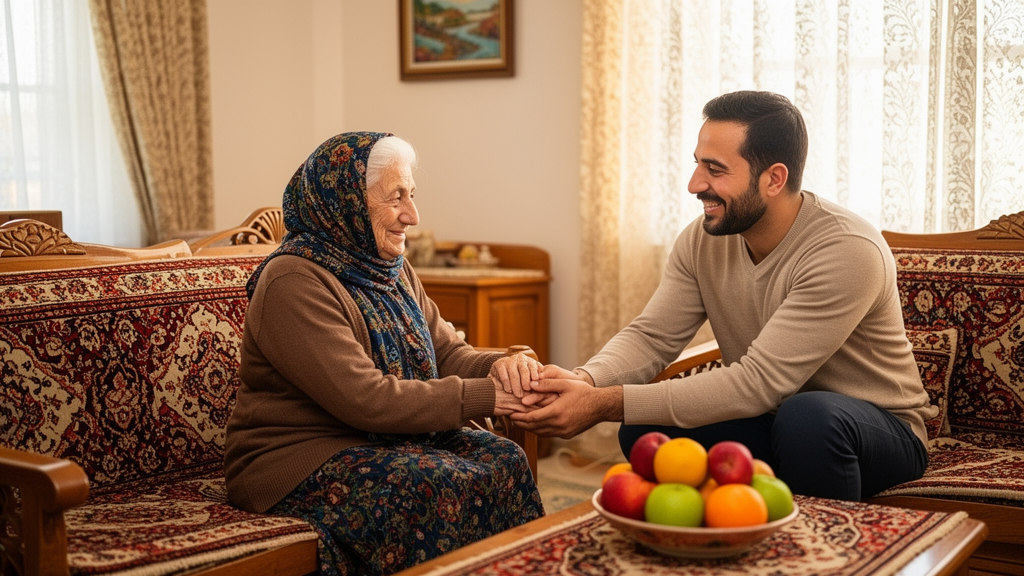
Image Credits: AI Generated
DOI: 10.1186/s12889-026-29881-x
Keywords: aging perception, older adults, Iran, perceived social support, life satisfaction, education, family living arrangements, cross-sectional study, public health, Predictors, aging, perception
News Source: Beatrice Stafford. (October 26, 2026). Social support and family ties shape aging perception in Iranian older adults. Scienmag.