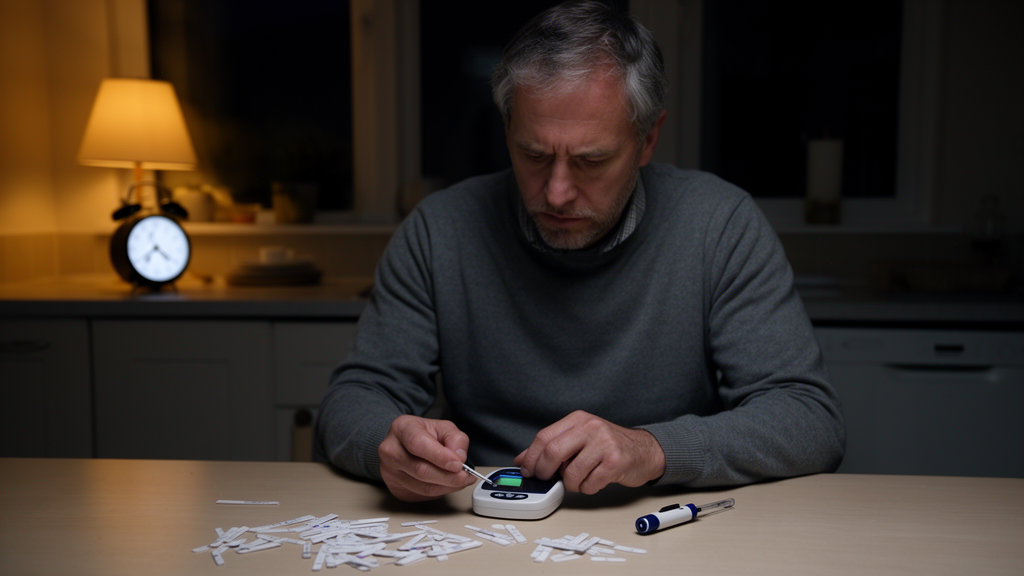
Every weekend, millions of working adults quietly shift their sleep schedules by an hour or more, staying up late on Friday and Saturday nights and sleeping in on Saturday and Sunday mornings. Come Monday, their body clocks are dragged back into line with the alarm clock. Scientists call this weekly mismatch social jetlag, and a new study suggests it may be quietly undermining one of the most demanding routines in medicine: the daily self-management of type 2 diabetes.
The research, published in Frontiers in Public Health, examined 339 employed adults aged 18 to 60 with type 2 diabetes recruited from the endocrinology departments of three tertiary public general hospitals in Ningxia Hui Autonomous Region, China, between January and April 2026. The team, led by researchers from the School of Nursing at Ningxia Medical University, set out to answer a deceptively simple question: does the gap between workday and free-day sleep timing relate to how consistently patients eat well, exercise, take their medication, monitor their blood glucose, and care for their feet?
Social jetlag was quantified using the micro Munich Chronotype Questionnaire, an ultra-short instrument that asks participants for their usual sleep-onset and wake-up times on workdays and free days. From these responses, the researchers calculated the sleep midpoint for each type of day, the moment that falls exactly halfway between falling asleep and waking. Social jetlag was defined as the absolute difference between the free-day and workday sleep midpoints, expressed in hours. Sleep quality was measured with the Pittsburgh Sleep Quality Index, depressive symptoms with the Patient Health Questionnaire-9, and diabetes self-management with the authorized Chinese version of the Summary of Diabetes Self-Care Activities, an 11-item scale covering diet, physical activity, blood glucose monitoring, foot care, and medication adherence.
The results were striking. Only 23 percent of participants had social jetlag below one hour, while 40.1 percent fell in the one-to-two-hour range and 36.9 percent exceeded two hours. In adjusted multivariable linear regression models, each additional hour of social jetlag was associated with a 1.352-point increase in sleep quality index scores, indicating poorer sleep, and a 3.772-point increase in depressive symptom scores. The same hour was associated with a 6.623-point decrease in self-management scores, a scale that ranges from 0 to 77. Median self-management scores fell steadily across social jetlag groups, from 39 points in the lowest group to 33 points in the highest.
But the study went further than simple associations. Using a serial mediation analysis with 5,000 bootstrap resamples, the researchers tested whether sleep quality and depressive symptoms statistically accounted for portions of the link between social jetlag and self-management. The analysis revealed a significant serial pathway: greater social jetlag was associated with poorer sleep quality, which in turn was associated with more severe depressive symptoms, which were associated with poorer self-management. The specific indirect association through depressive symptoms alone was −2.230 points, and the serial indirect association through sleep quality and depressive symptoms was −0.314 points, both statistically significant. Notably, the indirect association through sleep quality alone was not significant, suggesting that sleep timing misalignment may reach self-management primarily through its emotional consequences.
Even after both mediators were included in the model, the direct association between social jetlag and self-management remained significant at −3.830 points, indicating that the weekly sleep-timing mismatch relates to self-management through additional mechanisms not captured by sleep quality and mood. The findings survived eight sensitivity analyses, including additional adjustment for education, marital status, income, glycemic indicators such as HbA1c and fasting plasma glucose, sleep duration measures, and recruitment site. When the researchers reversed the order of the mediators, placing depressive symptoms before sleep quality, the serial pathway was no longer significant, consistent with the hypothesized sequence from disrupted sleep timing through sleep quality to mood.
Why would a shifting sleep schedule matter so much for diabetes care? The authors argue that effective self-management depends on behaviors being performed consistently across all seven days of the week, without distinction between workdays and free days. Dietary regulation, physical activity, medication adherence, and blood glucose monitoring must be woven into regular daily schedules. Social jetlag, by its very nature, creates a discrepancy in daily routines between workdays and free days, potentially making these behaviors harder to plan and maintain. Depressive symptoms may compound the problem by eroding the motivation, self-efficacy, planning, and problem-solving skills that sustained self-care requires, even in patients who fully understand the recommended behaviors.
The study builds on a growing body of evidence linking social jetlag to metabolic harm. Previous research has found that about 65 percent of adults with type 2 diabetes experience social jetlag in excess of one hour, and greater social jetlag has been associated with less favorable glycemic and metabolic outcomes, higher HbA1c, insulin resistance, metabolic syndrome parameters, and obesity. The new findings extend this evidence to the behavioral level, suggesting that the weekly sleep-timing mismatch may be an overlooked and potentially modifiable barrier in diabetes education and care.
The authors emphasize practical implications for clinical practice. Brief assessment of sleep timing across workdays and free days may help nurses identify routine-related barriers that standard diabetes education does not capture. Patients with substantial differences in sleep timing may benefit from self-management plans adapted to their weekly schedules. Because depressive symptoms emerged as a key psychological link, the researchers recommend incorporating brief mood assessment into diabetes education and follow-up, and they caution that sleep quality should not be assessed in isolation, since poor sleep and depressive symptoms share manifestations such as fatigue, sleep disturbance, and impaired daytime functioning.
Important caveats remain. The cross-sectional design cannot establish temporal ordering or causal mediation, and the study included only employed adults recruited by convenience sampling from tertiary hospitals in a single region of China, limiting generalizability. Reliance on questionnaire-based measures may have introduced recall or reporting bias, and data on diabetes treatment regimens, diagnosed sleep disorders, psychiatric history, and specific psychotropic medications were not collected, leaving residual confounding possible. Still, the consistency of the findings across sensitivity analyses and the plausibility of the underlying mechanisms make social jetlag a compelling target for future longitudinal research. If later studies confirm these pathways, the humble weekend lie-in could join diet and exercise on the list of modifiable factors that shape the daily lives of the roughly 589 million adults worldwide living with diabetes.
Subject of Research: Health
Article Title: Association between social jetlag and diabetes self-management in adults with type 2 diabetes: a cross-sectional study with serial mediation analysis
Article References: He, J., Wang, S., Zhang, J., Li, S., Huang, X., Huang, C., & Liu, M. (2026). Association between social jetlag and diabetes self-management in adults with type 2 diabetes: a cross-sectional study with serial mediation analysis. Frontiers in Public Health, 14, Article 1979499. https://doi.org/10.3389/fpubh.2026.1979499
Image Credits: AI Generated
DOI: 10.3389/fpubh.2026.1979499
Keywords: social jetlag, type 2 diabetes, sleep, depression, self-management, chronobiology, public health, Association, between, social, jetlag, diabetes
News Source: Ophelia Keating. (October 17, 2026). Social jetlag linked to poorer diabetes self-management in working adults. Scienmag.