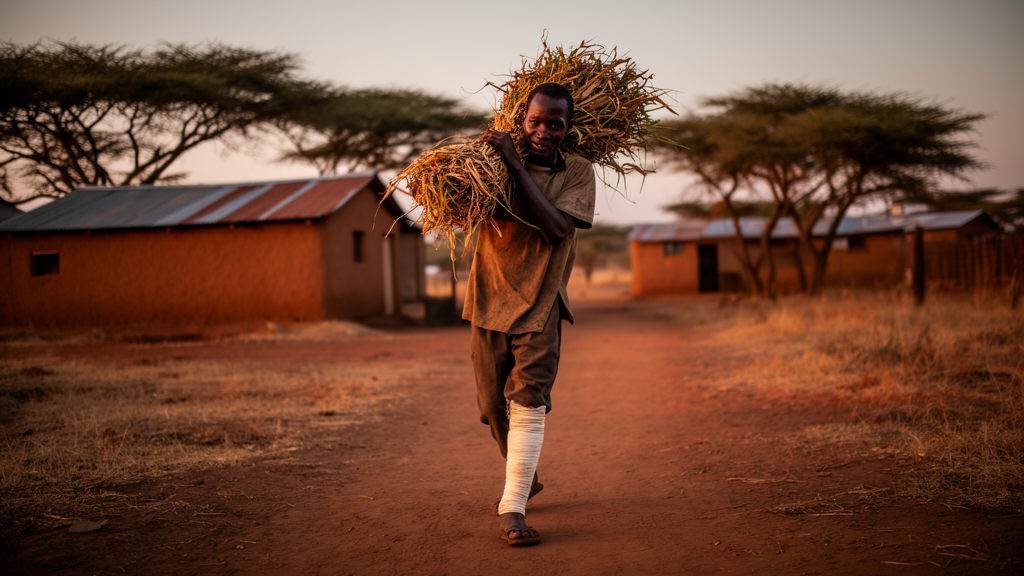
Snakebite envenoming in Kenya is concentrated among poorer, rural populations, and is more consistently linked to livelihoods and housing conditions than to seasonality or time of day, according to a systematic review published in PLOS Global Public Health.
Researchers led by Eleanor Collinson carried out a narrative systematic review that deliberately combined peer-reviewed studies with grey literature, an approach recommended by earlier snakebite publications because globally available studies remain limited. The team appraised academic studies using the Mixed Methods Appraisal Tool and assessed grey literature against the Authority, Accuracy, Coverage, Date and Significance guidelines.
The synthesis drew on 16 eligible peer-reviewed studies and 4 grey literature sources published between 1994 and 2025, examining determinants of snakebite risk and outcomes across Kenya. Because the number of eligible studies was small and the study types highly heterogeneous, the authors conducted a thematic narrative synthesis rather than a statistical meta-analysis.
In total, 25 variables clustered into four domains were assessed, spanning human demographic factors and environmental exposures. The review concurred with established international literature in identifying rurality, poverty and farming as factors that increase snakebite risk.
However, the analysis also highlighted discrepancies with global data. Several studies reported no seasonal variation in bites, or more bites in the dry season; bites were reported to occur equally in the day and the night in some studies; and no significant gender difference was observed in several reports.
The authors concluded that the overall findings converge on a consistent picture: snakebite envenoming in Kenya is concentrated among poorer, rural populations, and is more consistently linked to livelihoods and housing conditions than to seasonality or temporality. They also cautioned that the actual burden of snakebite and the species responsible for bites remain poorly understood, underscoring the value of incorporating grey literature to build a more accurate picture of the burden of this neglected tropical disease.
Subject of Research: Risk factors for snakebite in Kenya, synthesised from academic and grey literature
Article Title: A narrative systematic review of snakebite risk factors in Kenya, incorporating grey and academic literature
Article References: Collinson, E., Gumbs, R., Lees, S., & Bowmer, A. (2026). A narrative systematic review of snakebite risk factors in Kenya, incorporating grey and academic literature. PLOS Global Public Health, 6(10), e0006344. https://doi.org/10.1371/journal.pgph.0006344
Image Credits: AI Generated
DOI: 10.1371/journal.pgph.0006344
Keywords: snakebite, Kenya, neglected tropical disease, systematic review, grey literature, rurality, poverty, farming, envenoming, public health, narrative, systematic
News Source: Phoebe Ingram. (October 29, 2026). Snakebite in Kenya hits poorest rural communities hardest, review finds. Scienmag.