• HOME
  • NEWS
  • EXPLORE
    • CAREER
      • Companies
      • Jobs
    • EVENTS
    • iGEM
      • News
      • Team
    • PHOTOS
    • VIDEO
    • WIKI
  • BLOG
  • COMMUNITY
    • FACEBOOK
    • INSTAGRAM
    • TWITTER
Tuesday, December 30, 2025
BIOENGINEER.ORG
No Result
View All Result
  • Login
  • HOME
  • NEWS
  • EXPLORE
    • CAREER
      • Companies
      • Jobs
        • Lecturer
        • PhD Studentship
        • Postdoc
        • Research Assistant
    • EVENTS
    • iGEM
      • News
      • Team
    • PHOTOS
    • VIDEO
    • WIKI
  • BLOG
  • COMMUNITY
    • FACEBOOK
    • INSTAGRAM
    • TWITTER
  • HOME
  • NEWS
  • EXPLORE
    • CAREER
      • Companies
      • Jobs
        • Lecturer
        • PhD Studentship
        • Postdoc
        • Research Assistant
    • EVENTS
    • iGEM
      • News
      • Team
    • PHOTOS
    • VIDEO
    • WIKI
  • BLOG
  • COMMUNITY
    • FACEBOOK
    • INSTAGRAM
    • TWITTER
No Result
View All Result
Bioengineer.org
No Result
View All Result
Home NEWS Science News Immunology

Smoking increases SARS-CoV-2 receptors in the lung

Bioengineer by Bioengineer
May 18, 2020
in Immunology
Reading Time: 2 mins read
0
IMAGE
Share on FacebookShare on TwitterShare on LinkedinShare on RedditShare on Telegram

IMAGE

Credit: CSHL

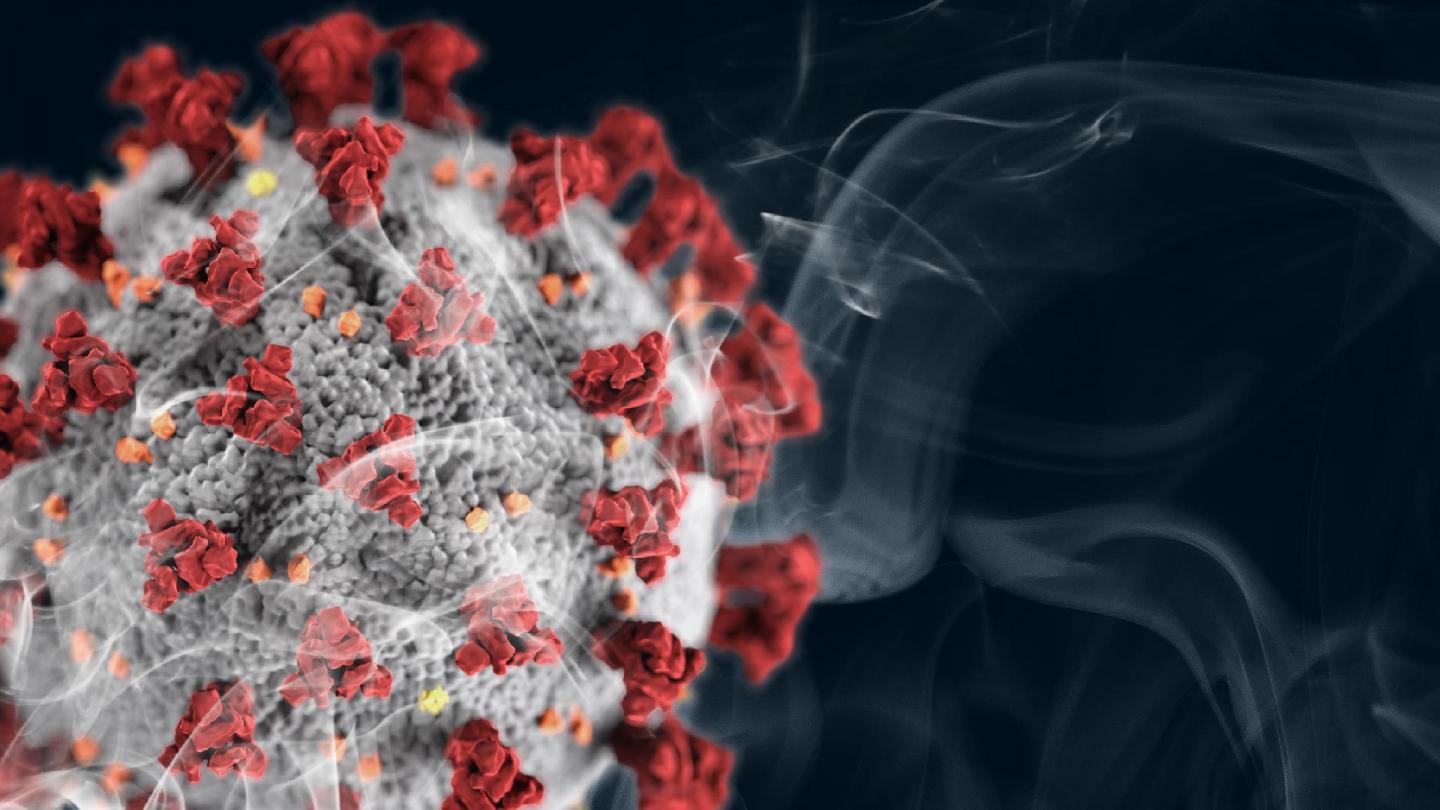
New research from CSHL scientists suggests that cigarette smoke spurs the lungs to make more ACE2 (angiotensin-converting enzyme 2), the protein that the coronavirus responsible for COVID-19 grabs and uses to enter human cells. The findings, reported May 16, 2020 in the journal Developmental Cell, may explain why smokers appear to be particularly vulnerable to severe infections. The analysis also indicates that the change is reversible, suggesting that quitting smoking might reduce the risk of a severe coronavirus infection.

From the early stages of the current pandemic, scientists and clinicians have noted dramatic differences in how people respond to infection with SARS-CoV-2. Most infected individuals suffer only mild illness, if they experience any at all. But others require intensive care when the sometimes-fatal virus attacks. Three groups, in particular, have been significantly more likely than others to develop severe illness: men, the elderly, and smokers.

With most laboratory experiments on hold due to the pandemic, CSHL Fellow Jason Sheltzer and Joan Smith, an engineer at Google, turned to previously published data to seek possible explanations for these disparities. They were curious whether the vulnerable groups might share some key feature related to the human proteins that the coronavirus relies on for infection.

“We started gathering all the data we could find,” Sheltzer says, explaining that he and Smith focused first on comparing gene activity in the lungs across different ages, between the sexes, and between smokers and nonsmokers. “When we put it all together and started analyzing it, we saw that both mice that had been exposed to smoke in a laboratory and humans who were current smokers had significant upregulation of ACE2.”

While they found no evidence that age or sex impacts ACE2 levels in the lungs, the influence of smoke exposure was surprisingly strong, Sheltzer says. The change appears to be temporary, however: the data revealed that the level of ACE2 in the lungs of people who had quit smoking was similar to that of non-smokers.

Sheltzer, Smith, and colleagues also found that the most prolific producers of ACE2 in the airways are mucus-producing cells called goblet cells. Smoking is known to increase the prevalence of such cells, a change that can protect the airways from irritants but–by amplifying the amount of ACE2 in the lungs–may also increase vulnerability to SARS-CoV-2.

###

Media Contact
Sara Roncero-Menendez
[email protected]

Original Source

https://www.cshl.edu/smoking-increases-sars-cov-2-receptors-in-the-lung/

Related Journal Article

http://dx.doi.org/10.1016/j.devcel.2020.05.012

Tags: BiologyCell BiologyInfectious/Emerging DiseasesMedicine/Health
Share12Tweet8Share2ShareShareShare2

Related Posts

IMAGE

UMass Amherst grad student awarded fellowship for food allergy research

July 23, 2021
IMAGE

Less-sensitive COVID-19 tests may still achieve optimal results if enough people tested

July 22, 2021

Public trust in CDC, FDA, and Fauci holds steady, survey shows

July 20, 2021

USC study shows male-female differences in immune cell function

July 19, 2021
Please login to join discussion

POPULAR NEWS

  • Robotic Waist Tether for Research Into Metabolic Cost of Walking

    NSF funds machine-learning research at UNO and UNL to study energy requirements of walking in older adults

    71 shares
    Share 28 Tweet 18
  • Exploring Audiology Accessibility in Johannesburg, South Africa

    51 shares
    Share 20 Tweet 13
  • Nurses’ Views on Online Learning: Effects on Performance

    70 shares
    Share 28 Tweet 18
  • SARS-CoV-2 Subvariants Affect Outcomes in Elderly Hip Fractures

    44 shares
    Share 18 Tweet 11

About

We bring you the latest biotechnology news from best research centers and universities around the world. Check our website.

Follow us

Recent News

Micro- and Nanoplastics’ Toxicity in COPD Cells

E2F8 Boosts DTL, Driving Endometrial Cancer via MAPK

Brain Imaging Insights in Early-Onset Precocious Puberty

Subscribe to Blog via Email

Success! An email was just sent to confirm your subscription. Please find the email now and click 'Confirm' to start subscribing.

Join 71 other subscribers
  • Contact Us

Bioengineer.org © Copyright 2023 All Rights Reserved.

Welcome Back!

Login to your account below

Forgotten Password?

Retrieve your password

Please enter your username or email address to reset your password.

Log In
No Result
View All Result
  • Homepages
    • Home Page 1
    • Home Page 2
  • News
  • National
  • Business
  • Health
  • Lifestyle
  • Science

Bioengineer.org © Copyright 2023 All Rights Reserved.