As the planet grapples with escalating climate change, the frequency and severity of extreme heat waves and air pollution episodes are intensifying, posing mounting risks to human health. In response to these urgent challenges, a pioneering pilot study emerging from The City University of New York (CUNY) reveals an innovative method to assess individual environmental exposures in real time. By integrating wearable technology, smartphone location data, and momentary mood assessments, researchers have crafted a dynamic model capable of capturing the physiological and emotional impacts of environmental stressors as they occur throughout daily life.
Published in the prestigious journal JMIR Formative Research, the study titled “Feasibility of Integrating Wearable Devices and Ecological Momentary Assessment for Real-Time Environmental Exposure Estimation” pushes the boundaries of environmental epidemiology. The research team, led by doctoral candidate Sameera Ramjan alongside co-first author Melissa Blum, implemented a multifaceted data collection strategy that transcends traditional stationary environmental monitoring. Their approach actively follows participants across diverse environments over extended periods, illuminating nuanced exposure profiles unattainable with conventional methods.
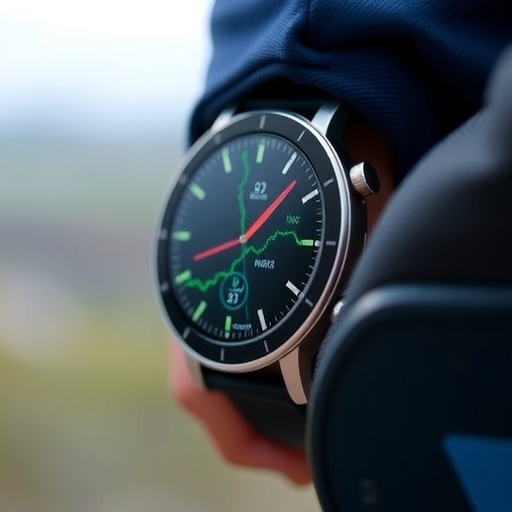
Central to the study’s design was the deployment of Fitbit smartwatches worn continuously for approximately one month by participants. These devices meticulously recorded physiological biometrics, including heart rate variability (HRV), a key indicator of autonomic nervous system function and stress recovery capacity. Complementing this, participants completed frequent ecological momentary assessments — brief, real-time surveys probing current mood states at multiple intervals daily. This dual data collection enabled the juxtaposition of objective physical measurements with subjective emotional experiences, providing a holistic view of individual responses to environmental conditions.
Crucially, smartphone GPS data was harnessed to map participants’ precise locations throughout the day. By overlaying these locations against high-resolution environmental datasets, researchers estimated individual exposures to critical atmospheric pollutants such as nitrogen dioxide (NO₂), particulate matter (PM), and sulfur dioxide (SO₂), in addition to quantifying heat exposure. This methodological fusion marks a significant leap from relying solely on fixed environmental sensors or static residential addresses, enabling temporally and spatially precise assessments aligned with personal movement patterns.
The study uncovered compelling associations between environmental exposures and participants’ physiological and emotional responses. Elevated levels of heat and nitrogen dioxide exposure corresponded with notable alterations in heart rate variability, suggesting diminished resilience to stress during high pollutant and heat episodes. Meanwhile, greater exposure to sulfur dioxide was linked with heightened self-reported feelings of nervousness and hopelessness, providing evidence of acute emotional distress triggered by specific environmental toxins.
One of the study’s more intriguing findings was the inverse relationship between heat exposure and reported sadness. This counterintuitive observation may reflect confounding factors such as increased social interaction and outdoor activities during warmer weather, which potentially mitigate feelings of sadness despite physiological stress. Such complexity underscores the necessity for expansive, longitudinal studies to disentangle behavioral, seasonal, and environmental influences on mental health outcomes.
Lead medical student Melissa Blum emphasized the transformative potential of combining wearable sensors, GPS tracking, and ecological momentary assessments. This triad facilitates the creation of individualized, dynamic exposure profiles that move in tandem with daily life activities, supplanting traditional reliance on static monitor data. The resulting granularity in exposure and response data paves the way for personalized health insights and more tailored preventive interventions.
Senior author Yoko Nomura, a distinguished professor with joint appointments at CUNY Graduate Center, Queens College, and the Icahn School of Medicine at Mount Sinai, highlights that this pilot study is the first known effort to integrate these diverse technologies for environmental exposure analysis and immediate health impact measurement. The study’s promising approach not only bridges consumer technology with environmental epidemiology but also charts a course toward precision public health strategies responsive to the individualized nature of environmental risks.
Despite the small sample size and initial exploratory status, the study also identified critical areas for methodological refinement — notably, simplifying technological interfaces and improving participant adherence to data collection protocols. These lessons have already informed subsequent research phases, which aim to apply this refined methodology on a larger scale through NIH-supported investigations into how prenatal and current environmental exposures impact adolescent brain development and mental health trajectories.
These advancements arrive amidst intensifying environmental challenges disproportionately affecting vulnerable populations, including children, pregnant individuals, and socioeconomically disadvantaged groups. These communities face broadened risks as environmental insults like extreme heat and air pollution exert lasting effects on neurodevelopment and behavioral health. Consequently, more precise, individualized monitoring could yield critical data to inform protective policies and clinical care tailored to these at-risk groups.
Beyond research implications, the real-time monitoring of environmental exposures harbors transformative potential within clinical contexts. The ability to track patients’ immediate environmental risks and physiological responses could revolutionize management and treatment strategies for conditions highly sensitive to heat and air quality fluctuations, such as asthma, cardiovascular disease, and mood disorders. Personalized exposure profiling may empower clinicians to anticipate exacerbations and implement timely interventions.
Acknowledging the study’s foundational nature, Nomura underscores the pivotal role improved exposure measurement plays in advancing public health. The successful demonstration of integrating consumer wearables, ecological momentary assessments, and GPS-based exposure estimation establishes a scalable framework for future research and clinical application. This methodological innovation sets the stage for more responsive, data-driven approaches that can robustly address the multifaceted health impacts of a changing environment.
Supported by a Professional Staff Congress–City University of New York (PSC-CUNY) research grant, this study exemplifies the intersection of emerging technology and environmental health science. Interested parties may reach out to senior author Yoko Nomura or co-author Melissa Blum for more detailed discussions on the study’s methodology and forthcoming research initiatives poised to deepen understanding of environment-health interrelations.
Subject of Research: People
Article Title: Feasibility of Integrating Wearable Devices and Ecological Momentary Assessment for Real-Time Environmental Exposure Estimation
News Publication Date: 8-May-2026
Web References: https://doi.org/10.2196/86615
Keywords
Climate change effects, Biosensors, Wearable technology, Environmental epidemiology, Heart rate variability, Air pollution, Ecological momentary assessment, Real-time monitoring, Personalized medicine, Heat exposure, GPS tracking, Mental health
Tags: CUNY environmental health pilot studydynamic modeling of health and environmentecological momentary assessment in epidemiologyextreme heat waves health risksGPS-enabled wearable technologyheart rate variability and environmental stressimpact of air pollution on healthphysiological effects of climate changereal-time environmental exposure trackingsmartphone location data in health studiessmartwatches for health monitoringwearable devices in environmental research