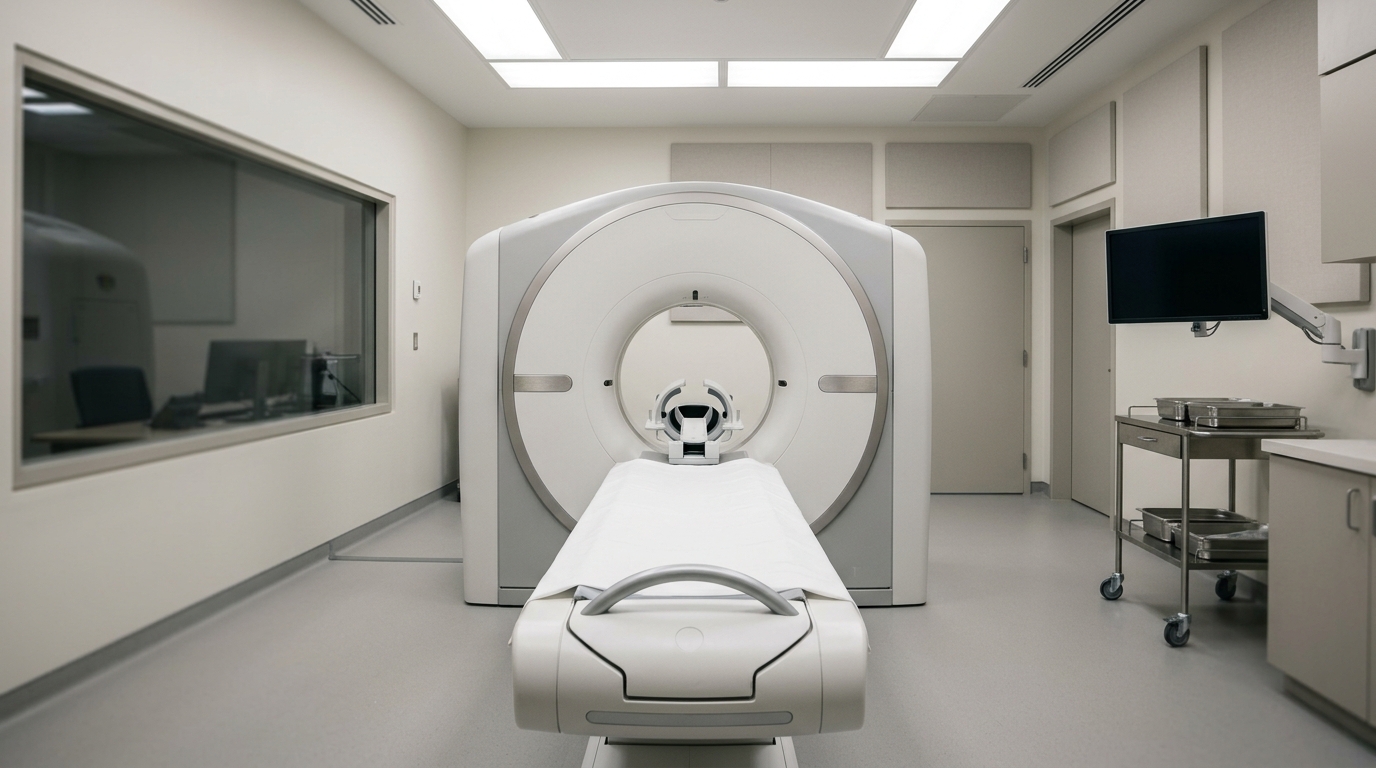
Addressing this clinical challenge, a comprehensive multi-vendor study published in the Egyptian Journal of Radiology and Nuclear Medicine demonstrates that optimizing emergency brain scanning protocols through advanced computational reconstruction can slash radiation dose by roughly half while maintaining diagnostic image fidelity. Conducted across four hospital emergency units utilizing scanners from Siemens, Philips, General Electric, and Canon, the investigation evaluated 294 adult patients undergoing non-contrast brain examinations. The researchers sought to determine whether low-dose computed tomography paired with hybrid statistical iterative reconstruction could resolve the longstanding compromise between minimizing patient radiation burden and producing the crisp anatomical definition required for urgent clinical decision-making.
To counteract these limitations, modern scanner manufacturers developed hybrid statistical iterative reconstruction technologies, including Sinogram Affirmed Iterative Reconstruction, intelligence dose, Adaptive Statistical Iterative Reconstruction-V, and Adaptive Iterative Dose Reduction three-dimensional. As the study authors emphasize, these sophisticated algorithms do not inherently reduce radiation output on their own. This computational noise suppression creates a crucial clinical opening: technologists and radiologists can safely dial down physical exposure parameters, such as tube current and peak kilovoltage, knowing that post-processing will restore diagnostic clarity.
To evaluate this integrated hardware and software approach under pragmatic conditions, the researchers established an operational threshold of 37.24 milligrays for the volume computed tomography dose index, derived from the lower distribution bound of regional dose surveys. Scans acquired below this benchmark using vendor-specific iterative reconstruction were compared against baseline standard-dose examinations processed with conventional filtered back projection or weighted filtered back projection. Standard-dose protocols frequently reached volume dose index levels up to 105 milligrays, markedly exceeding recommended diagnostic reference thresholds of 80 milligrays. Across all four scanner platforms, transitioning to low-dose protocols with hybrid reconstruction achieved substantial, statistically significant reductions in scanner output. Percentage drops in volume dose index ranged from 46.8 percent on the Siemens platform to 56.4 percent on the General Electric platform, while overall dose-length product reductions spanned from 36.5 percent to 57.4 percent, confirming that reduced physical tube output was successfully achieved across diverse clinical machinery.
Accurately translating raw machine output into meaningful patient exposure requires looking beyond generic phantom measurements, which assume an idealized sixteen-centimeter cylindrical head. To capture realistic clinical anatomy, the investigators leveraged IndoseCT dosimetry software to perform slice-by-slice calculations across every axial DICOM dataset. By automatically extracting anterior-posterior and lateral dimensions for each cross-section, the software calculated patient-specific effective diameters to derive size-specific dose estimates in accordance with American Association of Physicists in Medicine guidelines. Integrating slice-specific dose estimates over total scan coverage yielded size-corrected dose-length products, accounting for automated tube current modulation along the cranial axis. Patient-size dose estimates dropped significantly under low-dose protocols, showing reductions between 44.1 percent and 55.9 percent across vendors. Applying size-adapted conversion factors based on Monte Carlo simulations, the researchers determined that patient effective doses fell from an average baseline of 1.42 to 2.12 millisieverts under standard protocols to just 0.71 to 0.91 millisieverts under low-dose iterative reconstruction, representing an overall mean reduction of 48.3 percent.
Because ionizing radiation affects anatomical structures differently, the research team analyzed organ-specific absorbed doses across both directly irradiated tissues and adjacent structures exposed to scattered photons. Tissues situated directly within the primary examination beam—including the brain, eye lenses, salivary glands, and oral mucosa—experienced statistically significant dose drops ranging between 42.2 percent and 52.3 percent under optimized acquisition protocols. Mitigating ocular exposure is of particular clinical importance because the eye lens is vulnerable to deterministic radiation effects, with international radiological protection bodies recognizing a cumulative threshold of 500 milligrays for cataractogenesis. The study also documented statistically significant exposure decreases in out-of-field structures such as the thyroid gland and localized bone marrow. Although the thyroid receives lower absolute doses from scattered radiation, its exceptional radiosensitivity makes any scatter reduction clinically relevant for minimizing long-term stochastic risks, demonstrating that comprehensive protocol optimization shields organs both inside and outside the primary scan field.
To contextualize these physical dose reductions in terms of long-term public health impact, the authors modeled lifetime attributable cancer risk utilizing epidemiological risk frameworks from the National Research Council BEIR VII Phase 2 report. To apply discrete age-stratified risk coefficients across a continuous adult lifespan, the researchers implemented a validated sixth-order polynomial fit while truncating values to zero beyond age eighty-four to prevent numerical extrapolation artifacts. Across all evaluated cohorts, model-projected lifetime attributable cancer risk was significantly lower under low-dose iterative protocols, corresponding to a projected relative risk reduction of 44 percent in males and 58 percent in females. In absolute terms, the model-projected attributable risk difference averaged 4.0 avoided cancer cases per 100,000 scanned males and 8.0 avoided cases per 100,000 scanned females. When contextualized against general population lifetime baseline cancer rates, these projected differences correspond to a theoretical number needed to harm of 25,000 for males and 12,500 for females.
The mathematical risk projections exhibited distinct variations across age groups and biological sexes, reflecting the underlying epidemiological principles embedded in the BEIR VII model. Younger patients demonstrated markedly higher baseline modeled cancer vulnerability than elderly individuals; for instance, young females scanned under unoptimized standard-dose protocols exhibited a modeled cancer risk of 19.2 cases per 100,000, compared to 11.4 cases per 100,000 in young males. Protocol optimization yielded projected attributable risk differences of 10.3 cases per 100,000 in young females and 5.12 cases per 100,000 in young males. The higher modeled susceptibility observed in females reflects systemic sex-specific coefficients and tissue weighting factors that account for baseline hormonal, biological, and anatomical radiosensitivity differences. Crucially, the researchers emphasize that these metrics represent theoretical, population-level statistical projections derived from linear no-threshold models rather than clinically documented cancer diagnoses, serving as comparative benchmarks to quantify the theoretical safety margins gained through rigorous protocol engineering.
To verify diagnostic acceptability, two board-certified radiologists conducted double-blinded qualitative reviews across all examinations, scoring compliance with five established European Guidelines quality criteria: sharp reproduction of the grey-white matter interface, visualization of the basal ganglia, ventricular system definition, mesencephalic cerebrospinal fluid space clarity, and cortical surface delineation. Across all participating scanner platforms, qualitative performance under low-dose iterative protocols proved statistically non-inferior to standard-dose acquisitions, with criterion fulfillment rates exceeding 87 percent and showing no significant differences between protocols.
While these multi-vendor findings demonstrate that low-dose iterative reconstruction offers a robust pathway for reducing population-level radiation burden, the authors identify several methodological considerations and operational realities. Because data were collected retrospectively from four distinct clinical centers, acquisition parameters such as tube voltage, filtration, and automated exposure control modulation were not standardized across institutions, and smaller cohort sizes on select platforms warrant cautious generalization. Furthermore, applying whole-body cancer risk coefficients to localized cranial exposures introduces intrinsic modeling uncertainty, as regional tissue doses deviate from whole-body averages. Most fundamentally, the authors stress that technological optimization addresses only half of the radiological protection mandate. Technical dose reductions per examination protect patients from excessive exposure, but they cannot resolve the documented problem of clinically unjustified imaging requests in emergency departments. Achieving true radiation stewardship requires uniting intelligent scanner optimization with strict clinical referral criteria, ensuring that emergency neuroimaging delivers vital diagnostic insight at the lowest possible biological cost.
Subject of Research: Radiation dose optimization and modeled cancer risk reduction in emergency brain computed tomography
Article Title: Dose optimization and modeled lifetime attributable cancer risk in brain CT using hybrid statistical iterative reconstruction
Article References: Osman, N. D., Arjah, H., ALMasri, H., Anam, C., & Aziz, M. E. (2026). Dose optimization and modeled lifetime attributable cancer risk in brain CT using hybrid statistical iterative reconstruction. Egyptian Journal of Radiology and Nuclear Medicine, 57(1), Article 239. https://doi.org/10.1186/s43055-026-01892-z
Image Credits: AI Generated
DOI: 10.1186/s43055-026-01892-z
Keywords: Brain Computed Tomography, Radiation Dose Optimization, Iterative Reconstruction, Medical Physics, Lifetime Attributable Risk, Emergency Neuroimaging, Diagnostic Reference Levels, Dosimetry, Dose, optimization, modeled, lifetime
News Source: Cassandra Pierce. (November 6, 2026). Smart Brain CT Protocols Slash Radiation Exposure and Modeled Cancer Risks. Scienmag.