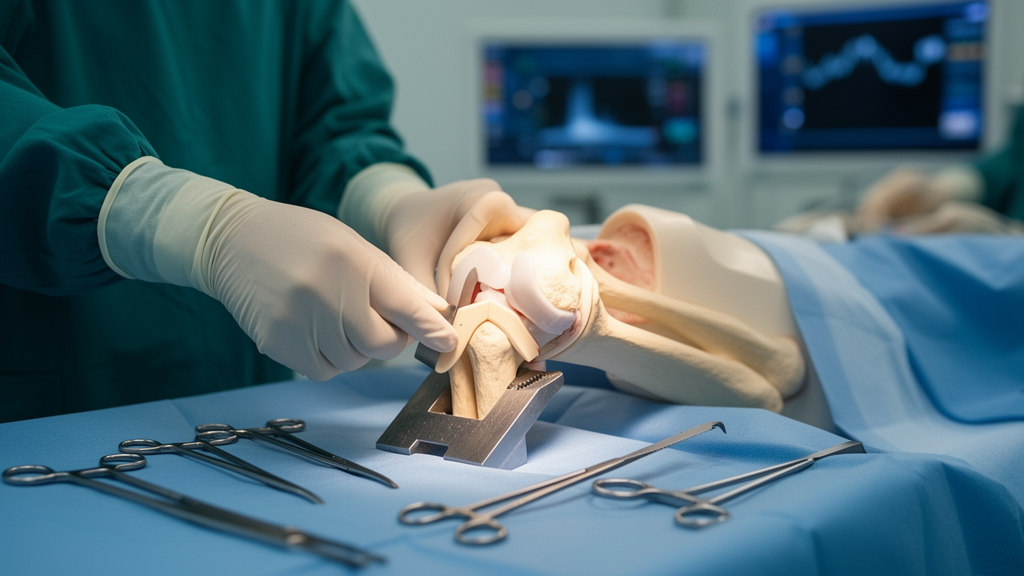
Slope-increasing tibial osteotomy, a procedure that deliberately steepens the angle at the top of the shin bone, is gaining attention as an adjunct for knees with posterior cruciate ligament (PCL) insufficiency, but a new scoping review concludes that while its biomechanical rationale is consistent, the clinical evidence remains thin. The review, published in BMC Musculoskeletal Disorders, maps the existing literature on the technique for posterior knee instability related to PCL deficiency or PCL reconstruction.
The authors conducted the scoping review according to PRISMA-ScR guidelines, searching PubMed, MEDLINE, and EMBASE on January 31, 2026 for studies discussing PCL insufficiency or reconstruction together with a slope-increasing osteotomy. Eligible studies included clinical studies, biomechanical analyses, and surgical technique reports. Seventeen studies met the inclusion criteria: eight technique papers, seven biomechanical studies, and two clinical case series.
The technique reports most often described a slope-increasing anterior opening-wedge osteotomy, used in five papers, with three papers describing a biplanar high tibial osteotomy. Fixation was typically performed with plates, and bone grafting was universally reported. Notably, target correction was inconsistently specified across the literature, although the reported goals generally aimed for a final posterior tibial slope of 5 to 10 degrees.
The biomechanical evidence base comprised 51 cadaveric knees and 15 computational models. Across these investigations, the findings were consistent: increasing the posterior tibial slope shifted the tibial resting position anteriorly, reduced posterior tibial sag, and decreased loading on the PCL or on a reconstructed graft. In practical terms, steepening the slope appears to offload the ligament that normally prevents the shin bone from sliding backwards relative to the thigh bone, which is the core mechanical problem in PCL-deficient knees.
Clinical evidence, however, was limited to just two case series totalling 16 patients, with heterogeneous indications and techniques. One study of six patients reported that one patient required re-fixation for delayed union at four months, and two other patients required hardware removal and subsequent ligament reconstruction after 12 months, giving a reoperation rate of three out of six, or 50 percent. The other study, involving 10 patients, reported improvement in functional outcomes after slope-increasing osteotomy with no complications or reoperations.
The review’s authors conclude that slope-increasing osteotomy for PCL deficiency is supported by technical descriptions and biomechanical rationales, yet clinical outcomes data remain sparse and require further investigation. They identify significant knowledge gaps in optimal indications, slope thresholds, correction targets, and comparative effectiveness with and without PCL reconstruction. Until those gaps are filled, the procedure’s place in the treatment algorithm for posterior knee instability remains uncertain.
Subject of Research: Slope-increasing tibial osteotomy for posterior cruciate ligament insufficiency and reconstruction
Article Title: The role of slope-increasing tibial osteotomy in posterior cruciate Ligament Insufficiency and Reconstruction: A Scoping Review of techniques, biomechanics, and clinical outcomes
Article References: Vivekanantha, P., Bouchard, M. D., Meena, A., Hegde, P., Sharma, N., Khajuria, A., de SA, D., & Tapasvi, S. (2026). The role of slope-increasing tibial osteotomy in posterior cruciate Ligament Insufficiency and Reconstruction: A Scoping Review of techniques, biomechanics, and clinical outcomes. BMC Musculoskeletal Disorders. https://doi.org/10.1186/s12891-026-10665-8
Image Credits: AI Generated
DOI: 10.1186/s12891-026-10665-8
Keywords: posterior cruciate ligament, tibial osteotomy, posterior tibial slope, knee instability, scoping review, biomechanics, ligament reconstruction, orthopaedic surgery, case series, PRISMA-ScR, role, slope-increasing
News Source: Ophelia Keating. (October 29, 2026). Slope-Increasing Tibial Osteotomy Shows Biomechanical Promise but Sparse Clinical Evidence in PCL Insufficiency. Scienmag.