For decades, the success of a sleep apnea treatment has been measured with a deceptively simple question: how many hours per night did the patient actually use it? For continuous positive airway pressure, or CPAP, that metric has shaped clinical practice, reimbursement decisions, and an entire generation of adherence research. But a new commentary published in the Journal of Clinical Sleep Medicine argues that when it comes to oral appliance therapy, the mandibular advancement devices that millions of people with obstructive sleep apnea wear instead of a mask and hose, the hours-per-night paradigm may be quietly misleading clinicians about who is truly being treated and who is not.
The commentary, written by Joseph Russo, Vinita Vidya, and Robert Stansbury of West Virginia University’s Division of Pulmonary, Critical Care and Sleep Medicine, responds to a growing body of evidence suggesting that oral appliance adherence is far more complicated than a single nightly usage figure can capture. The authors center their argument on a one-year longitudinal pilot study by Zhang and colleagues that tracked both objective and subjective adherence in adults using mandibular advancement devices, and their conclusion is provocative: patients and clinicians often disagree about how much the device is being used, and neither number alone tells the full story of therapeutic benefit.
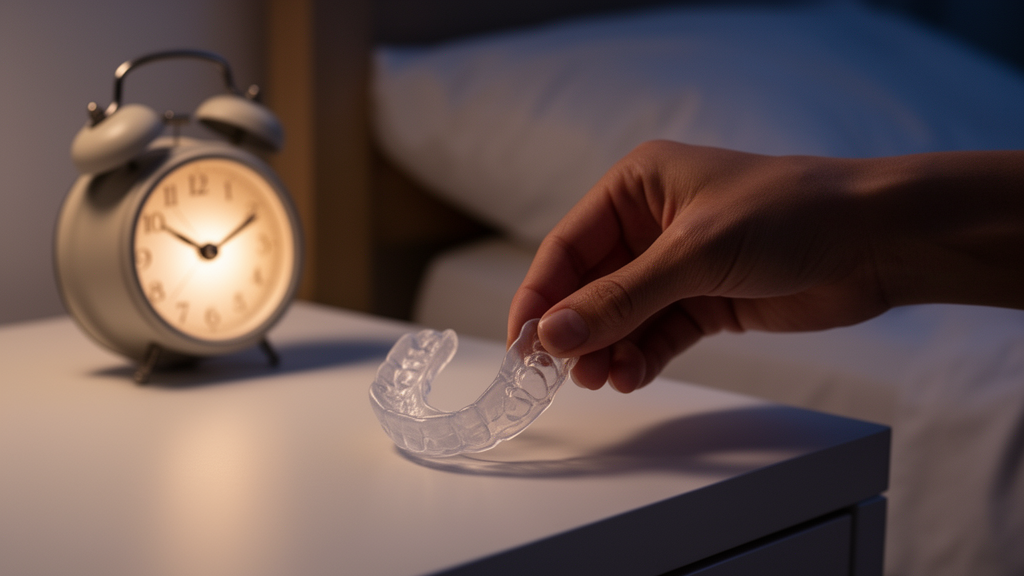
Obstructive sleep apnea affects hundreds of millions of people worldwide and is driven by the repeated collapse of the upper airway during sleep, fragmenting sleep, starving the body of oxygen, and raising the long-term risk of hypertension, cardiovascular disease, stroke, and daytime cognitive impairment. Oral appliances work by holding the lower jaw, and with it the tongue and surrounding soft tissues, in a forward position, mechanically propping open the pharyngeal airway. They are recommended by clinical practice guidelines, including the American Academy of Sleep Medicine’s 2015 update, as a first-line option for patients with mild to moderate apnea and for those with severe disease who cannot tolerate or decline CPAP.
The appeal of these devices is obvious. They are small, silent, portable, and free of the pressurized airflow that drives many patients away from CPAP. But that same convenience creates a measurement problem. A CPAP machine is, in effect, its own compliance monitor, logging pressure, flow, and mask-on time every night. A mandibular advancement device is a piece of molded acrylic and hardware that sits silently in the mouth, generating no data of its own unless it is fitted with embedded sensors. Historically, clinicians have therefore relied on what patients tell them, and self-report is notoriously unreliable in sleep medicine, with patients consistently overestimating how often and how long they use their devices.
The Zhang pilot study highlighted in the commentary tackled this gap by comparing objective adherence data with subjective patient reports over a full year of therapy, an unusually long follow-up window for this kind of device monitoring. The commentary’s authors use those findings to make a broader conceptual point: adherence to oral appliance therapy is not a single number but a multidimensional behavior. It includes how many nights per week the device is worn, how many hours per night, whether it is worn consistently across the entire sleep period or removed partway through the night, and whether the device’s titration, the gradual forward adjustment of the jaw, has actually been optimized to control the patient’s apnea.
That last dimension may be the most underappreciated. A patient can wear a mandibular advancement device faithfully every night for eight hours and still have untreated, or undertreated, sleep apnea if the jaw has not been advanced far enough to keep the airway open during rapid eye movement sleep, when muscles relax most completely and airway collapse is most likely. Conversely, a patient who wears the device fewer hours but at an effective titration position may derive more genuine protection. Hours per night, in other words, is a proxy for exposure, not for efficacy, and conflating the two risks mislabeling adherent-but-undertreated patients as successfully managed.
The timing of this rethinking is significant because the therapeutic landscape of obstructive sleep apnea is changing rapidly. The field has moved decisively toward precision or endophenotype-based approaches, as reflected in a 2025 American Thoracic Society research statement on translating apnea subtyping into clinical practice. Pharmaceutical options have arrived as well: the GLP-1 receptor agonist tirzepatide demonstrated meaningful reductions in apnea severity in obese patients in a landmark 2024 New England Journal of Medicine trial, and a combination therapy of aroxybutynin and atomoxetine, known as AD109, completed a randomized phase 3 trial targeting the neural control of upper airway tone. In a world of tailored, multimodal therapy, the commentary argues, a blunt nightly-hours metric for oral appliances looks increasingly anachronistic.
Technology is also converging on the problem. Digital dentistry workflows, including intraoral scanning and computer-aided design and fabrication of custom devices, have been shown in pilot studies to produce mandibular advancement devices with comparable or improved usability compared with conventional fabrication, and they open the door to embedded sensors that log temperature, movement, and wear time objectively. The commentary situates these developments within a broader vision of combination therapy, in which oral appliances are paired with positional therapy, weight management, pharmacotherapy, or even surgically fabricated hybrid devices, each component monitored on its own terms rather than collapsed into a single adherence statistic.
The clinical implications are concrete. If adherence is multidimensional, then follow-up visits should ask not only how often the device is in the mouth but whether the patient wakes refreshed, whether a bed partner still hears snoring, and whether objective testing shows the apnea hypopnea index actually falling into the treated range. Sleep physicians and dentists, who jointly manage most oral appliance patients, need shared frameworks for distinguishing a device that is worn but ineffective from one that is effective but inconsistently worn, because the interventions differ completely: the first calls for retitration or combination therapy, the second for adherence support and troubleshooting discomfort, dry mouth, dental changes, or temporomandibular symptoms that drive patients to quietly abandon the device.
What makes the commentary resonate beyond the sleep clinic is its challenge to a habit of measurement that extends across medicine. Adherence metrics are convenient because they are countable, but countable is not the same as meaningful. For the millions of patients who choose a mouthguard over a mask, the question that ultimately matters is not how many hours the device spent in the mouth but whether the airway stayed open, the oxygen stayed up, and the long-term health risks of untreated apnea actually receded. Reframing adherence around those outcomes, the authors suggest, is the necessary next step for a therapy whose popularity continues to grow while the way it is judged has barely evolved since the first practice parameters were written three decades ago.
Subject of Research: Redefining adherence measurement for oral appliance therapy in obstructive sleep apnea
Article Title: Beyond hours per night: rethinking oral appliance adherence in OSA
Article References: Beyond hours per night: rethinking oral appliance adherence in OSA. (n.d.). https://doi.org/10.1007/s44470-026-00207-3
Image Credits: AI Generated
DOI: 10.1007/s44470-026-00207-3
Keywords: obstructive sleep apnea, oral appliance therapy, mandibular advancement device, adherence, CPAP, sleep medicine, titration, digital dentistry, tirzepatide, precision medicine, Journal of Clinical Sleep Medicine, Beyond
News Source: Ophelia Keating. (October 14, 2026). Sleep Apnea Mouthguards: Why Hours Worn Per Night No Longer Tell the Whole Story. Scienmag.