• HOME
  • NEWS
  • EXPLORE
    • CAREER
      • Companies
      • Jobs
    • EVENTS
    • iGEM
      • News
      • Team
    • PHOTOS
    • VIDEO
    • WIKI
  • BLOG
  • COMMUNITY
    • FACEBOOK
    • INSTAGRAM
    • TWITTER
Wednesday, May 13, 2026
BIOENGINEER.ORG
No Result
View All Result
  • Login
  • HOME
  • NEWS
  • EXPLORE
    • CAREER
      • Companies
      • Jobs
        • Lecturer
        • PhD Studentship
        • Postdoc
        • Research Assistant
    • EVENTS
    • iGEM
      • News
      • Team
    • PHOTOS
    • VIDEO
    • WIKI
  • BLOG
  • COMMUNITY
    • FACEBOOK
    • INSTAGRAM
    • TWITTER
  • HOME
  • NEWS
  • EXPLORE
    • CAREER
      • Companies
      • Jobs
        • Lecturer
        • PhD Studentship
        • Postdoc
        • Research Assistant
    • EVENTS
    • iGEM
      • News
      • Team
    • PHOTOS
    • VIDEO
    • WIKI
  • BLOG
  • COMMUNITY
    • FACEBOOK
    • INSTAGRAM
    • TWITTER
No Result
View All Result
Bioengineer.org
No Result
View All Result
Home NEWS Science News Biology

Skull scans tell tale of how world's first dogs caught their prey

Bioengineer by Bioengineer
January 11, 2019
in Biology
Reading Time: 2 mins read
0
IMAGE
Share on FacebookShare on TwitterShare on LinkedinShare on RedditShare on Telegram

IMAGE

Credit: Julia Schwab


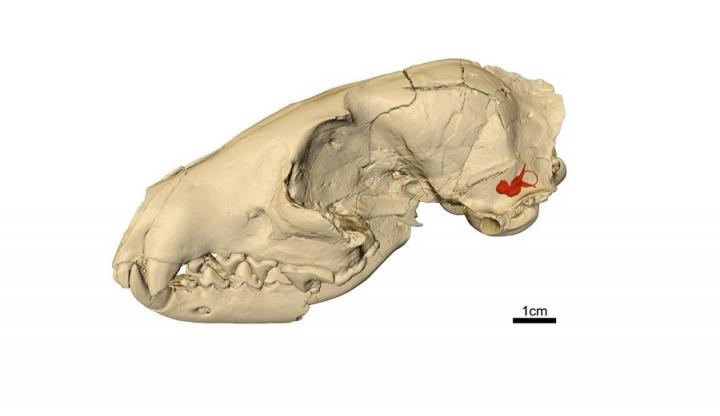
Analysis of the skulls of lions, wolves and hyenas has helped scientists uncover how prehistoric dogs hunted 40 million years ago.

A study has revealed that the first species of dog – called Hesperocyon gregarius – pounced on its prey in the same way that many species, including foxes and coyotes, do today.

The findings also show that the largest dog species ever to live – known as Epicyon haydeni – hunted in a similar way. The animals – which lived from 16 until seven million years ago – could grow to the size of a grizzly bear.

Comparisons between computerised scans of fossils and modern animals have shed light on the hunting methods used by prehistoric members of a group of mammals known as carnivorans. These include modern-day foxes, wolves, cougars and leopards.

Scientists at the Universities of Edinburgh and Vienna used the scans to create digital models of the inner ears of 36 types of carnivoran, including six extinct species.

The team found that the size of three bony canals in the inner ear – the organ that controls balance and hearing – changed over millions of years as animals adopted different hunting styles.

Faster predators – such as cheetahs, lions and wolves – developed large ear canals that enable them to keep their head and vision stable while ambushing or chasing prey at speed, the team says.

Their findings reveal that inner ear structure indicates whether a species descended from dog-like animals or belongs to one of four families of animals resembling cats. A distinctive angle between two parts of the inner ear is much larger in dog-like animals, the team found.

The study is based on research carried out by Julia Schwab, a current PhD student at the University of Edinburgh, during her MSc studies at the University of Vienna, Austria. It is published in the journal Scientific Reports.

Ms Schwab, based in the University of Edinburgh’s School of GeoSciences, said: “For me, the inner ear is the most interesting organ in the body, as it offers amazing insights into ancient animals and how they lived. The first dog and the largest-ever dog are such fascinating specimens to study, as nothing like them exists in the world today.”

###

Media Contact
Corin Campbell
[email protected]
44-131-650-6382

Related Journal Article

http://dx.doi.org/10.1038/s41598-018-37106-4

Tags: Earth SciencePaleontology
Share12Tweet8Share2ShareShareShare2

Related Posts

Cutting-Edge Genomic Techniques Reveal Unexpected Cellular Changes in the Aging Brain — Biology

Cutting-Edge Genomic Techniques Reveal Unexpected Cellular Changes in the Aging Brain

May 12, 2026
USC Researchers Initiate Study on the Most Advanced Lab-Grown Kidney Structures — Biology

USC Researchers Initiate Study on the Most Advanced Lab-Grown Kidney Structures

May 12, 2026

Childbirth in Humans Is Not Uniquely Challenging Among Mammals, New Research Shows

May 12, 2026

From Complexity to Clarity: Unraveling the “Topological Laws” Governing Cell Death

May 11, 2026
Please login to join discussion

POPULAR NEWS

  • Research Indicates Potential Connection Between Prenatal Medication Exposure and Elevated Autism Risk

    842 shares
    Share 337 Tweet 211
  • New Study Reveals Plants Can Detect the Sound of Rain

    728 shares
    Share 290 Tweet 182
  • Salmonella Haem Blocks Macrophages, Boosts Infection

    62 shares
    Share 25 Tweet 16
  • Breastmilk Balances E. coli and Beneficial Bacteria in Infant Gut Microbiomes

    57 shares
    Share 23 Tweet 14

About

We bring you the latest biotechnology news from best research centers and universities around the world. Check our website.

Follow us

Recent News

Nanoplatform Combats Skin Inflammation via RNA, ROS

PSU-Led Team Advances Promising New Drug Candidate for Malaria Control and Eradication

Study Finds Increased Psychosis Risk in High-Risk Groups with Combined Cannabis and Tobacco Use

Subscribe to Blog via Email

Enter your email address to subscribe to this blog and receive notifications of new posts by email.

Join 82 other subscribers
  • Contact Us

Bioengineer.org © Copyright 2023 All Rights Reserved.

Welcome Back!

Login to your account below

Forgotten Password?

Retrieve your password

Please enter your username or email address to reset your password.

Log In
No Result
View All Result
  • Homepages
    • Home Page 1
    • Home Page 2
  • News
  • National
  • Business
  • Health
  • Lifestyle
  • Science

Bioengineer.org © Copyright 2023 All Rights Reserved.