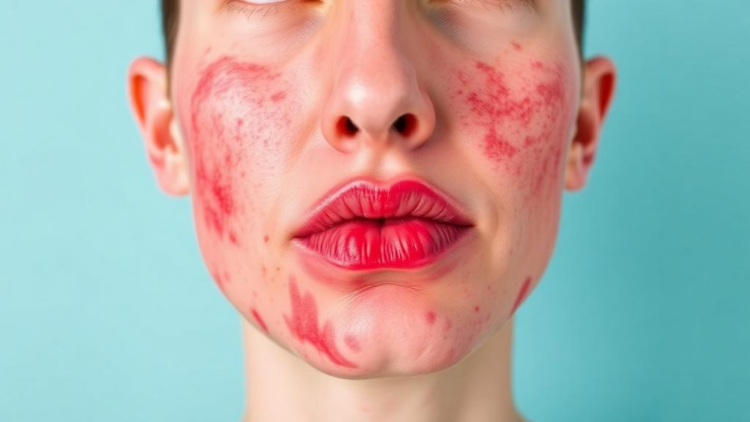
Immune checkpoint inhibitors have transformed modern oncology, unleashing the immune system against tumors that once defied surgery, chemotherapy, and radiation. Yet the same drugs that awaken T cells to destroy cancer cells can also turn that firepower against healthy tissue. A new multi-disciplinary expert consensus, published in Clinical Cancer Bulletin, offers the most systematic framework to date for managing cutaneous immune-related adverse events, the earliest and most common toxicities of checkpoint blockade, and provides clinicians with detailed guidance on when skin symptoms should force a pause or a permanent stop to cancer treatment.
The scale of the problem is considerable. According to a systematic review of cases reported between 2010 and 2020, cutaneous immune-related adverse events affect roughly 30 to 50 percent of patients receiving immune checkpoint inhibitors. The risk profile differs sharply by drug class. CTLA-4 inhibitors such as ipilimumab produce higher rates of pruritus, at 30 to 40 percent, and maculopapular rash, at 20 to 30 percent, compared with 10 to 20 percent for PD-1 and PD-L1 inhibitors, which more often trigger lichenoid reactions or vitiligo. Combination therapy with ipilimumab and nivolumab amplifies both incidence, reaching 60 to 70 percent, and severity, with rashes appearing earlier, at a median of two to four weeks versus six to twelve weeks for monotherapy.
Timing itself carries diagnostic weight. The consensus notes that cutaneous events can emerge anywhere from the start of therapy to 150 weeks afterward, and even after immunotherapy has been discontinued. Severe reactions such as erythema multiforme and toxic epidermal necrolysis tend to appear early, with a median onset near 9.5 weeks, while lichenoid eruptions and bullous pemphigoid-like disease surface later, at median onsets of 21.6 and 21.5 weeks respectively. The expert panel therefore recommends routine skin examinations every two to three weeks during the first three months of treatment, the peak period of onset, followed by monthly monitoring for high-risk patients, with all findings graded using the CTCAE v5.0 standard.
At the mechanistic level, the toxicities trace back to the biology of immune regulation. Under normal conditions, CTLA-4 restrains T-cell activation during thymic maturation, while the PD-1 pathway maintains peripheral tolerance to self-reactive T cells. When checkpoint inhibitors block these brakes, antitumor responses intensify, but self-reactive T-cell clones can proliferate concurrently, triggering autoimmune reactions. A second mechanism involves antigen cross-reactivity: in metastatic melanoma, tumor cells and epidermal melanocytes share common antigens, so an immune response aimed at the cancer can also destroy pigment cells, producing vitiligo-like reactions. Pre-existing skin damage may expose self-antigens, PD-1 blockade can activate B cells to generate autoantibodies, and genetic predisposition plays a role, with the HLA-DRB1*11:01 allele significantly associated with pruritus.
The consensus classifies cutaneous events into two broad groups: newly emerging conditions and exacerbations of pre-existing skin disease. Psoriasiform eruptions rank among the most common, arising either de novo or through flares of prior psoriasis. Histopathologically, plaque-type lesions typically show hyperkeratosis with parakeratosis, acanthosis, a diminished granular layer, and perivascular lymphocytic infiltrates with neutrophils, including Munro microabscesses or Kogoj spongiform pustules, although some patients lack these classic features. Treatment is tiered by severity: topical corticosteroids or vitamin D3 analogs for mild to moderate disease, narrowband UVB phototherapy and systemic agents such as methotrexate, retinoids, or the oral PDE-4 inhibitor apremilast for more extensive cases, and biologic agents for severe disease when tumor status is stable and an oncologist has carefully evaluated the risk.
Eczematous eruptions, more frequent with anti-CTLA-4 therapy, present acutely with erythema, papules, vesicles, erosion, and crusting, and chronically with lichenification and hyperpigmentation. Management follows the SCORAD severity index, beginning with cleansing and moisturizing for all patients, topical corticosteroids or calcineurin inhibitors with oral antihistamines for mild cases, and systemic agents such as hydroxychloroquine, thalidomide, short-term corticosteroids, dupilumab, or phototherapy for moderate to severe disease. Lichenoid eruptions, in contrast, are more strongly linked to PD-1 and PD-L1 inhibitors, favor the dorsum of the hands, extensor limb surfaces, and lower lip, and show vacuolar interface dermatitis with a band-like lymphohistiocytic infiltrate on biopsy, sometimes with eosinophils in immunotherapy-induced cases. Topical anti-inflammatory agents suffice for mild disease, while thalidomide, hydroxychloroquine, acitretin, or systemic corticosteroids serve more severe presentations.
The most dangerous end of the spectrum demands immediate action. Stevens-Johnson syndrome and toxic epidermal necrolysis produce rapidly coalescing edematous erythema, targetoid lesions, blisters, and epidermal detachment that creates a scalded appearance, frequently involving oral, ocular, and genital mucosa. For involvement of ten percent or less of body surface area without significant systemic symptoms, the consensus recommends temporary suspension of immunotherapy plus systemic corticosteroids at 0.5 to 1 mg per kilogram per day. Beyond that threshold, or with mucosal involvement, immediate permanent cessation, hospitalization, higher-dose methylprednisolone at 1 to 2 mg per kilogram per day, and intravenous immunoglobulin or cyclosporine in severe cases are required. Erythroderma, defined as erythema over more than 90 percent of body surface area, likewise warrants immediate discontinuation, typically permanent when hemodynamic instability or secondary infection complicates the picture.
Bullous pemphigoid-like eruptions, predominantly induced by anti-PD-1 and PD-L1 agents, bring tense blisters on erythematous skin and intense pruritus, and some patients develop non-bullous variants with pruritic erythema, nodules, and erosions that require immunofluorescence and serologic testing for anti-BP180 or anti-BP230 antibodies to confirm. These eruptions force permanent discontinuation of immunotherapy in 20 to 50 percent of affected patients, making early diagnosis critical. Dermatomyositis presents a particular diagnostic challenge because cancer itself predisposes patients to the condition; the panel recommends baseline dermatologic evaluation before immunotherapy and early testing for anti-TIF1γ antibodies, which correlate with severe disease and demand vigilance for rapidly progressive interstitial lung disease. In anti-TIF1γ-positive cases, immediate high-dose corticosteroids and comprehensive cancer screening are advised. Notably, vitiligo, which favors sun-exposed sites and appears most often in melanoma patients, is associated with improved oncological outcomes and should not prompt discontinuation.
Perhaps the consensus’s most distinctive contribution is its decision-making philosophy, distilled as the Two-Look and Two-Don’t principle: look at the primary rash morphology and look for visceral involvement, but do not discontinue immunotherapy prematurely and do not use rash extent as the sole criterion for stopping treatment. Eczema covering more than 30 percent of body surface area without organ involvement can often be managed without interrupting therapy, whereas Stevens-Johnson syndrome affecting under five percent still warrants immediate cessation because of progression risk. The panel also stresses that immune-related adverse events rarely respect organ boundaries. Myocarditis, though rare, carries the highest mortality of any checkpoint toxicity, with a median onset near six weeks. Pneumonitis accounts for roughly 35 to 40 percent of fatal immune-related events, and endocrine toxicities affect about ten percent of patients, requiring hormonal monitoring every four to six weeks. Multidisciplinary team assessment is recommended for all moderate to severe cutaneous events or multi-organ involvement.
Looking forward, the authors acknowledge that the precise mechanisms distinguishing these reactions from classic drug-induced dermatitis remain unresolved, and they call for early warning systems and screening strategies to reduce skin damage and treatment interruptions. They also flag a therapeutic dilemma: while no high-quality evidence shows that corticosteroids used for cutaneous events undermine immunotherapy efficacy, some data suggest high-dose steroids given for other adverse events may shorten progression-free survival. That concern is driving interest in non-immunosuppressive biologics such as dupilumab as safer alternatives for severe skin toxicity. For now, the consensus delivers a clear message to oncologists and dermatologists alike: recognize rashes early, grade them accurately, examine the whole patient, and reserve treatment discontinuation for the situations where it is genuinely lifesaving.
Subject of Research: Management of cutaneous immune-related adverse events caused by immune checkpoint inhibitor cancer therapy
Article Title: Multi-disciplinary expert consensus on cutaneous adverse events caused by immune checkpoint inhibitors (2025)
Article References: Sun, Y., Huang, J., Hu, F., Xue, R., Chang, X., Cheng, L., Cui, Y., Jiang, J., Ou, X., Deng, D., Li, X., Liang, Y., Liu, H., Long, H., Lv, X., Qiao, J., Tang, H., Wang, W., Xia, Y., … Yang, J. (2025). Multi-disciplinary expert consensus on cutaneous adverse events caused by immune checkpoint inhibitors (2025). Clinical Cancer Bulletin, 4(1), Article 16. https://doi.org/10.1007/s44272-025-00043-1
Image Credits: AI Generated
DOI: 10.1007/s44272-025-00043-1
Keywords: immune checkpoint inhibitors, cutaneous adverse events, cancer immunotherapy, dermatology, PD-1 inhibitors, CTLA-4 inhibitors, toxic epidermal necrolysis, bullous pemphigoid, dermatomyositis, psoriasiform eruptions, multidisciplinary consensus, drug toxicity
Cite Scienmag News
APA MLA Chicago
Nathaniel Bowman. (October 1, 2026). Skin Rashes From Cancer Immunotherapy: New Expert Consensus Maps Diagnosis and Treatment. Scienmag. https://scienmag.com/skin-rashes-from-cancer-immunotherapy-new-expert-consensus-maps-diagnosis-and-treatment/
Nathaniel Bowman. “Skin Rashes From Cancer Immunotherapy: New Expert Consensus Maps Diagnosis and Treatment.” Scienmag, 1 October 2026, https://scienmag.com/skin-rashes-from-cancer-immunotherapy-new-expert-consensus-maps-diagnosis-and-treatment/. Accessed 1 October 2026.
Nathaniel Bowman. “Skin Rashes From Cancer Immunotherapy: New Expert Consensus Maps Diagnosis and Treatment.” Scienmag. October 1, 2026. https://scienmag.com/skin-rashes-from-cancer-immunotherapy-new-expert-consensus-maps-diagnosis-and-treatment/
Copy citation Download RIS
Tags: bullous pemphigoidcancer immunotherapycancer immunotherapy skin toxicityCTLA-4 inhibitorscutaneous adverse eventscutaneous toxicity in oncologydermatologic side effects of cancer treatmentdermatologydermatomyositisdrug toxicityimmune checkpoint blockade skin reactionsimmune checkpoint inhibitor adverse eventsimmune checkpoint inhibitorsimmune system side effects from checkpoint inhibitorsimmune-related adverse event treatment guidelinesmanagement of immune-related skin rashesmelanoma and skin toxicitymultidisciplinary approach to skin toxicitiesmultidisciplinary consensusPD-1 inhibitorspsoriasiform eruptionsskin rash diagnosis in immunotherapytoxic epidermal necrolysistreatment pauses for immune-related skin symptoms