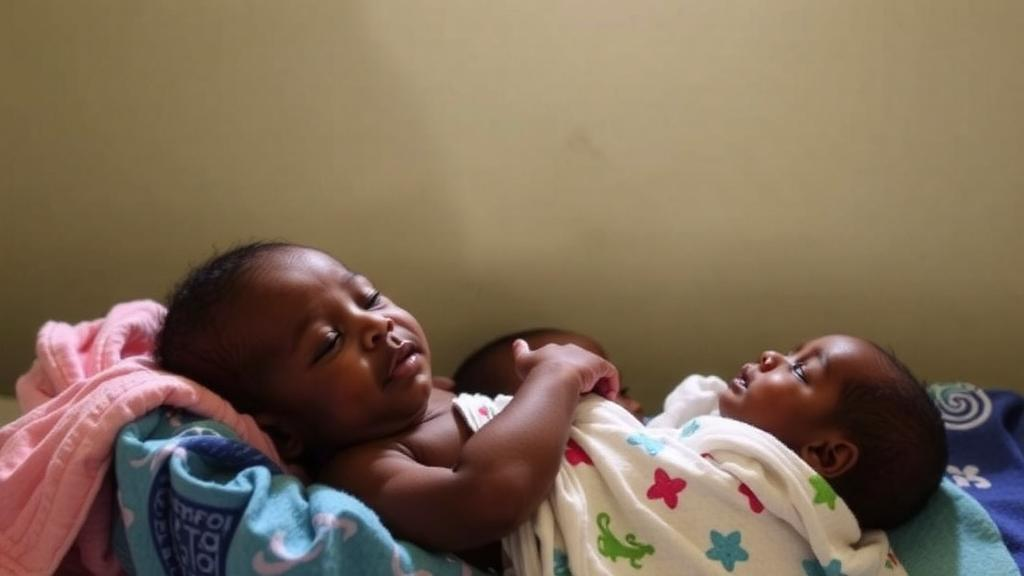
Neonatal sepsis, a life-threatening bloodstream infection that strikes newborns within their first weeks of life, remains one of the most formidable killers in global child health. In Ethiopia, where 29 out of every 1,000 babies do not survive their first month, the condition represents a daily emergency for neonatal intensive care units. A new retrospective study conducted at Metu Karl Comprehensive Specialized Hospital (MKCSH) in Southwest Ethiopia offers a rare, granular look at how quickly infected newborns recover and which clinical factors drag out their hospital stay, findings that could sharpen treatment protocols across resource-limited settings.
The research team, led by Abeya Fufa Worke of Mattu University together with colleagues from the university’s departments of midwifery and nursing, reviewed the medical records of 512 newborns admitted with sepsis to the hospital’s Neonatal Intensive Care Unit between January 2022 and December 2023. The two-year window captured a broad cross-section of cases in a region where specialized neonatal care is scarce and every day of hospitalization carries both clinical and economic weight for families.
The headline result is strikingly encouraging. Of the 512 neonates included in the final analysis, 497, or 95.2 percent, recovered from their infection. The median time to recovery was just six days, with an interquartile range of five to seven and a half days, meaning half of the surviving newborns were well enough to leave intensive care within roughly a week of admission. For a hospital operating in a resource-constrained corner of Southwest Ethiopia, those numbers suggest that the NICU’s standard care pathway is working.
But the study’s deeper contribution lies in its statistical machinery. Rather than simply comparing averages, the researchers deployed survival analysis techniques, beginning with Kaplan-Meier curves to visualize how recovery probability changed day by day, and then fitting a Weibull regression model to identify which clinical characteristics independently accelerated or delayed recovery. The Weibull distribution, a flexible parametric approach, is particularly well suited to time-to-event data like hospital recovery, where the hazard of recovery can rise or fall over the course of illness. Model selection was guided by the Akaike and Bayesian Information Criteria, and the team checked for multicollinearity using variance inflation factors, a level of methodological rigor that strengthens confidence in the final estimates.
The regression model surfaced a cluster of clinical predictors associated with slower recovery. Newborns presenting with leukopenia, an abnormally low white blood cell count, took longer to recover, a biologically plausible finding since a depleted immune cell arsenal limits the body’s capacity to clear infection. Respiratory distress and apnea, the latter referring to pauses in breathing that are common and dangerous in septic newborns, also predicted prolonged recovery, as did poor feeding, which can compound weakness and delay the return to normal growth.
Two additional factors stood out. Late-onset sepsis, defined as infection occurring between the eighth and twenty-eighth days of life, was linked to slower recovery compared with early-onset disease acquired within the first week. And newborns who received a clinical diagnosis of meningitis, an infection of the membranes surrounding the brain, faced a markedly longer road back to health. Meningitis in the neonatal period is notoriously difficult to treat, as antibiotics must penetrate the blood-brain barrier, and it often signals a more severe or disseminated infection.
The distinction between early-onset and late-onset sepsis carries practical implications. Early-onset infections typically stem from organisms acquired from the mother during delivery, while late-onset cases more often arise from the hospital or community environment. The finding that late-onset disease predicts slower recovery underscores the importance of infection prevention measures within NICUs themselves, from rigorous hand hygiene to careful management of invasive devices, as well as prompt recognition of illness in babies who have already gone home.
For clinicians working under the World Health Organization’s Integrated Management of Neonatal and Childhood Illness framework, the study offers a practical triage signal. A newborn with sepsis who also shows respiratory distress, apnea, poor feeding, or low white blood cell counts is not just sicker on arrival but statistically likely to occupy a NICU bed longer. Anticipating that trajectory could guide earlier escalation of care, closer monitoring, and more proactive nutritional support, potentially shaving critical days off recovery time.
The authors are careful to frame the findings within the limits of a retrospective, record-based design. Because the analysis relied on de-identified medical records rather than prospective follow-up, the predictors reflect associations observed in routine clinical documentation, and the diagnosis of meningitis was made clinically rather than confirmed by lumbar puncture in every case. The ethics committee of Mattu University’s Institutional Health Research Ethics Review Committee approved the study under the Declaration of Helsinki and formally waived individual informed consent given the retrospective use of de-identified data.
Even with those caveats, the study delivers a message of cautious optimism. A 95.2 percent recovery rate and a median stay of six days indicate that effective neonatal sepsis care is achievable far from the well-resourced hospitals of high-income countries. The path forward, the researchers conclude, lies in targeting the specific complications that slow recovery, particularly respiratory problems, meningitis, and feeding difficulties. For the thousands of Ethiopian families whose newborns face this infection each year, closing that gap could mean the difference between a one-week scare and a far longer, more dangerous ordeal.
Subject of Research: Time to recovery and predictors of neonatal sepsis in a Southwest Ethiopian neonatal intensive care unit
Article Title: Time to recovery and predictors of neonatal sepsis in Southwest Ethiopia, 2024
Article References: Balcha, M. L., Worke, A. F., Tesfaye, H., & Bidira, K. (2026). Time to recovery and predictors of neonatal sepsis in Southwest Ethiopia, 2024. BMC Infectious Diseases. https://doi.org/10.1186/s12879-026-14576-w
Image Credits: AI Generated
DOI: 10.1186/s12879-026-14576-w
Keywords: neonatal sepsis, Ethiopia, recovery time, survival analysis, Weibull regression, Kaplan-Meier, NICU, leukopenia, apnea, respiratory distress, meningitis, late-onset sepsis
News Source: Harold Sullivan. (October 13, 2026). Six Days to Recovery: What Slows Newborns Fighting Sepsis in Ethiopia. Scienmag.