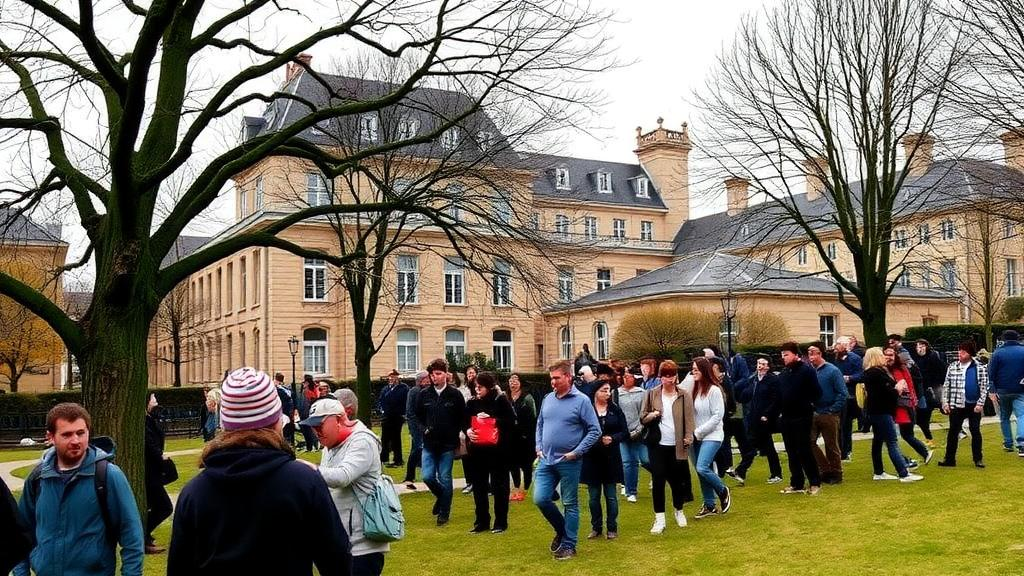
When the CONSTANCES cohort was launched in 2012, its architects set out to build something France had never had before: a nationwide laboratory of living people, large enough and representative enough to answer questions about how work, environment, social circumstances and biology combine to shape health. A decade on, the team behind the project has published a comprehensive account of what the infrastructure has achieved, and the numbers are striking. The cohort now comprises 219,144 adults aged 18 to 69 at enrolment, drawn from a representative sample of the French population, and it has grown into one of the most versatile epidemiological resources in Europe.
The design of CONSTANCES reflects a deliberate response to a persistent problem in population research: participation bias. Invitations were sent to more than 3.8 million eligible residents, and the participation rate was just 7.6 percent, a figure that would ordinarily raise serious concerns about whether findings could be generalized. The team’s solution was twofold. First, they used unequal probability sampling to over-represent groups that typically decline survey invitations, including men, young people and people of lower socioeconomic status. Second, they constructed a passive reference cohort of 435,522 non-participants who did not explicitly refuse data linkage, allowing researchers to calibrate prevalence estimates from the active cohort against a truly representative baseline. This statistical architecture, based on weighting methods derived from national administrative databases, is what allows CONSTANCES to produce prevalence figures for the French population that are corrected for the effects of willingness to participate.
Recruitment took place through 21 nationally coordinated Health Examination Centers spread across mainland France, ensuring coverage of regions that together reflect the demographic mosaic of the country. At enrolment, every participant completed wide-ranging questionnaires and underwent an extensive health examination covering anthropometry, blood pressure, electrocardiography, vision, hearing and lung function. Blood and urine samples were collected and stored in a biobank that now holds nearly 1.4 million aliquots from 57,848 participants. Follow-up is designed to last for participants’ lifetimes and rests on three pillars: an annual self-administered questionnaire, a repeat health examination every four years, and continuous linkage with the National Health Data System and the National Retirement Insurance Fund. Because these administrative databases register data for every French resident, losses to follow-up are virtually nonexistent, a technical advantage that few cohorts anywhere can match.
The sheer volume of data collected is formidable. As of September 2025, the project had accumulated more than 1.16 million questionnaires and over 441,000 health examinations, including 145,497 cognitive and physical function assessments in participants aged 45 and older. Annual questionnaire participation averages about 70 percent, and fewer than 0.4 percent of participants have left the cohort since its inception. Beyond the original protocol, the database is continually enriched: algorithms have been developed to identify numerous diseases within the National Health Data System, and additional information is extracted from medical records where administrative codes fall short.
Two data assets make CONSTANCES almost unique among the world’s large cohorts. The first is occupational history. Around 210,000 complete job histories have been coded using French and international classification systems, representing roughly 700,000 professional episodes, likely one of the largest such databases in existence. These histories can be linked to job-exposure matrices covering biomechanical stressors, solvents, dusts, cleaning products and even SARS-CoV-2 exposure in the workplace, converting raw employment records into quantitative estimates of lifetime exposure to chemical, physical and psychosocial hazards. The second is residential history. Participants’ addresses are geocoded at enrolment and throughout follow-up, and for more than 80,000 participants the team has also collected and geocoded every address since birth. Linking these trajectories to spatialized databases yields estimates of lifetime exposure to fine particulate matter, black carbon, nitrogen dioxide, ozone, sulfur dioxide, airborne metals, drinking-water contaminants, ultraviolet and ionizing radiation, and neighborhood characteristics such as green space and access to care.
The scientific output has been substantial and diverse. More than 250 peer-reviewed publications have emerged from over 200 projects conducted by more than 160 French and international teams, and the annual publication rate has climbed from five papers in 2016 to 56 in 2024. In cardiovascular research, the cohort showed that snoring and daytime sleepiness predict incident hypertension, that a systolic threshold of 130 mmHg predicted 70 percent of new cases, and that a one-point reduction in body mass index cut hypertension risk by 16 percent regardless of starting blood pressure. CONSTANCES data also fed a pointed critique of the 2024 European Society of Cardiology blood pressure guidelines, suggesting the new thresholds could overestimate the prevalence of dangerously high blood pressure in the population.
Respiratory and metabolic findings have been equally consequential. The cohort estimated current asthma prevalence in French adults at 5.8 percent and revealed that half of symptomatic individuals with airflow limitation had undiagnosed obstructive lung disease. Occupational exposure to solvents, paints, disinfectants and cleaning products was linked to asthma, while weekly use of disinfecting wipes at home raised risk, with green and homemade products appearing safer. Long-term exposure to PM2.5, black carbon and nitrogen dioxide was associated with worse asthma symptoms and higher rhinitis prevalence, with black carbon emerging as a potentially especially harmful component. On the metabolic front, the cohort estimated that nonalcoholic fatty liver disease affects about 8.5 million adults in metropolitan France, with prevalence reaching nearly 80 percent among people with obesity, and showed that diabetes nearly quadruples the risk of advanced liver fibrosis in affected individuals.
The cohort’s mental health research has produced some of its most socially resonant results. Exploiting a 1959 French education reform that raised the minimum school-leaving age from 14 to 16 as a natural experiment, researchers found that longer schooling improved cognitive scores in men but, in women, led to higher levels of depressive symptoms. Studies of career trajectories showed that women who climbed into high-skilled jobs reported more depressive symptoms than those who stayed put, a quantitative portrait of the glass ceiling’s psychological toll, while men with histories of unemployment or temporary work faced elevated depression risk. Work on addiction documented how night shifts and weekend work undermine smoking cessation and drive alcohol and cannabis use, and a study of benzodiazepine prescriptions found a measurable increase in use among people under 50 after the November 2015 Paris terrorist attacks.
The COVID-19 pandemic tested the infrastructure in real time and delivered one of its most cited findings. Using blood samples banked between November 2019 and March 2020, researchers identified positive SARS-CoV-2 cases in France as early as November 2019, weeks before the country’s first officially recognized case on January 24, 2020. Six dedicated questionnaires were sent to participants between April 2020 and October 2021, and the resulting work, now exceeding 30 publications, has spanned seroprevalence, infection fatality rates, immunological mechanisms including the role of type I interferon autoantibodies in severe disease, the mental health consequences of lockdowns, and the risk factors and pathophysiology of long COVID.
For the international research community, CONSTANCES is explicitly open: legitimate researchers from any country can apply to use the data and biomaterials on any topic for which a sound project is proposed, subject to approval by the cohort’s International Scientific Committee and compliance with French data protection law under the GDPR. The cohort’s limitations are acknowledged candidly by its founders: hard-to-reach groups such as heavy drinkers and socially excluded people remain underrepresented, some subgroups are too small for reliable weighting, and even 220,000 participants lack the statistical power to study rare outcomes, which is why CONSTANCES participates in several French and European cohort consortia. Yet as participants age, the value of a cohort that began measuring cognition and physical function as early as age 45, and that holds complete lifetime residential and career histories for tens of thousands of people, will only grow. The next decade of French population health research, it appears, will be built on this foundation.
Subject of Research: The design, accomplishments and scientific output of the French nationwide population cohort CONSTANCES
Article Title: CONSTANCES, the French nationwide population cohort: major accomplishments
Article References: Zins, M., Goldberg, M., Kab, S., Siemiatycki, J., Duclos, A., Constances Team, Airagnes, G., Baylet, M., Bonnaud, S., Bouziri, H., Carole, C., Coeuret-Pellicer, M., Demir, B., Dia, N., Diouf, N. M., El Haddad, R., Gilbert, F., Gourmelen, J., Heyndrickx-Gallin, E., … Yvon, C. (2026). CONSTANCES, the French nationwide population cohort: major accomplishments. European Journal of Epidemiology. https://doi.org/10.1007/s10654-026-01463-6
Image Credits: AI Generated
DOI: 10.1007/s10654-026-01463-6
Keywords: CONSTANCES, epidemiology, population cohort, public health, occupational health, environmental exposure, air pollution, COVID-19, mental health, biobank, chronic disease, France
News Source: Phoebe Ingram. (October 13, 2026). France’s 220,000-Person Health Cohort Marks a Decade of Discoveries. Scienmag.