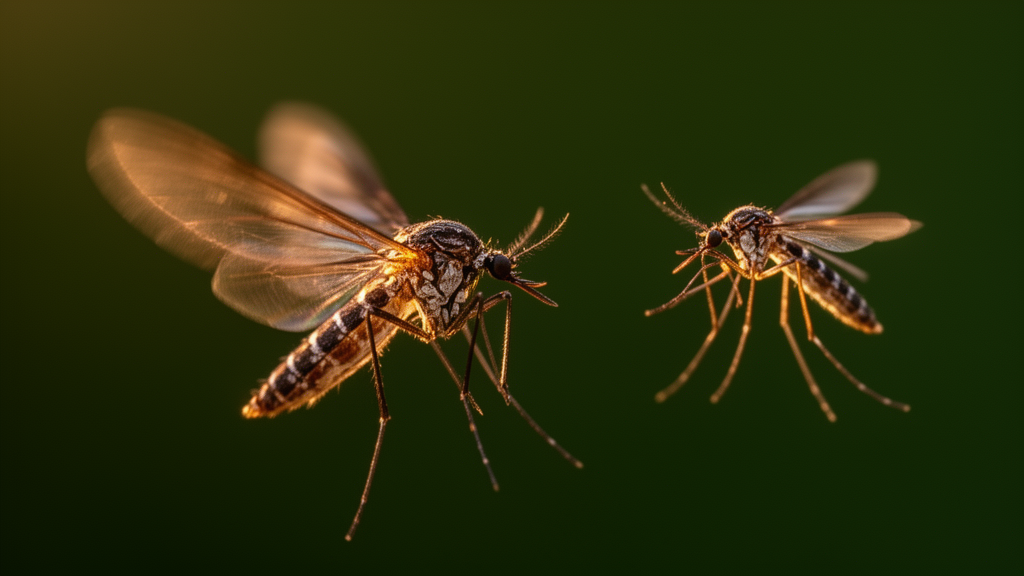
A new study published in PLOS Biology reports that a single male-specific gene, fruitless, is essential for this behavior. When the male-specific isoform of fruitless, known as fruM, was disrupted in the mosquitoes, mutant males showed a complete abolition of sound attraction behaviors, leaving them unable to locate females for mating.
In mutant males lacking FruM, the ear’s ability to amplify female flight sounds was severely disrupted. The mutant male ears also propagated frequency-specific, sound-evoked electrical signals at about one-sixth the magnitude seen in control males, significantly reducing the amount of auditory information relayed to the brain. In contrast, female mosquitoes do not show any sound attraction behaviors, a behavioral dimorphism that had been documented for almost a century without a known molecular explanation.
According to the study, fruitless plays a significant role in determining proper male peripheral hearing function underlying mating. Transcriptomic analyses of the mosquito ears identified essential hearing genes that sit under the transcriptional influence of FruM, whether through direct or indirect actions. These findings suggest that the gene shapes male-specific hearing cellular machineries that support the males’ attraction to female flight sounds, effectively commanding male-specific hearing behaviors involved in mating by directly controlling the earliest stages of auditory organ performance: sound amplification and acoustic signal detection.
The work demonstrates that FruM is essential for male-specific reproductive behaviors in mosquitoes, tying a sex-specific transcription factor to the very first steps of hearing rather than only to downstream brain circuits. Because the findings come from experiments in Aedes aegypti mosquitoes, they describe the molecular basis of a mosquito behavior rather than an immediate application, but the identification of the genes under FruM’s control may inform future research into how male mosquitoes find their mates.
Subject of Research: The role of the fruitless gene in male mosquito attraction to female flight sounds
Article Title: fruitless is essential for male Aedes aegypti mosquito attraction to female flight sounds
Article References: Loh, Y. M., Thornton, A. J., Loh, W., Lee, T.-T., Chen, W.-T., Xu, Y. Y. J., Yap, J. X., Tsuchiya, Y., Eberl, D. F., Su, M. P., & Kamikouchi, A. (2026). fruitless is essential for male Aedes aegypti mosquito attraction to female flight sounds. PLOS Biology, 24(10), e3004041. https://doi.org/10.1371/journal.pbio.3004041
Image Credits: AI Generated
DOI: 10.1371/journal.pbio.3004041
Keywords: Aedes aegypti, fruitless gene, mosquito mating, flight sounds, hearing, auditory organ, fruM, PLOS Biology, sound attraction, transcriptomics, male mosquitoes, fruitless
News Source: Juliet Wilcox. (October 27, 2026). Single Gene Drives Male Mosquitoes’ Attraction to Female Flight Sounds. Scienmag.