A single oral dose of Simparica Trio, the Zoetis chewable combining sarolaner, moxidectin and pyrantel, reduced circulating microfilariae by 99.9 percent within seven days in dogs naturally infected with the heartworm parasite Dirofilaria immitis, according to a randomised, blinded, negative-controlled laboratory study published in Parasites & Vectors.
The trial enrolled dogs that were naturally infected with heartworm and carried microfilariae in their bloodstream. Twelve dogs received one treatment at the recommended label dosage, delivering a minimum of 1.2 mg/kg sarolaner, 24 µg/kg moxidectin and 5 mg/kg pyrantel. Their microfilaria counts were compared weekly with those of an untreated control group of ten dogs over a period of 28 days.
Seven days after treatment, the reduction in microfilaria counts in the treated group relative to the control group was statistically significant, with a P value below 0.0001. Efficacy at that first weekly check was 99.9 percent based on geometric means and 98.9 percent based on arithmetic means.
That level of suppression did not fade quickly. The researchers report that efficacy remained at least 99.9 percent on geometric means, and at least 99.5 percent on arithmetic means, throughout the full 28-day observation window, with the difference from the untreated controls remaining significant at P < 0.0001 at each assessment.
No adverse events were recorded in the study, an observation the authors note alongside the efficacy figures.
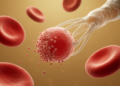
The biological target of the treatment, circulating microfilariae, is the life cycle stage that mosquitoes pick up when they bite an infected dog. The authors describe this stage as a continuous infection reservoir for mosquito vectors, which makes it central to transmission of heartworm between animals. Reducing microfilariae in the blood therefore limits the parasite material available to the insect vector.
The study’s context is a broader problem in canine parasitology. Heartworm disease remains a global threat despite multiple preventive options, and the emergence of macrocyclic lactone-resistant heartworm strains, particularly in the United States, has complicated prevention efforts. In that setting, the authors argue that targeting the microfilarial stage is a critical component of a comprehensive, multimodal prevention strategy rather than a stand-alone measure.
Simparica Trio’s activity is not limited to blood-stage parasites. The authors point to its effects on migrating L4 larval stages and its ability to kill mosquitoes, in combination with the microfilarial suppression demonstrated here, as the basis for describing the product as a multimodal, integrated approach to heartworm prevention in dogs.
The conclusion drawn from the data is deliberately narrow: a single oral dose of Simparica Trio was highly effective against circulating microfilariae in naturally infected dogs with D. immitis for one month. The findings come from a small laboratory study with 22 dogs in total, and the published version is an early-release, peer-reviewed accepted manuscript that remains subject to further edits before the final Version of Record appears.
Subject of Research: Efficacy of a single oral dose of Simparica Trio against circulating Dirofilaria immitis microfilariae in naturally infected dogs
Article Title: Efficacy of Simparica Trio® (sarolaner, moxidectin, and pyrantel chewable tablets) against circulating microfilariae in dogs infected with Dirofilaria immitis
Article References: Packianathan, R., Ahn, K. S., Shin, S., Cho, H., Kim, J., Rodriguez, J., & Geurden, T. (2026). Efficacy of Simparica Trio® (sarolaner, moxidectin, and pyrantel chewable tablets) against circulating microfilariae in dogs infected with Dirofilaria immitis. Parasites & Vectors, 19(1), Article 458. https://doi.org/10.1186/s13071-026-07733-2
Image Credits: AI Generated
DOI: 10.1186/s13071-026-07733-2
Keywords: Simparica Trio, Dirofilaria immitis, heartworm, microfilariae, dogs, sarolaner, moxidectin, pyrantel, macrocyclic lactone resistance, Parasites & Vectors, randomised controlled study, veterinary parasitology
News Source: William Thompson. (October 27, 2026). Single Dose of Simparica Trio Clears Heartworm Microfilariae in Dogs for a Month. Scienmag.