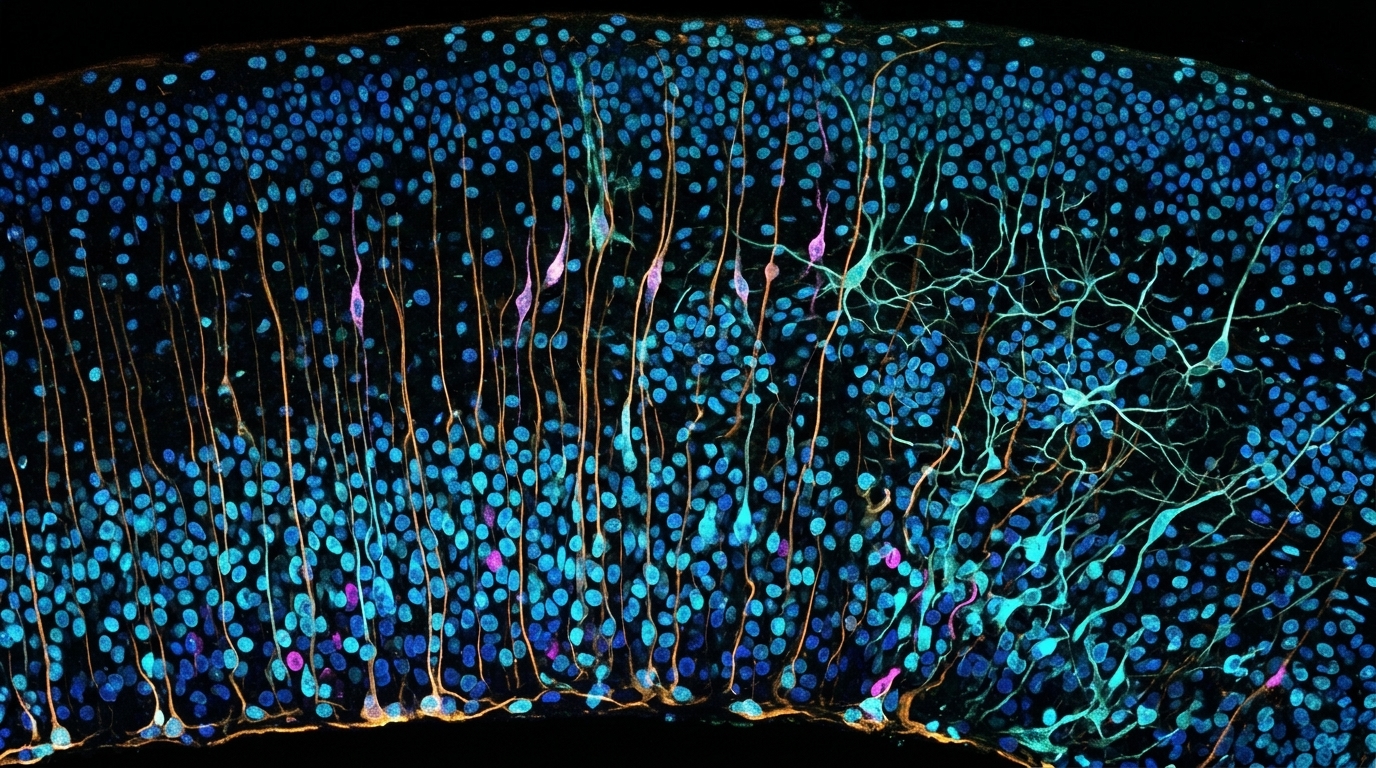
Researchers have profiled non-canonical DNA structures known as G-quadruplexes across individual postnatal mouse brain cells using single-cell CUT&Tag. The study demonstrates that G-quadruplex landscapes can be systematically characterized at single-cell resolution, revealing distinct chromatin features across developing neural lineages. By applying single-cell analytical pipelines typically used for single-cell RNA sequencing and chromatin accessibility assays, the investigators showed that non-canonical DNA structures vary across cell types in complex mammalian tissue.
Despite these biological roles, G4 structures had not previously been analyzed systematically across diverse mammalian tissues and specialized cell types.
To overcome this limitation, the authors developed and deployed G4 single-cell CUT&Tag, abbreviated as G4 scCUT&Tag. The resulting molecular profiles were then processed and explored using analytical frameworks established for single-cell transcriptomics and epigenomics.
Analysis of the single-cell profiles revealed marked G4 heterogeneity across the developing brain cell populations. The variation in G4 signal allowed the research team to distinguish distinct cell lineages directly from their non-canonical DNA structure profiles. Furthermore, the researchers established that a specific subset of lineage-specific genes possesses unique G4 configurations localized within their promoter regions, linking local DNA structural states to cell lineage identity.
To clarify how these structural features relate to cellular activity, the investigators integrated their G4 scCUT&Tag datasets with single-cell RNA sequencing gene expression profiles. The multi-omics integration employed two distinct computational strategies: a covariance-based method using canonical correlation analysis and a transfer learning-based approach. Combining these layers facilitated more accurate cell-type annotation across the heterogeneous postnatal brain populations.
In addition to confirming these correlations, the results established that G4 scCUT&Tag permits the detailed examination of G4 heterogeneity within intact, complex tissues. This experimental workflow confirms that single-cell G4 profiling can be integrated directly with other omics modalities to clarify epigenetic regulation.
The study establishes G4 scCUT&Tag as a systematic experimental framework for analyzing the cellular diversity of G4 landscapes in complex tissues. The authors conclude that this single-cell methodology provides a foundation for investigating how non-canonical DNA structures interact with gene regulation, chromatin architecture, and epigenetic organization during mammalian tissue development.
Subject of Research: G-quadruplex profiling in developing mouse brain cells using single-cell CUT&Tag
Article Title: G-quadruplex profiling using single-cell CUT&Tag offers insight into the epigenetic landscape of the developing mouse brain
Article References: Lyu, J., Hetey, S., Öztürk, M. A., Castelo-Branco, G., Bartosovic, M., & Elsässer, S. J. (2026). G-quadruplex profiling using single-cell CUT&Tag offers insight into the epigenetic landscape of the developing mouse brain. Genome Biology. https://doi.org/10.1186/s13059-026-04339-w
Image Credits: AI Generated
DOI: 10.1186/s13059-026-04339-w
Keywords: G-quadruplexes, G4 DNA, single-cell CUT&Tag, G4 scCUT&Tag, mouse brain development, epigenomics, postnatal brain, single-cell omics, scRNA-Seq integration, canonical correlation analysis, transfer learning, gene regulation, promoter G4s, cellular heterogeneity, chromatin organization, neurogenomics
News Source: Cassandra Pierce. (November 13, 2026). Single-Cell CUT&Tag Maps G-Quadruplex Landscapes Across Developing Mouse Brain Lineages. Scienmag.