• HOME
  • NEWS
  • EXPLORE
    • CAREER
      • Companies
      • Jobs
    • EVENTS
    • iGEM
      • News
      • Team
    • PHOTOS
    • VIDEO
    • WIKI
  • BLOG
  • COMMUNITY
    • FACEBOOK
    • INSTAGRAM
    • TWITTER
Thursday, December 4, 2025
BIOENGINEER.ORG
No Result
View All Result
  • Login
  • HOME
  • NEWS
  • EXPLORE
    • CAREER
      • Companies
      • Jobs
        • Lecturer
        • PhD Studentship
        • Postdoc
        • Research Assistant
    • EVENTS
    • iGEM
      • News
      • Team
    • PHOTOS
    • VIDEO
    • WIKI
  • BLOG
  • COMMUNITY
    • FACEBOOK
    • INSTAGRAM
    • TWITTER
  • HOME
  • NEWS
  • EXPLORE
    • CAREER
      • Companies
      • Jobs
        • Lecturer
        • PhD Studentship
        • Postdoc
        • Research Assistant
    • EVENTS
    • iGEM
      • News
      • Team
    • PHOTOS
    • VIDEO
    • WIKI
  • BLOG
  • COMMUNITY
    • FACEBOOK
    • INSTAGRAM
    • TWITTER
No Result
View All Result
Bioengineer.org
No Result
View All Result
Home NEWS Science News Chemistry

Simulation explores how insects glean compass direction from skylight

Bioengineer by Bioengineer
July 18, 2019
in Chemistry
Reading Time: 3 mins read
0
IMAGE
Share on FacebookShare on TwitterShare on LinkedinShare on RedditShare on Telegram

Neural mechanisms could inspire designs for new skylight-based navigation tools for robots
IMAGE

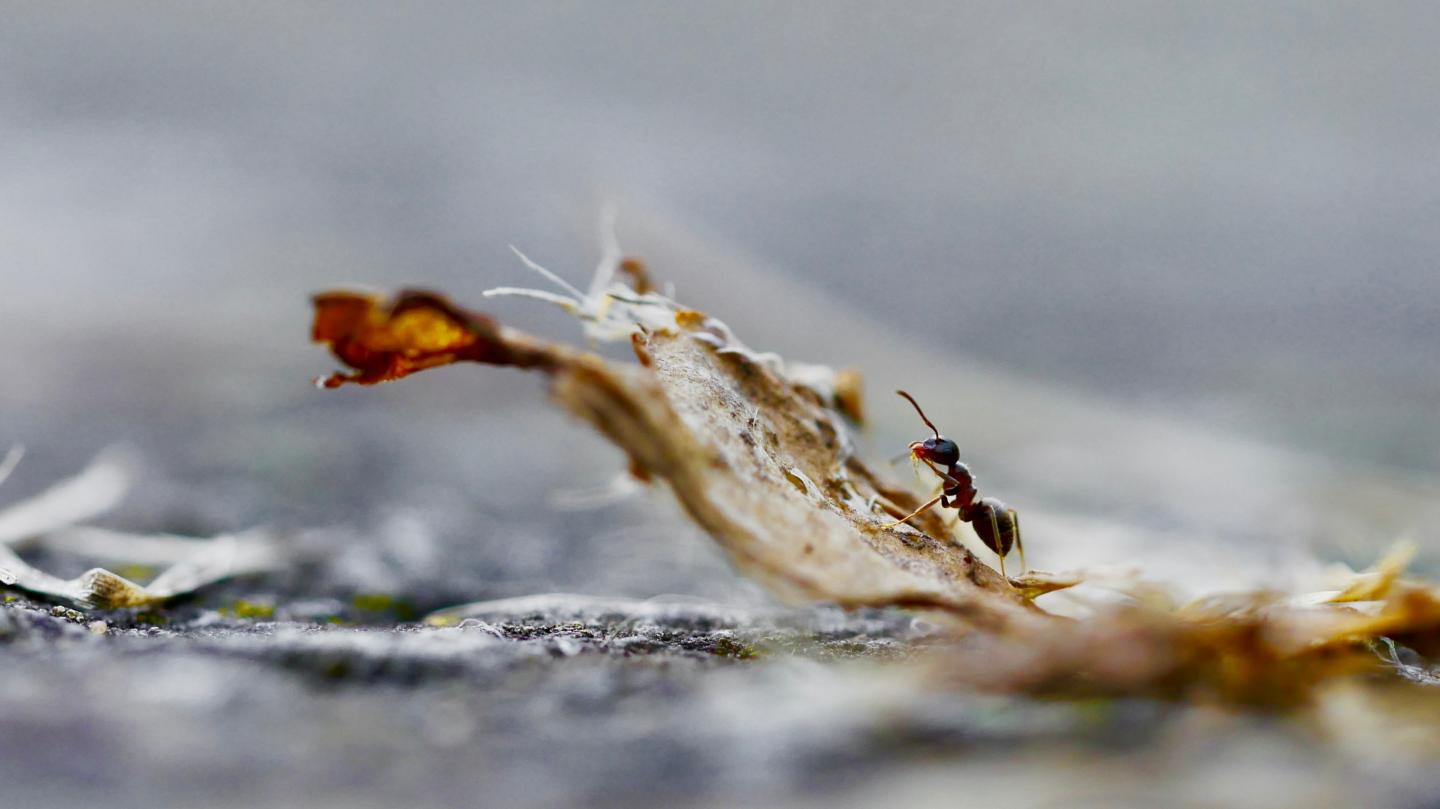
Credit: Christian Lischka, unsplash.

A computational simulation suggests that insects may be capable of using the properties of light from the sky to determine their compass direction with an error of less than two degrees. Evripidis Gkanias of the University of Edinburgh, U.K., and colleagues present their findings in PLOS Computational Biology.

Several insects, including honeybees, locusts, and monarch butterflies, use the position of the sun to guide their travel. Even when the sun is not visible, these insects can sense the polarization of light in the sky and use it to estimate the sun’s position. However, the precise neural processes by which insects transform properties of light from the sky into an accurate compass sense are unclear.

To explore this question, Gkanias and colleagues built a computational simulation that incorporates a hypothetical system of neurons that an insect’s brain could potentially use to reconstruct the sun’s position from skylight properties detected by the eye. The simulation also incorporates known physical properties of light from the sky, the layout of the insect eye, and other biological parameters determined from previous research on the insect brain.

The simulation suggests that insects should be able to use sky polarization to estimate their compass direction to an error of less than two degrees, without ambiguity and with the ability to correct for passing time. It also shows that this compass information is accurate enough to allow an insect to estimate the distance and direction back to its home, even after moving a long distance away in a random path over rough terrain.

“This highly accurate insect compass could potentially be copied for development of a component in a cheap and self-contained positioning system,” Gkanias says. “Such a system could serve as an alternative to GPS for navigation of outdoor robots.”

The researchers are now building a prototype physical sensor based on the simulation used in this study. They plan to test the sensor under a real sky and on a real robot.

###

In your coverage please use this URL to provide access to the freely available article in PLOS Computational Biology:

https://journals.plos.org/ploscompbiol/article?id=10.1371/journal.pcbi.1007123

Citation: Gkanias E, Risse B, Mangan M, Webb B (2019) From skylight input to behavioural output: A computational model of the insect polarised light compass. PLoS Comput Biol 15(7): e1007123. https://doi.org/10.1371/journal.pcbi.1007123

Funding: This study was funded by award EP/M008479/1 from the Engineering and Physical Sciences Research Council (EPSRC) to Barbara Webb and Michael Mangan. The funders had no role in study design, data collection and analysis, decision to publish, or preparation of the manuscript.

Competing Interests: The authors have declared that no competing interests exist.

Media Contact
Barbara Webb
[email protected]

Related Journal Article

http://dx.doi.org/10.1371/journal.pcbi.1007123

Tags: Algorithms/ModelsBiologyBiomechanics/BiophysicsEcology/EnvironmentEntomologyMathematics/StatisticsPets/EthologyPhysiologyZoology/Veterinary Science
Share12Tweet8Share2ShareShareShare2

Related Posts

blank

Iridium Catalysis Enables Piperidine Synthesis from Pyridines

December 3, 2025
Neighboring Groups Speed Up Polymer Self-Deconstruction

Neighboring Groups Speed Up Polymer Self-Deconstruction

November 28, 2025

Activating Alcohols as Sulfonium Salts for Photocatalysis

November 26, 2025

Carbonate Ions Drive Water Ordering in COâ‚‚ Reduction

November 25, 2025
Please login to join discussion

POPULAR NEWS

  • New Research Unveils the Pathway for CEOs to Achieve Social Media Stardom

    New Research Unveils the Pathway for CEOs to Achieve Social Media Stardom

    204 shares
    Share 82 Tweet 51
  • Scientists Uncover Chameleon’s Telephone-Cord-Like Optic Nerves, A Feature Missed by Aristotle and Newton

    120 shares
    Share 48 Tweet 30
  • Neurological Impacts of COVID and MIS-C in Children

    107 shares
    Share 43 Tweet 27
  • MoCK2 Kinase Shapes Mitochondrial Dynamics in Rice Fungal Pathogen

    69 shares
    Share 28 Tweet 17

About

We bring you the latest biotechnology news from best research centers and universities around the world. Check our website.

Follow us

Recent News

Boosting Cancer Immunotherapy by Targeting DNA Repair

Evaluating eGFR Equations in Chinese Children

Metformin-Alogliptin Combo vs. Monotherapy in Diabetes

Subscribe to Blog via Email

Enter your email address to subscribe to this blog and receive notifications of new posts by email.

Join 69 other subscribers
  • Contact Us

Bioengineer.org © Copyright 2023 All Rights Reserved.

Welcome Back!

Login to your account below

Forgotten Password?

Retrieve your password

Please enter your username or email address to reset your password.

Log In
No Result
View All Result
  • Homepages
    • Home Page 1
    • Home Page 2
  • News
  • National
  • Business
  • Health
  • Lifestyle
  • Science

Bioengineer.org © Copyright 2023 All Rights Reserved.