• HOME
  • NEWS
  • EXPLORE
    • CAREER
      • Companies
      • Jobs
    • EVENTS
    • iGEM
      • News
      • Team
    • PHOTOS
    • VIDEO
    • WIKI
  • BLOG
  • COMMUNITY
    • FACEBOOK
    • INSTAGRAM
    • TWITTER
Saturday, February 7, 2026
BIOENGINEER.ORG
No Result
View All Result
  • Login
  • HOME
  • NEWS
  • EXPLORE
    • CAREER
      • Companies
      • Jobs
        • Lecturer
        • PhD Studentship
        • Postdoc
        • Research Assistant
    • EVENTS
    • iGEM
      • News
      • Team
    • PHOTOS
    • VIDEO
    • WIKI
  • BLOG
  • COMMUNITY
    • FACEBOOK
    • INSTAGRAM
    • TWITTER
  • HOME
  • NEWS
  • EXPLORE
    • CAREER
      • Companies
      • Jobs
        • Lecturer
        • PhD Studentship
        • Postdoc
        • Research Assistant
    • EVENTS
    • iGEM
      • News
      • Team
    • PHOTOS
    • VIDEO
    • WIKI
  • BLOG
  • COMMUNITY
    • FACEBOOK
    • INSTAGRAM
    • TWITTER
No Result
View All Result
Bioengineer.org
No Result
View All Result
Home NEWS Science News Biology

Significantly less addictive opioid may slow progression of osteoarthritis while easing pain

Bioengineer by Bioengineer
July 13, 2020
in Biology
Reading Time: 2 mins read
0
IMAGE
Share on FacebookShare on TwitterShare on LinkedinShare on RedditShare on Telegram

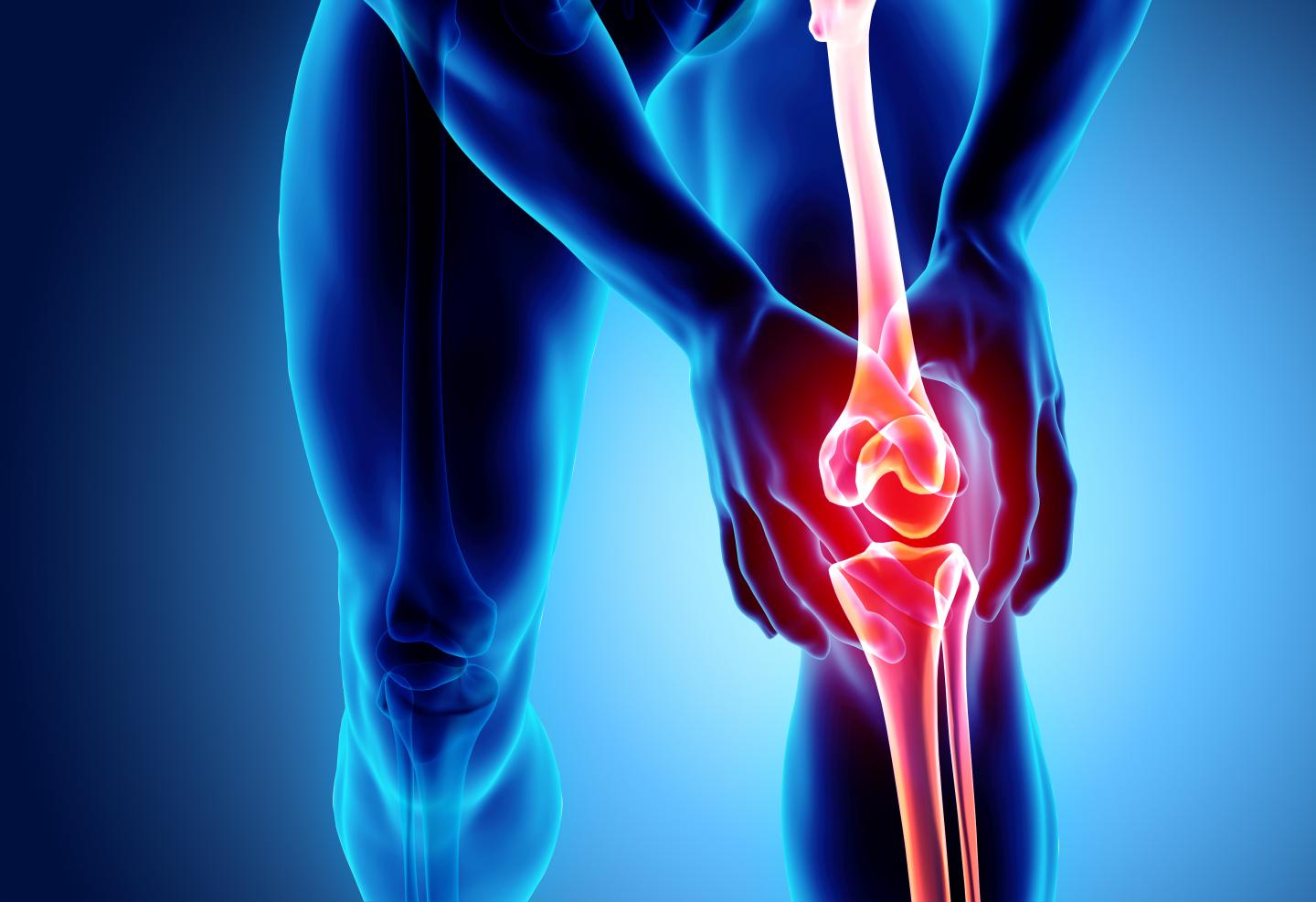
A Keck Medicine of USC study reveals that kappa opioids preserved cartilage in joints and eased pain
IMAGE

Credit: Shutterstock

LOS ANGELES – A novel preclinical study by Keck Medicine of USC researchers, published in Arthritis & Rheumatology, reveals that a potential new opioid medication may have the ability to slow the progression of osteoarthritis while being less addictive than commonly prescribed opioid drugs.

The medication activates the kappa opioid receptor (KOR), which binds to opioid-like compounds in the central and peripheral nervous systems to alleviate pain, resulting in targeted pain relief with a reduced risk of addiction.

Previous research shows that some opioids that selectively activate only KORs relieve pain locally at the site of injury without crossing the blood brain barrier and inducing substance dependency, whereas commonly prescribed opioids that target other receptors in the brain are more addictive.

In this study, lead author Alexander Weber, MD, sports medicine physician and orthopaedic surgeon with Keck Medicine, and corresponding author Denis Evseenko, MD, PhD, vice chair for research and associate professor of orthopaedic surgery at the Keck School of Medicine of USC, locally administered a kappa opioid into arthritic mice knees and measured the progression of the disease in their joints.

The researchers confirmed that the medication effectively alleviated pain, however findings also suggest that the medication prevented the loss of cartilage, the connective tissue between the joins that pads bones, and slowed the progression of osteoarthritis.

“Arthritis affects nearly a quarter of adults in the United States, many of whom take addictive opioids to manage their pain. The implications of this study may someday alter how we provide orthopaedic care to significantly reduce the number of patients experiencing long-term pain and addiction,” says Weber.

More research is needed to advance toward human clinical trials, which are paramount as treatment and pain management options for osteoarthritis are limited.

“We hope that the findings of our study will lay the foundations for clinical research to further current understandings of the relationship between kappa opioids and osteoarthritis in humans to improve clinical care and quality of life,” says Evseenko.

###

This study was supported by the National Institutes of Health under award numbers RO1-AR-071724 and RO1-AG-058624, and by the Department of Defense under award number W81XWH-13-1-0465.

For more information about Keck Medicine of USC visit news.KeckMedicine.org

Media Contact
Gabriella Robison
[email protected]

Original Source

https://news.keckmedicine.org/significantly-less-addictive-opioid-may-slow-progression-of-osteoarthritis-while-easing-pain/preview/13a216040c524ec7dc043dd51976d1d324666170

Related Journal Article

http://dx.doi.org/10.1002/art.41250

Tags: AddictionAgingCell BiologyDrugsMedicine/HealthOrthopedic Medicine
Share12Tweet8Share2ShareShareShare2

Related Posts

New Study Uncovers Mechanism Behind Burn Pit Particulate Matter–Induced Lung Inflammation

New Study Uncovers Mechanism Behind Burn Pit Particulate Matter–Induced Lung Inflammation

February 6, 2026

DeepBlastoid: Advancing Automated and Efficient Evaluation of Human Blastoids with Deep Learning

February 6, 2026

Navigating the Gut: The Role of Formic Acid in the Microbiome

February 6, 2026

AI-Enhanced Optical Coherence Photoacoustic Microscopy Revolutionizes 3D Cancer Model Imaging

February 6, 2026
Please login to join discussion

POPULAR NEWS

  • Robotic Ureteral Reconstruction: A Novel Approach

    Robotic Ureteral Reconstruction: A Novel Approach

    82 shares
    Share 33 Tweet 21
  • Digital Privacy: Health Data Control in Incarceration

    63 shares
    Share 25 Tweet 16
  • Study Reveals Lipid Accumulation in ME/CFS Cells

    57 shares
    Share 23 Tweet 14
  • Breakthrough in RNA Research Accelerates Medical Innovations Timeline

    53 shares
    Share 21 Tweet 13

About

We bring you the latest biotechnology news from best research centers and universities around the world. Check our website.

Follow us

Recent News

Oxygen-Enhanced Dual-Section Microneedle Patch Improves Drug Delivery and Boosts Photodynamic and Anti-Inflammatory Treatment for Psoriasis

Scientists Identify SARS-CoV-2 PLpro and RIPK1 Inhibitors Showing Potent Synergistic Antiviral Effects in Mouse COVID-19 Model

Neg-Entropy: The Key Therapeutic Target for Chronic Diseases

Subscribe to Blog via Email

Enter your email address to subscribe to this blog and receive notifications of new posts by email.

Join 73 other subscribers
  • Contact Us

Bioengineer.org © Copyright 2023 All Rights Reserved.

Welcome Back!

Login to your account below

Forgotten Password?

Retrieve your password

Please enter your username or email address to reset your password.

Log In
No Result
View All Result
  • Homepages
    • Home Page 1
    • Home Page 2
  • News
  • National
  • Business
  • Health
  • Lifestyle
  • Science

Bioengineer.org © Copyright 2023 All Rights Reserved.