• HOME
  • NEWS
  • EXPLORE
    • CAREER
      • Companies
      • Jobs
    • EVENTS
    • iGEM
      • News
      • Team
    • PHOTOS
    • VIDEO
    • WIKI
  • BLOG
  • COMMUNITY
    • FACEBOOK
    • INSTAGRAM
    • TWITTER
Friday, November 13, 2026
BIOENGINEER.ORG
No Result
View All Result
  • Login
  • HOME
  • NEWS
  • EXPLORE
    • CAREER
      • Companies
      • Jobs
        • Lecturer
        • PhD Studentship
        • Postdoc
        • Research Assistant
    • EVENTS
    • iGEM
      • News
      • Team
    • PHOTOS
    • VIDEO
    • WIKI
  • BLOG
  • COMMUNITY
    • FACEBOOK
    • INSTAGRAM
    • TWITTER
No Result
View All Result
Bioengineer.org
No Result
View All Result
Home NEWS Science News Biology

Signals from muscle protect from dementia

Bioengineer by Bioengineer
March 26, 2021
in Biology
Reading Time: 1 min read
0
IMAGE
Share on FacebookShare on TwitterShare on LinkedinShare on RedditShare on Telegram

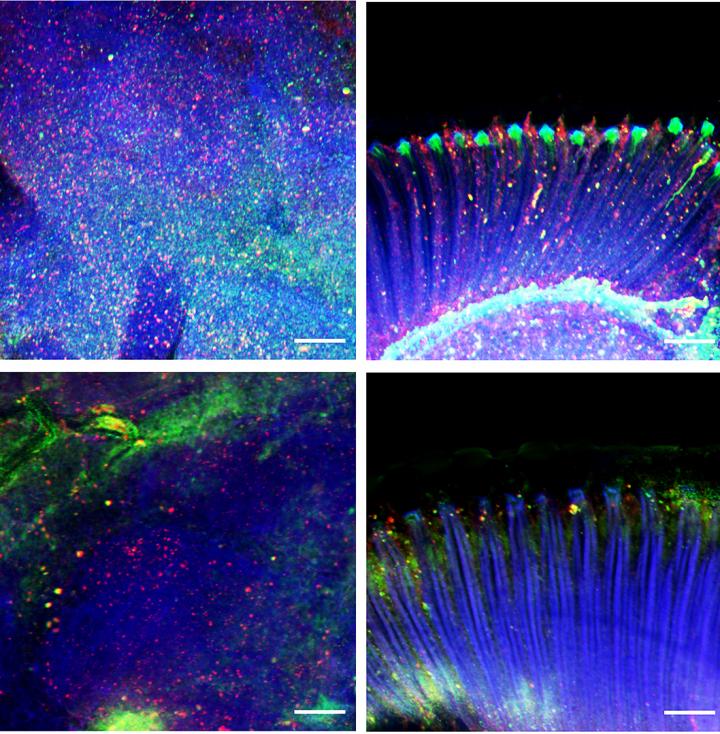
Scientists at St. Jude are studying how signals sent from skeletal muscle affect the brain
IMAGE

Credit: St. Jude Children’s Research Hospital

How do different parts of the body communicate? Scientists at St. Jude are studying how signals sent from skeletal muscle affect the brain.

The team studied fruit flies and cutting-edge brain cell models called organoids. They focused on the signals muscles send when stressed. The researchers found that stress signals rely on an enzyme called Amyrel amylase and its product, the disaccharide maltose.

The scientists showed that mimicking the stress signals can protect the brain and retina from aging. The signals work by preventing the buildup of misfolded protein aggregates. Findings suggest that tailoring this signaling may potentially help combat neurodegenerative conditions like age-related dementia and Alzheimer’s disease.

“We found that a stress response induced in muscle could impact not only the muscle but also promote protein quality control in distant tissues like the brain and retina,” said Fabio Demontis, PhD, of St. Jude Developmental Neurobiology. “This stress response was actually protecting those tissues during aging.”

###

Cell Metabolism published a report on this work.

Media Contact
Katy Hobgood
katy.hobgood@stjude.org

Related Journal Article

http://dx.doi.org/10.1016/j.cmet.2021.03.005

Tags: BiologyGenesGeneticsMemory/Cognitive Processes
Share13Tweet8Share2ShareShareShare2

Related Posts

Plasticizer Alternative ATBC Promotes Osteosarcoma Progression in Cell Models via EGFR

Plasticizer Alternative ATBC Promotes Osteosarcoma Progression in Cell Models via EGFR

November 13, 2026
Genomic Analysis Uncovers and Resolves Metadata Misassignments in Global Cattle Database

Genomic Analysis Uncovers and Resolves Metadata Misassignments in Global Cattle Database

November 13, 2026

AnnST Framework Improves Cross-Section Tissue Annotation in Spatial Transcriptomics

November 13, 2026

Four-Gene Score Stratifies Osteosarcoma Outcomes and Links to Immunometabolic Features

November 13, 2026
Please login to join discussion

POPULAR NEWS

  • Review Links Swine Inflammation and Necrosis Syndrome to Vascular Dysfunction

    Review Links Swine Inflammation and Necrosis Syndrome to Vascular Dysfunction

    29 shares
    Share 12 Tweet 7
  • Disrupted Overnight Emotional Distress Recalibration Found in Borderline Personality Disorder

    29 shares
    Share 12 Tweet 7
  • Positive Caregiving Experiences Buffer Strain Among Informal Carers, Dutch Study Finds

    29 shares
    Share 12 Tweet 7
  • Recycled PET Fibers Enhance Carbonated Concrete Durability

    29 shares
    Share 12 Tweet 7

About

We bring you the latest biotechnology news from best research centers and universities around the world. Check our website.

Follow us

Recent News

Inspection Study Links Structural Flaws and Training Failures to Foodborne Outbreaks

Innate Immune Receptor TLR8 Drives Hepatic Inflammation and Fibrosis in Biliary Atresia

Left Atrial Ejection Fraction and Coupling Index Predict Arrhythmia in Cardiomyopathy

Subscribe to Blog via Email

Enter your email address to subscribe to this blog and receive notifications of new posts by email.

Join 87 other subscribers
  • Contact Us

Bioengineer.org © Copyright 2023 All Rights Reserved.

Welcome Back!

Login to your account below

Forgotten Password?

Retrieve your password

Please enter your username or email address to reset your password.

Log In
No Result
View All Result
  • Homepages
    • Home Page 1
    • Home Page 2
  • News
  • National
  • Business
  • Health
  • Lifestyle
  • Science

Bioengineer.org © Copyright 2023 All Rights Reserved.