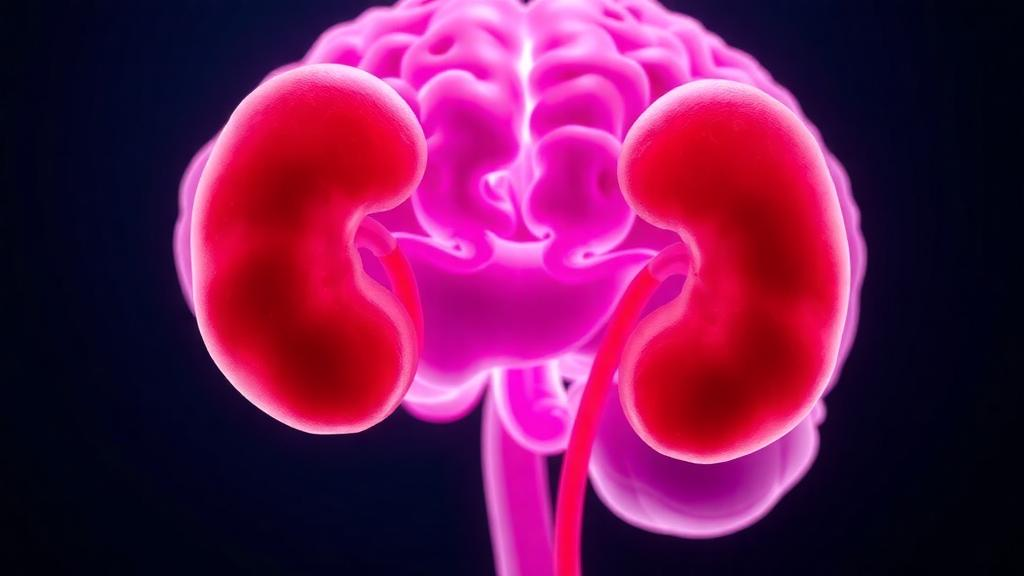
Chronic kidney disease has long been recognized as a silent saboteur of the cardiovascular system, the skeleton, and the body’s delicate electrolyte balance. But a new review published in Molecular Biology Reports argues that the damage may reach far higher—into the pea-sized command center at the base of the brain that governs nearly every hormonal cascade in the body. The review, led by N. Anirudh Singh and Saikat Sen of Assam down town University in India, together with colleagues at UCSI University in Malaysia, assembles evidence that chronic kidney disease should be considered a genuine risk factor for pituitary hormone dysregulation, and it lays out the molecular machinery through which failing kidneys could scramble the hypothalamic-pituitary axes that control stress, growth, reproduction, and metabolism.
The pituitary gland does not act alone. It sits at the receiving end of signals from the hypothalamus, releasing hormones such as adrenocorticotropic hormone, thyroid-stimulating hormone, growth hormone, follicle-stimulating hormone, luteinizing hormone, and prolactin in carefully calibrated pulses. Each of these axes is closed by a feedback loop: hormones produced downstream—cortisol from the adrenal glands, thyroid hormones from the thyroid, sex steroids from the gonads—circulate back and restrain further pituitary output. The review’s central argument is that chronic kidney disease perturbs this system in two ways at once. It can act directly on the hypothalamus and pituitary, and it can alter the downstream hormones themselves, which then feed back incorrectly and push pituitary secretion out of alignment.
The pathological backdrop matters. Chronic kidney disease is defined by abnormal kidney structure or function and is characterized histologically by chronic inflammation, tubular atrophy, vascular rarefaction, glomerulosclerosis, and interstitial fibrosis. As the disease progresses, the kidney loses its ability to clear waste, activate vitamin D, and regulate mineral balance. Clinical observations compiled in the review suggest the endocrine consequences are broad: altered cortisol dynamics measurable even in hair samples, thyroid dysfunction across multiple stages of kidney disease, gonadal dysfunction that worsens with disease severity, elevated prolactin linked in population cohorts to cardiovascular risk, and diagnostic confusion in children with chronic renal failure who present with features of Cushing’s disease.
At the top of the review’s mechanistic list sit the uremic toxins—compounds that a healthy kidney would excrete but that accumulate in the blood when filtration fails. Chief among them are indoxyl sulfate, p-cresol, p-cresyl sulfate, and trimethylamine N-oxide, the latter a gut microbial metabolite increasingly implicated in cardiovascular disease. These molecules are not inert waste. Experimental studies show they damage hippocampal neurons and disrupt synaptic transmission, and a growing body of work indicates they perturb the blood-brain barrier, the selective gate that normally shields the brain from circulating solutes. In rodent models, uremic toxin-driven blood-brain barrier disruption mediated by aryl hydrocarbon receptor activation produces cognitive impairment, and elevated urea itself has been shown to promote abnormal proliferation of oligodendrocyte precursor cells in the amygdala, driving anxiety-like behavior. If the barrier becomes leaky, toxins and inflammatory signals gain access to hypothalamic and pituitary tissue that would otherwise be protected.
Inflammation provides a second, overlapping route of attack. Chronic kidney disease sustains a state of low-grade systemic inflammation, with elevated interleukin-6, tumor necrosis factor alpha, and C-reactive protein documented in dialysis patients and in those with diabetic kidney disease. Cytokines are well known to modulate hypothalamic-pituitary function; studies dating back decades show they can stimulate or suppress the secretion of pituitary hormones depending on context. More recent animal work adds a striking cellular mechanism: lipopolysaccharide-induced necroptosis activates the hypothalamic-pituitary-adrenal axis in piglets, and in models of subarachnoid hemorrhage, microglia-derived ADAM9 drives pyroptosis— inflammatory cell death—of growth hormone-releasing hormone neurons via the Mad2L2-JNK-caspase-1 pathway. In other words, inflammatory signaling can kill the very hypothalamic neurons that instruct the pituitary to release growth hormone.
Mineral imbalance and the fibroblast growth factor 23–Klotho axis form a third pillar of the proposed mechanism. In chronic kidney disease, phosphate retention drives a compensatory surge of FGF23 from bone, while levels of its obligate co-receptor Klotho fall. This axis is classically associated with secondary hyperparathyroidism and mineral bone disorder, but the review highlights evidence that its reach extends to the brain and the pituitary itself. FGF23 protein has been localized in the rat hypothalamus, alpha-Klotho levels correlate with remission after pituitary surgery for acromegaly, and Klotho has been shown to participate in growth hormone signaling. Altered Klotho has also been linked to hypothyroidism in older adults, to central precocious puberty in girls, and to male and female reproduction, suggesting that the kidney-driven collapse of this signaling system could feed directly into pituitary regulation.
The review also emphasizes the renin-angiotensin-aldosterone system and the enzyme pair 11β-hydroxysteroid dehydrogenase types 1 and 2, which interconvert active cortisol and inactive cortisone. As kidney function declines, type 2 insufficiency progresses, blunting the kidney’s ability to inactivate cortisol and protect mineralocorticoid receptors. The result is a distorted cortisol economy: altered cortisol dynamics in chronic kidney disease have been linked to mortality, and vasopressin—another hormone entangled with renal water balance—has been shown to potentiate the action of corticotropin-releasing hormone on pituitary corticotropes through a protein kinase C-dependent mechanism. Copeptin, a stable surrogate marker for vasopressin, even predicts future kidney disease, underscoring how tightly renal physiology and pituitary stress hormones are interwoven.
Perhaps the most contemporary strand of the review concerns circulating microRNAs and the kidney-gut-brain axis. MicroRNAs—short non-coding RNAs that travel in the bloodstream and fine-tune gene expression—are established players in pituitary disease, with distinct signatures reported in acromegaly, Cushing’s syndrome, hyperprolactinemia, and invasive pituitary tumors. Kidney disease also reshapes the circulating microRNA landscape, raising the possibility that renal-derived microRNAs could modulate hypothalamic and pituitary gene programs. Meanwhile, gut dysbiosis in kidney disease alters the production of short-chain fatty acids, metabolites that influence the central nervous system and have been shown in animal studies to regulate the hypothalamic-pituitary-gonadal axis and reverse obesity-induced precocious puberty. Uremic toxins of gut origin, including indoxyl sulfate, have even been shown in ex vivo studies to alter thyroid gland morphology and function, and TMAO can trigger premature ovarian insufficiency through mitochondrial apoptosis in granulosa cells—effects that would feed back onto pituitary gonadotropin secretion.
The clinical stakes are considerable. Growth impairment in children with chronic kidney disease involves suppressor of cytokine signaling 2 and is treated with recombinant human growth hormone, yet long-term growth hormone use has itself been associated with acute kidney damage, and the FGF23-Klotho axis responds to such treatment in pediatric patients. Pubertal luteinizing hormone levels track with declining glomerular filtration rate in children, hypogonadism and erectile dysfunction are common in hemodialysis patients, and testosterone therapy has been linked to reduced risks of acute kidney injury and cardiovascular events in diabetic men with hypogonadism. Conversely, successful renal transplantation can normalize prolactin and sex hormone levels, and menopausal hormone therapy has been associated with better renal survival in postmenopausal women—observations that reinforce the bidirectional dialogue between kidney and pituitary. Single-cell RNA sequencing analyses have even suggested structured cell-cell interaction patterns along a pituitary-kidney axis, lending molecular weight to what clinicians have long observed.
The authors are careful to frame their work as a synthesis of mechanistic plausibility rather than proof of causation, echoing an older question in the literature about whether pituitary dysfunction in kidney disease is the chicken or the egg. Still, the convergence of evidence—from uremic toxin effects on the blood-brain barrier, to cytokine-driven death of hypothalamic neurons, to the collapse of Klotho signaling and the reshaping of the gut microbiome—makes a compelling case that the pituitary should join the list of organs endangered by chronic kidney disease. If validated in prospective studies, the framework could change how endocrine abnormalities in kidney patients are interpreted and treated, transforming what are often dismissed as epiphenomena of renal failure into actionable targets for therapy.
Subject of Research: Mechanisms by which chronic kidney disease may dysregulate pituitary hormone secretion
Article Title: Chronic kidney disease as a potential risk factor for pituitary hormone dysregulation: a review of the underlying mechanisms
Article References: Singh, N. A., Kalita, J. K., Biswas, S., Nath, B., Khanna, K., & Sen, S. (2026). Chronic kidney disease as a potential risk factor for pituitary hormone dysregulation: a review of the underlying mechanisms. Molecular Biology Reports, 53(1), Article 1704. https://doi.org/10.1007/s11033-026-12931-3
Image Credits: AI Generated
DOI: 10.1007/s11033-026-12931-3
Keywords: chronic kidney disease, pituitary hormones, hypothalamic-pituitary axis, uremic toxins, FGF23-Klotho signaling, inflammation, blood-brain barrier, microRNAs, gut-kidney-brain axis, cortisol, thyroid dysfunction, neuroendocrinology
News Source: Jerry Hayes. (October 12, 2026). Sick Kidneys, Misfiring Pituitary: How Chronic Kidney Disease Scrambles the Brain’s Hormone Command Center. Scienmag.