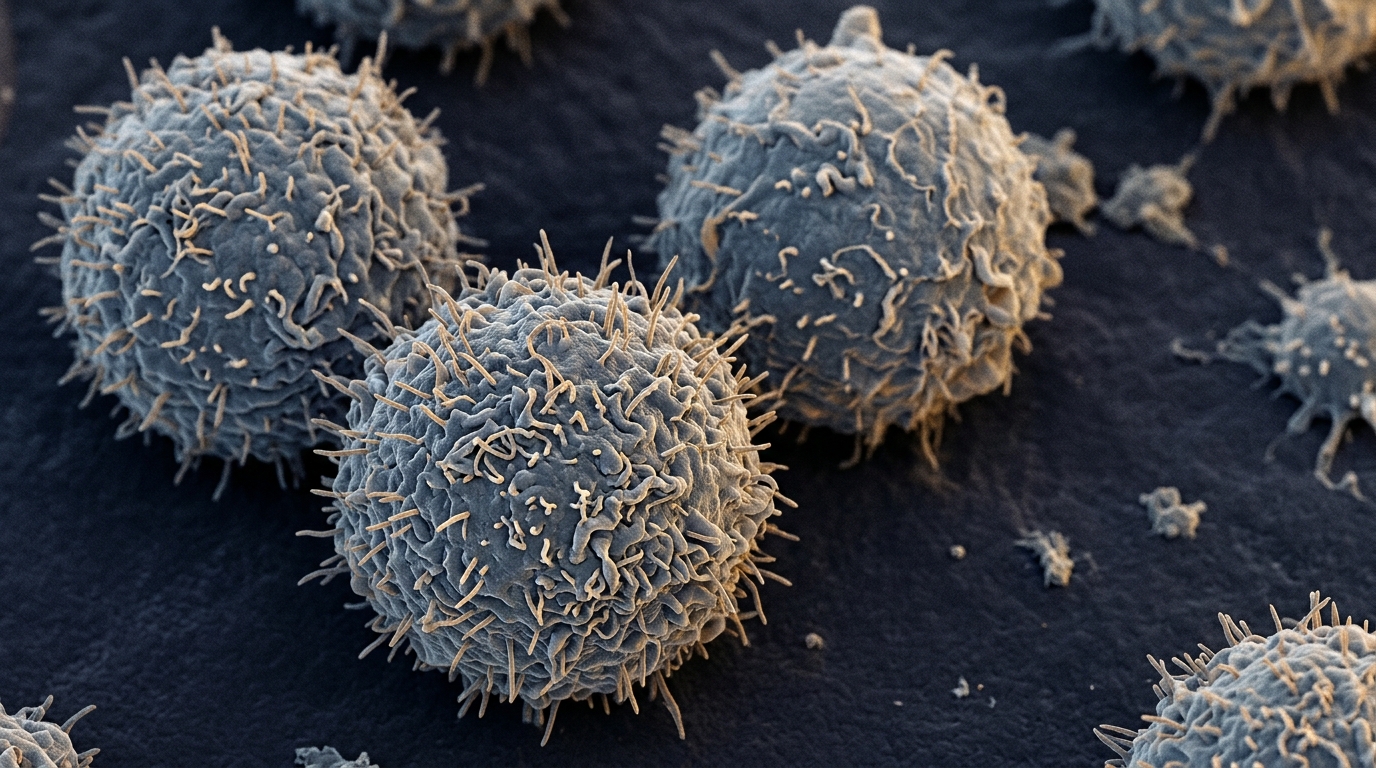
A short-term oral regimen of the probiotic bacterium Bacillus clausii induced selective quantitative remodeling of the peripheral T-cell receptor beta repertoire while maintaining overall structural stability, according to a longitudinal single-case investigation published in Infectious Agents and Cancer. The research team evaluated peripheral blood mononuclear cells collected from a single healthy volunteer immediately before and immediately after a ten-day oral supplementation course, investigating whether targeted probiotic administration can alter the architecture of circulating adaptive immune repertoires at single-clonotype resolution.
The intestinal microbiota is recognized as a major regulator of systemic immunity, yet its specific influence on the structural organization of the circulating T-cell receptor repertoire has remained poorly understood. Although previous scientific research demonstrated that probiotic interventions can modulate immune function by altering cytokine production and immune-cell activity, whether these microbial treatments reshape circulating repertoire architecture at single-clonotype resolution had not been established. The investigators therefore designed this longitudinal study to clarify how short-term probiotic exposure directly affects the circulating T-cell receptor beta compartment.
To monitor these cellular dynamics over time, the authors conducted a longitudinal single-case study using ultra-deep immune repertoire sequencing on peripheral blood mononuclear cells. Blood samples were gathered from the single healthy subject immediately prior to starting the oral Bacillus clausii regimen and immediately upon completing the ten-day intervention. This high-throughput sequencing methodology enabled detailed, longitudinal tracking of alterations across the circulating T-cell receptor beta repertoire throughout the complete course of the oral probiotic regimen.
The investigators evaluated the sequenced T-cell receptor beta repertoires using complementary nucleotide-based and amino acid-based clonotype definitions to assess both broad and fine-grained variations. Their analytical protocol evaluated multiple quantitative and structural characteristics, including repertoire richness, diversity, clonal evenness, repertoire overlap, and differential clonotype abundance. Furthermore, the team analyzed V(D)J germline gene usage, CDR3 sequence composition, motif enrichment, and hierarchical sequence clustering to determine whether observed changes represented widespread reorganization or selective clonal responses within the immune compartment.
Following the completion of the ten-day probiotic regimen, sequencing results indicated marked quantitative remodeling of the peripheral T-cell receptor beta repertoire. The healthy participant experienced substantial decreases in overall repertoire richness and diversity, which occurred alongside increased clonal focusing and the expansion of dominant clonotypes. This quantitative restructuring reflected a pronounced contraction within the compartment of low-frequency clonotypes as dominant lineages expanded in the peripheral blood following the oral administration period.
Despite the substantial reduction in richness and the contraction of low-frequency clones, the general structural organization of the circulating repertoire remained remarkably stable. The distribution of CDR3 sequence lengths, TRBV and TRBJ germline gene usage, and dominant V-J gene rearrangements were largely preserved after the probiotic intervention. In addition, abundance-weighted repertoire similarity between the pre-administration and post-administration samples remained exceptionally high, showing that the core structural framework endured throughout the short-term supplementation period.
Differential abundance analysis further clarified the mechanism underlying this remodeling, demonstrating that the observed shifts were driven predominantly by the expansion of pre-existing clonotypes rather than the widespread emergence of newly generated clones. Moreover, the expanded clonotypes segregated into multiple distinct clusters that shared conserved CDR3 sequence motifs. These shared sequence motifs appeared across heterogeneous TRBV and TRBJ gene usage, revealing recurrent CDR3 amino acid sequence patterns that occurred independently of germline gene composition.
The authors concluded that these findings offer preliminary evidence that short-term Bacillus clausii administration may promote selective quantitative remodeling of the peripheral T-cell receptor repertoire within a preserved structural framework. The preferential expansion of pre-existing clones and the detection of shared CDR3 sequence motifs suggest that microbiota-directed interventions can fine-tune adaptive immunity rather than induce wholesale repertoire replacement. Because these observations were obtained from a single-case study, the team emphasized that validation in larger controlled cohorts is necessary, while noting that ultra-deep immune repertoire sequencing provides a sensitive tool to assess systemic immune responses.
Subject of Research: Probiotic remodeling of the peripheral T-cell receptor repertoire
Article Title: Short-term Bacillus clausii administration remodels the peripheral T-cell receptor repertoire through convergent CDR3 sequence architectures
Article References: Mauriello, A., Mendizabal-Sasieta, A., Melero, J. L., Soto, M., Grzelak, M., Capelli, M., Heyn, H., Tagliamonte, M., & Buonaguro, L. (2026). Short-term Bacillus clausii administration remodels the peripheral T-cell receptor repertoire through convergent CDR3 sequence architectures. Infectious Agents and Cancer. https://doi.org/10.1186/s13027-026-00818-8
Image Credits: AI Generated
DOI: 10.1186/s13027-026-00818-8
Keywords: Bacillus clausii, T-cell receptor repertoire, TCRβ sequencing, adaptive immunity, probiotics, gut microbiota, CDR3 motifs, clonotype diversity, ultra-deep sequencing, peripheral blood mononuclear cells, clonal expansion, TRBV gene usage, TRBJ gene usage, repertoire richness, single-case study, systemic immunology, V(D)J recombination
News Source: Kristina Jarvis. (November 17, 2026). Short Probiotic Regimen Remodels Peripheral T-Cell Repertoire in Single-Case Study. Scienmag.