• HOME
  • NEWS
  • EXPLORE
    • CAREER
      • Companies
      • Jobs
    • EVENTS
    • iGEM
      • News
      • Team
    • PHOTOS
    • VIDEO
    • WIKI
  • BLOG
  • COMMUNITY
    • FACEBOOK
    • INSTAGRAM
    • TWITTER
Sunday, June 28, 2026
BIOENGINEER.ORG
No Result
View All Result
  • Login
  • HOME
  • NEWS
  • EXPLORE
    • CAREER
      • Companies
      • Jobs
        • Lecturer
        • PhD Studentship
        • Postdoc
        • Research Assistant
    • EVENTS
    • iGEM
      • News
      • Team
    • PHOTOS
    • VIDEO
    • WIKI
  • BLOG
  • COMMUNITY
    • FACEBOOK
    • INSTAGRAM
    • TWITTER
  • HOME
  • NEWS
  • EXPLORE
    • CAREER
      • Companies
      • Jobs
        • Lecturer
        • PhD Studentship
        • Postdoc
        • Research Assistant
    • EVENTS
    • iGEM
      • News
      • Team
    • PHOTOS
    • VIDEO
    • WIKI
  • BLOG
  • COMMUNITY
    • FACEBOOK
    • INSTAGRAM
    • TWITTER
No Result
View All Result
Bioengineer.org
No Result
View All Result
Home NEWS Science News Biology

Shining a (UV) light on the glow-in-the-dark platypus

Bioengineer by Bioengineer
October 29, 2020
in Biology
Reading Time: 3 mins read
0
IMAGE
Share on FacebookShare on TwitterShare on LinkedinShare on RedditShare on Telegram

Biofluorescent fur could help some mammals spot each other after dark
IMAGE

Credit: Goddard Photography

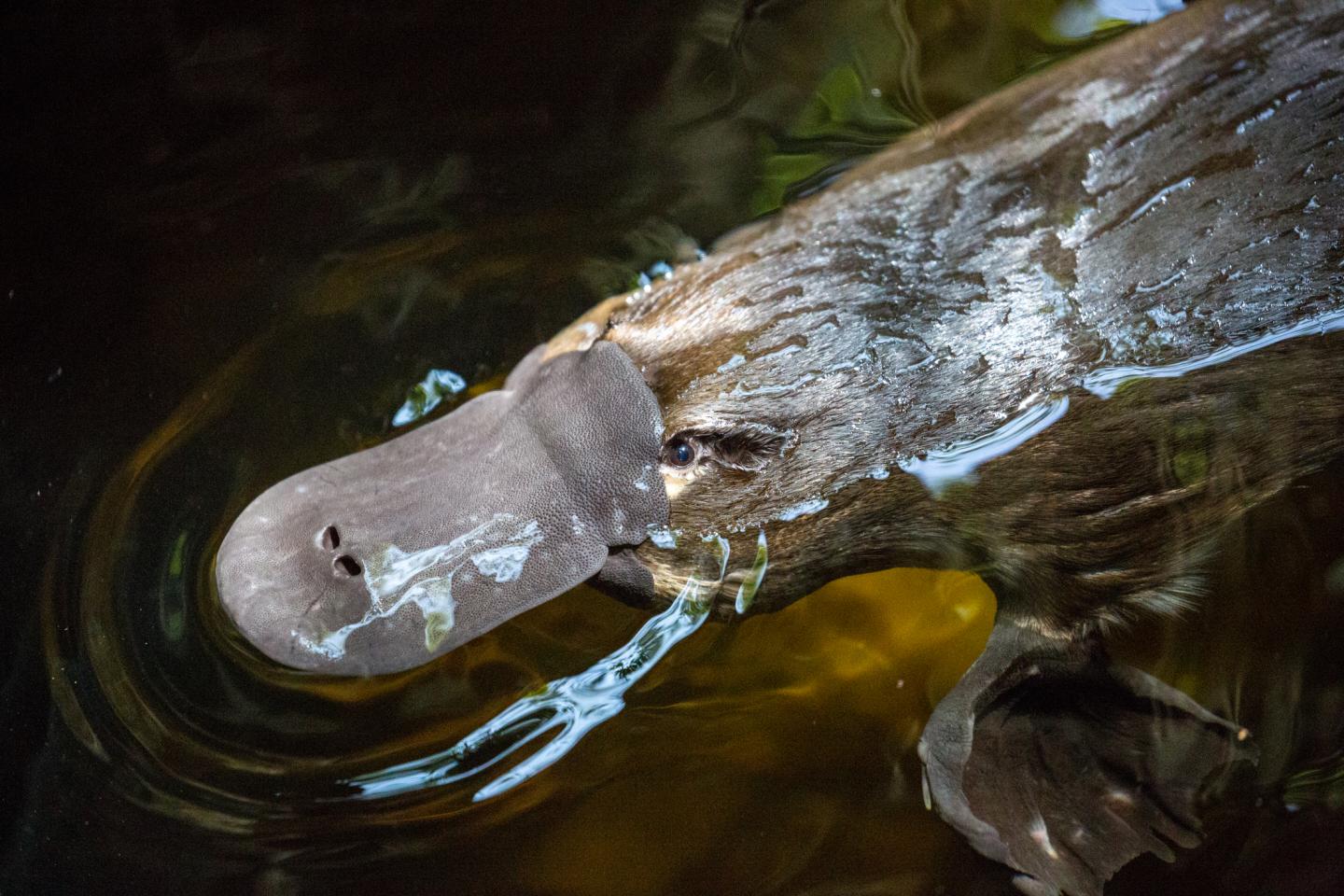
The fur of the platypus – an Australian species threatened with extinction – glows green under ultraviolet light, a new study finds. This is the first observation of biofluorescence in an egg-laying mammal (monotreme), suggesting this extraordinary trait may not be as rare as previously thought.

The research article “Biofluorescence in the platypus (Ornithorhynchus anatinus)” was published in De Gruyter’s international journal Mammalia.

Two mammals – the opossum and the flying squirrel – are already known to have fur that biofluoresces under under ultraviolet (UV) light.

One of the paper’s authors discovered pink biofluorescence in flying squirrels by accident while conducting a night survey for lichens, a finding reported in an earlier paper. While confirming this field observation with preserved museum specimens, the researchers decided to examine the platypuses in the next drawer along too.

They studied three museum platypus specimens: a female and a male from the Field Museum of Natural History in Chicago and another male specimen from the University of Nebraska State Museum.

In visible light, the fur of all three platypus specimens was uniformly brown. But under UV light they appeared green or cyan. The fur of the platypus absorbs UV (wavelengths of 200-400 nanometers) and re-emits visible light (of 500-600 nanometers), making it fluoresce.

Like the marsupial opossum and the placental flying squirrel, platypuses are most active during the night and at dawn and dusk. It may be that these mammals – and possibly others – developed biofluorescence to adapt to low light conditions. The researchers suggest this may be a way for platypuses to see and interact with each other in the dark.

The researchers would now like to work with an Australian team to observe biofluorescence in wild animals. And with colleagues at Northland College and Colorado State University, they are working on a project to further explore the phenomenon across the mammalian family tree.

“It was a mix of serendipity and curiosity that led us to shine a UV light on the platypuses at the Field Museum,” said lead author Professor Paula Spaeth Anich, Associate Professor of Biology and Natural Resources at Northland College. “But we were also interested in seeing how deep in the mammalian tree the trait of biofluorescent fur went. It’s thought that monotremes branched off the marsupial-placental lineage more than 150 million years ago. So, it was intriguing to see that animals that were such distant relatives also had biofluorescent fur.”

###

The paper was published online ahead of print here: https://doi.org/10.1515/mammalia-2020-0027

Media Contact
Mauricio QuiƱones
[email protected]

Original Source

https://www.degruyter.com/view/journals/mamm/ahead-of-print/article-10.1515-mammalia-2020-0027/article-10.1515-mammalia-2020-0027.xml?tab_body=contentReferences-78538

Related Journal Article

http://dx.doi.org/10.1515/mammalia-2020-0027

Tags: BiologyEvolutionZoology/Veterinary Science
Share14Tweet9Share2ShareShareShare2

Related Posts

Natural Hallucinogens: Evolution’s Ecological Tools, Not Mere Chemical Byproducts

June 25, 2026

This Famous Butterfly Revealed: Three Distinct Species Hidden in One

June 25, 2026

Scientists Attack Soybean Cyst Nematode by Starving Its Food Source

June 25, 2026

Decoding the Secret Code of a Crucial Immune Sensor

June 24, 2026
Please login to join discussion

POPULAR NEWS

  • Saying Goodbye to PGY-6: Pediatric Fellowship Realities

    103 shares
    Share 41 Tweet 26
  • Multi-Hospital Study Reveals Long Covid Burden Is Twice as High as Current Estimates

    92 shares
    Share 36 Tweet 23
  • Detection of EDCs in Breast Milk and Infant Urine Up to Six Months Highlights Early Exposure Risks

    77 shares
    Share 31 Tweet 19
  • New Drug Candidate Developed at McMaster Shows Potential for Treating Brain Cancer

    58 shares
    Share 23 Tweet 15

About

We bring you the latest biotechnology news from best research centers and universities around the world. Check our website.

Follow us

Recent News

Tracking Lanthanide-Labeled Microplastics in Plants

POSTECH Researchers Slash Cost of Reconstituted Cell-Free Systems by 95%

AI and Physics Collaborate to Design Advanced Hydrogen Storage Materials

Subscribe to Blog via Email

Success! An email was just sent to confirm your subscription. Please find the email now and click 'Confirm' to start subscribing.

Join 82 other subscribers
  • Contact Us

Bioengineer.org Ā© Copyright 2023 All Rights Reserved.

Welcome Back!

Login to your account below

Forgotten Password?

Retrieve your password

Please enter your username or email address to reset your password.

Log In
No Result
View All Result
  • Homepages
    • Home Page 1
    • Home Page 2
  • News
  • National
  • Business
  • Health
  • Lifestyle
  • Science

Bioengineer.org Ā© Copyright 2023 All Rights Reserved.