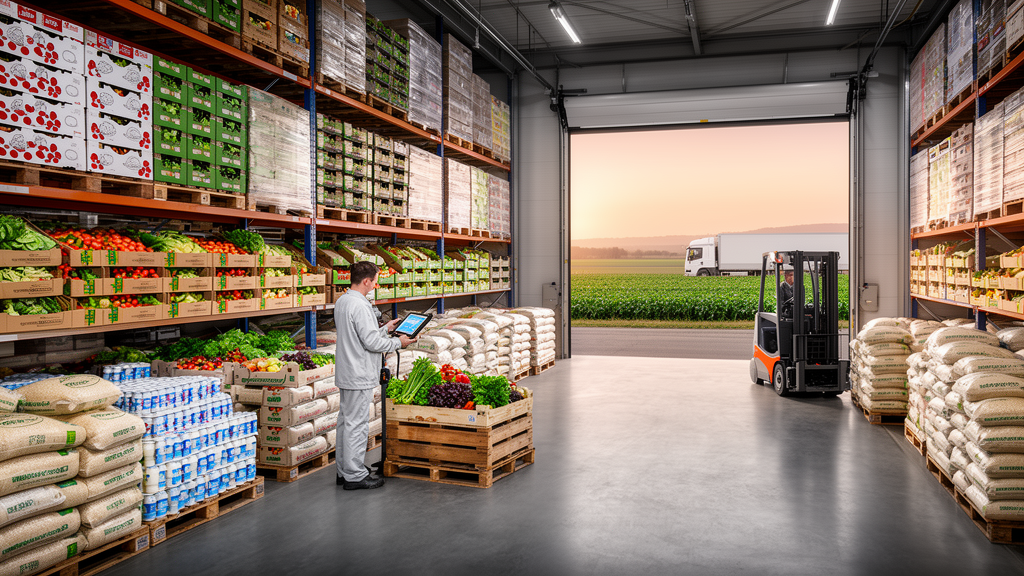
Researchers in Sweden have distilled the views of dozens of food system insiders into a new theoretical framework, called PREPARE, that specifies seven practices intended to improve the security of food supply in highly privatised and fragmented food systems. The study, published in Agricultural and Food Economics, is grounded in semi-structured interviews with 31 participants drawn from public authorities, private companies, associations and foundations, academia, and voluntary organisations across Sweden, and it argues that resilience in such systems cannot be built by amassing discrete crisis interventions. Instead, the authors contend, the core challenge is a dual market-and-governance failure: markets do not price the public-good value of preparedness, while fragmented, short-term-oriented governance structures fail to compensate for that shortfall.
The renewed policy urgency behind the work is unmistakable. European approaches to food supply security have fluctuated sharply since the end of the Cold War, when diminished military threat and trust in global trade led most countries to dismantle civil defence institutions and strategic reserves. Wars, droughts, and the COVID-19 pandemic have since pushed the issue back to the top of the agenda across the continent. In Sweden the shift was particularly dramatic: food supply security was a central part of the country’s Cold War total defence system, abolished in 2004, only to be re-enacted in policy in 2015 and rebuilt today, with Food Supply and Drinking Water designated one of twelve preparedness sectors of Swedish civil defence. Sweden’s recent NATO membership adds baseline resilience requirements that include a resilient food supply.
The Swedish food system itself has transformed over the same period. Agriculture has moved from small-scale farms connected to local markets towards more centralised and specialised production dependent on imported inputs such as fuel, fertilisers, pesticides, seeds, and animal feed, all distributed through a just-in-time logistical system with no buffers and rapid turnover of items. More than half of the interviewed participants described the system in exactly these just-in-time terms, and most saw the absence of storage buffers as a vulnerability. Participants consistently identified war and disrupted global supply chains as the most pressing risks, alongside climate change, supply chain disruptions, and increased digitalisation, with thirteen participants naming climate change as a threat to Swedish food supply in both the short and long term.
The empirical basis of the framework is a series of thirty interviews with 31 consenting participants, one conducted with two people, carried out in February and March 2025 and lasting roughly 30 to 45 minutes each. Seven interviews were held in person and 23 online. Participants were purposefully selected to represent each actor category and different administrative levels, from national to municipal, with additional recruits identified through snowball sampling. The transcripts were coded collaboratively in NVivo, and the inductive analysis yielded nine overall themes covering the governance setting, system vulnerabilities, and capacity for adaptation and intervention. Data saturation was judged to have been reached when no new patterns emerged.
Those themes paint a picture of a system pulled between efficiency and preparedness. Legislation emerged in 24 interviews as both a prerequisite for action and a barrier: participants highlighted overlapping controls and administrative burdens that fall hardest on small producers, and noted that EU internal market rules aimed at fair competition restrict targeted national support such as stockpiling or infrastructure investment in critical sectors. Financing preparedness surfaced as a persistent mismatch, with long-term investment needs colliding with short-term funding in a market-driven context, and with participants insisting that costs must be shared across the whole supply chain rather than borne by any single actor. Meanwhile, seven participants flagged the declining farming workforce as one of the greatest concerns for national preparedness, linking it to low profitability, hard work, and young farmers’ difficulty securing loans.
Yet the interviews also revealed genuine adaptive strengths. Participants across categories described private companies as highly adjustable, citing how firms rapidly adapted production during the COVID-19 pandemic and the Russian invasion of Ukraine, with one participant observing that no one went hungry in Sweden despite considerable disturbances. Trust between the public and private sectors, a widespread willingness to solve crises collectively, and a relatively small food industry with existing collaboration platforms were all named as assets. Participants also pointed to strong agricultural foundations, including innovation, deep sector expertise, soil quality, and land availability.
From these findings the authors abductively derived the PREPARE framework, whose seven practices fall into three interdependent categories. Perceiving systemic, multi-hazard risk and Recognising complexity are epistemic practices, concerning how actors perceive and frame the problem; without them, actors may misallocate attention and overlook systemic issues such as reliance on a few critical hubs or vulnerabilities in IT-dependent logistics. Equalising time perspectives and objectives and Promoting transparency in communication and decision-making are relational practices, addressing how actors align across time horizons and information gaps, since short-term profit motives and election-cycle politics both undermine long-term resilience. Absorbing costs along the value chains, Reconciling self-sufficiency and secure international trade, and Enhancing existing capacities within the system are distributive practices, concerning how resources, costs, and structural positions can be reallocated, and the authors argue these depend substantially on the epistemic and relational practices being in place.
The distributive practices confront some of the hardest trade-offs in food policy. Participants diverged sharply on import dependence, with some claiming up to half of food items are imported and others calling that an exaggerated narrative, but most agreed that complete self-sufficiency is unattainable because producing all essential inputs domestically is neither environmentally feasible nor economically viable. The framework instead advocates a context-dependent balance: investing in domestic production capacity and processing infrastructure while pursuing friend-shoring, deliberately situating key supply chains within geopolitically aligned countries. On costs, the authors conclude that market demand alone cannot deliver the required transformation, since consumers are generally unwilling to pay more for preparedness-enhancing products when cheaper alternatives exist, so government must regulate or incentivise change through funding, subsidies, or higher food prices, with consumers, as taxpayers, absorbing costs either way.
The study carries five stated policy implications: governance reform enabling cross-sectoral coordination across agriculture, trade, health, and environmental domains; hybrid governance combining strategic state intervention with market flexibility, including fiscal instruments that distribute preparedness costs along value chains; a balanced self-sufficiency-and-trade strategy; structural policies making primary production economically viable and socially attractive; and broadening international food security frameworks to encompass the vulnerabilities of high-income, trade-dependent countries. The authors are careful about scope. As a single-case study, the work supports analytical rather than statistical generalisation, and they caution that the framework cannot simply be transferred to other countries without considering contextual differences, particularly the substantial variation in domestic regulation, though they suggest it may inform other highly privatised and fragmented food systems in Europe and beyond.
Subject of Research: A theoretical framework, built from interviews with Swedish food system actors, for improving food supply security in highly privatised and fragmented food systems.
Article Title: PREPARE: a theoretical framework to improve food supply security in highly privatised and fragmented food systems
Article References: Bozzo, N., Persson, J., & Becker, P. (2026). PREPARE: a theoretical framework to improve food supply security in highly privatised and fragmented food systems. Agricultural and Food Economics, 14(1), Article 65. https://doi.org/10.1186/s40100-026-00507-5
Image Credits: AI Generated
DOI: 10.1186/s40100-026-00507-5
Keywords: food supply security, food systems, resilience, Sweden, PREPARE framework, qualitative interviews, governance, just-in-time logistics, self-sufficiency, international trade, preparedness, food policy
News Source: Courtney Benton. (October 30, 2026). Seven practices could strengthen food supply security in privatised European food systems. Scienmag.