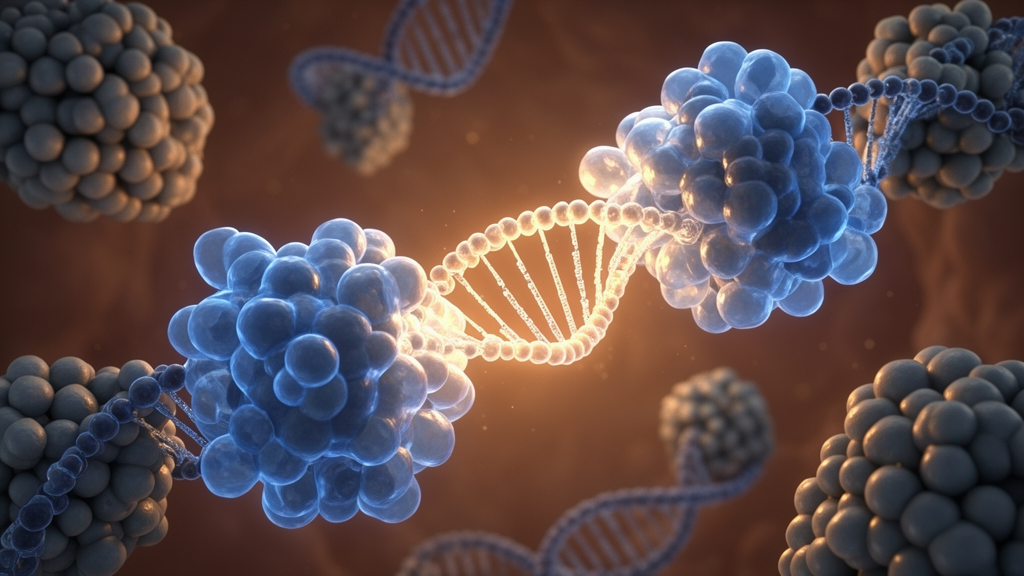
Biomedical researchers have identified the epigenetic modifying heterodimer SETDB1/ATF7IP and the downstream human silencing hub complex as potent molecular barriers restricting precise genome engineering in human cells. Investigating the relatively uncharted DNA repair subpathway known as single-stranded DNA incorporation, a team led by Eric A. Hendrickson demonstrated that these chromatin regulators significantly suppress the efficiency of nickase-induced gene correction across transgenic reporters and select endogenous loci. While programmable nucleases such as Cas9 have revolutionized functional genomics, the epigenetic landscape surrounding target sequences exerts profound control over the molecular machinery responsible for repairing DNA lesions. The discovery establishes a direct mechanical link between histone lysine methylation and homology-directed repair outcomes, providing a scientific foundation for modulating chromatin environments to enhance targeted genetic modifications without causing chromosomal breaks.
Precise genome engineering relies on introducing targeted lesions into chromosomal DNA to stimulate cellular repair mechanisms in the presence of exogenous donor templates. The classical CRISPR-Cas9 platform accomplishes this by generating targeted DNA double-strand breaks, which predominantly trigger error-prone non-homologous end joining or, when donor sequences are provided, homology-directed repair through classic double-strand break repair. However, the reliance on double-strand breaks introduces substantial risks of unwanted genomic instability, translocations, and extensive chromosomal deletions that limit therapeutic translation. Furthermore, classic double-strand break repair pathways demand actively cycling cells and often involve large double-stranded DNA donors, which strongly activate the human innate immune system by mimicking viral infection intermediates. To circumvent these cytotoxic consequences, researchers have turned toward Cas9 nickase variants that cut only a single strand of chromosomal DNA. When paired with single-stranded oligodeoxynucleotide donors, these nickases stimulate recombinogenic repair without generating hazardous double-strand breaks or provoking innate immune alarms.
Nickase-mediated homology-directed repair operates through at least two distinct subpathways depending on strand geometry: synthesis-dependent strand annealing and single-stranded DNA incorporation, sometimes designated as single-strand assimilation. In synthesis-dependent strand annealing, the donor oligodeoxynucleotide simply functions as a physical template from which cellular polymerases copy new genetic sequences into the chromosomal cut site. Conversely, during single-stranded DNA incorporation, the synthetic donor oligodeoxynucleotide is physically integrated directly into the host chromosome. While the basic mechanics of mammalian synthesis-dependent strand annealing have been moderately characterized, the biological factors regulating single-stranded DNA incorporation have remained virtually unknown. Investigators previously hypothesized that donor oligonucleotides might assimilate through nucleotide excision repair gaps or during lagging-strand replication, yet genetic evidence was absent. Understanding these regulatory controls is critical because nucleosome compaction and repressive histone modifications are established inhibitors of double-strand break repair, prompting researchers to query whether heterochromatin similarly obstructs single-strand DNA assimilation.
To identify cellular genes whose disruption enhances single-stranded DNA incorporation, the scientists executed an unbiased, genome-wide knockout screen in the near-haploid human cell line HAP1. The hemizygous genetic architecture of HAP1 cells facilitates the rapid phenotypic recovery of recessive loss-of-function mutations. The investigators engineered a specialized screening platform containing an inducible Cas9 expression cassette driven by a tetracycline response element and the reverse tetracycline transactivator. Simultaneously, a dual-reporter selection cassette was integrated into the adeno-associated virus integration site 1 safe-harbor locus. This integrated reporter carried blasticidin deaminase and inosine monophosphate dehydrogenase genes joined by a porcine teschovirus-1 2A ribosome-skipping sequence under the control of a constitutive cytomegalovirus promoter. Crucially, the reporter genes were rendered non-functional by the targeted insertion of tandem translational stop codons into both reading frames, establishing a stringent baseline system where cell survival required sequential, successful gene editing.
The engineered HAP1 cells were transduced with the pooled Brunello lentiviral guide RNA library, which encompasses 76,441 unique single-guide RNAs targeting 19,114 human genes at approximately four guides per gene. To isolate bona fide repair regulators from nonspecific genes affecting general cellular fitness, the researchers implemented a rigorous two-step selection scheme divided into two parallel tracks: Track A utilizing doxycycline induction and Track B employing Cas9 messenger RNA delivery. After allowing Cas9 expression to decay, the cells underwent an initial round of single-stranded DNA incorporation editing using Cas9 nickase ribonucleoproteins and donor oligonucleotides to repair the blasticidin selection marker. Surviving blasticidin-resistant colonies were subsequently subjected to a second round of nickase-mediated editing targeting the inosine monophosphate dehydrogenase cassette under mycophenolic acid selection through day 33. High-throughput Illumina sequencing of recovered guide RNAs deconvolved with the Orobas scoring pipeline revealed that guides targeting SETDB1 and ATF7IP were enriched by several orders of magnitude across both tracks.
The independent enrichment of SETDB1 and ATF7IP provided immediate biological validation because their encoded proteins physically assemble into a well-characterized heterodimeric protein lysine methyltransferase complex. In this enzymatic partnership, SETDB1 provides catalytic methyltransferase activity while ATF7IP acts as an essential chaperone directing the nuclear localization and stability of SETDB1. Together, the SETDB1/ATF7IP complex deposits repressive trimethyl marks on histone H3 lysine 9, a biochemical modification recognized by Kruppel-associated box-associated protein 1 and heterochromatin protein 1. These adaptor proteins sequentially recruit transcription activation suppressor, M-phase phosphoprotein 8, and periphilin, which collectively assemble the human silencing hub complex. Acting in coordination with the MORC2 zinc-finger protein, this silencing apparatus establishes dense heterochromatin domains over endogenous retroviruses, repetitive elements, and retrotransposons. The initial HAP1 screening data also detected significant enrichment of silencing hub members MPP8 and PPHLN1, demonstrating that the entire repressive epigenetic network operates as a coordinated barrier against single-stranded DNA incorporation.
To substantiate the screening findings across a distinct cell lineage, the authors established validation models in the human colorectal carcinoma line HCT116 by targeting a fluorescent reporter into the hypoxanthine phosphoribosyltransferase 1 locus. The integrated reporter expressed green fluorescent protein linked via a 2A peptide to a mutated, inactive mCherry fluorescent gene. Using CRISPR-Cas9, the researchers generated clonal cell lines completely lacking SETDB1, ATF7IP, or individual human silencing hub components including MPP8, PPHLN1, TASOR, and MORC2. When these knockout clones were challenged with Cas9 nickases and correcting donor oligonucleotides, cells lacking SETDB1 or ATF7IP exhibited a three- to five-fold surge in single-stranded DNA incorporation editing compared to parental cells. Knockouts of human silencing hub components similarly yielded approximately three-fold elevated repair proficiencies. Re-expressing wild-type alleles in reverted clones fully restored baseline repression, whereas knocking out alternative histone H3 lysine 9 methyltransferases, such as EHMT2 or SUV39H1, failed to increase editing, confirming pathway specificity.
Because the initial assays evaluated synthetic transgenic cassettes, the researchers investigated whether SETDB1 and the human silencing hub complex also restrict single-stranded DNA incorporation at native single-copy human genes. They focused on protocadherin gamma subfamily B, 2, an endogenous neural regulatory gene naturally silenced by the SETDB1-HUSH pathway that is transcriptionally active in HCT116 cells. Quantitative reverse transcription-PCR demonstrated that inactivating SETDB1 provoked an approximate twenty-fold increase in native PCDHGB2 messenger RNA expression. The team engineered a single-base insertion mutation into exon 1 of PCDHGB2 and attempted single-stranded DNA incorporation correction using Cas9 nickases alongside synthetic oligonucleotides carrying synonymous tracking mutations. Deep next-generation sequencing across more than 50,000 genomic events revealed a statistically significant two-fold elevation of precise correction in SETDB1-null cells compared to parental controls. This quantitative observation verified that chromatin-mediated suppression of single-strand assimilation is not an artifact of foreign transgenes but directly governs endogenous chromosomal loci under repressive control.
To determine whether the absence of SETDB1/ATF7IP promotes a global, genome-wide stimulation of nickase editing, the investigators systematically assessed endogenous single-copy genes that are not regulated by the silencing hub complex. They engineered stop codon mutations into two distinct endogenous loci: PIGA, an X-linked gene required for glycosylphosphatidylinositol anchor biosynthesis, and CD81, which encodes a well-characterized cell-surface determinant. Across multiple experimental orientations and biological replicates, SETDB1-null and ATF7IP-null cell lines exhibited no significant enhancement in single-stranded DNA incorporation repair frequencies at either PIGA or CD81. These negative findings confirmed that the enhancement observed upon SETDB1 loss is strictly localized to heterochromatic regions targeted by the HUSH silencing machinery rather than reflecting a generalized cellular recombinational hyper-proficiency.
The discovery that local heterochromatin restricts Cas9 nickase editing provides critical insights for therapeutic and experimental genome engineering, although the authors emphasize significant translational constraints. Inactivating SETDB1 or human silencing hub components permits the mobilization of transposable elements and endogenous retroviruses, producing unintended double-strand breaks and catastrophic genomic instability that preclude permanent knockout strategies in clinical medicine. However, the findings illuminate potential avenues for safely inactivating integrated retroviruses, such as HIV-1 proviruses in latent reservoirs, where nickase-mediated introduction of stop codons presents a lower risk of genomic rearrangements than endonuclease cleavage. Furthermore, basic researchers studying structure-function relationships can exploit transgenic single-stranded DNA incorporation to rapidly mutate complemented cDNA variants within uniform expression environments. The authors conclude that developing transient small-molecule inhibitors targeting SETDB1, ATF7IP, or silencing hub enzymes could generate controlled temporal windows of open chromatin, maximizing precise nickase-mediated gene editing efficiency without permanently compromising genome integrity.
Subject of Research: Epigenetic regulation of nickase-mediated single-stranded DNA incorporation in human cells
Article Title: SETDB1/ATF7IP regulate the precise genome engineering of HUSH-regulated genes
Article References: Ruis, B. L., Ward, H., Myers, C. L., Bielinsky, A.-K., & Hendrickson, E. A. (2026). SETDB1/ATF7IP regulate the precise genome engineering of HUSH-regulated genes. Epigenetics & Chromatin, 19(1), Article 10. https://doi.org/10.1186/s13072-026-00661-6
Image Credits: AI Generated
DOI: 10.1186/s13072-026-00661-6
Keywords: CRISPR-Cas9, Cas9 nickase, precise genome engineering, homology-directed repair, single-stranded DNA incorporation, synthesis-dependent strand annealing, SETDB1, ATF7IP, HUSH complex, heterochromatin, histone methylation, H3K9me3, HAP1 cells, HCT116 cells, PCDHGB2, gene targeting, oligodeoxynucleotide donors
News Source: Juliet Wilcox. (November 11, 2026). SETDB1 and HUSH Complexes Restrict Single-Stranded DNA Incorporation During Genome Editing. Scienmag.