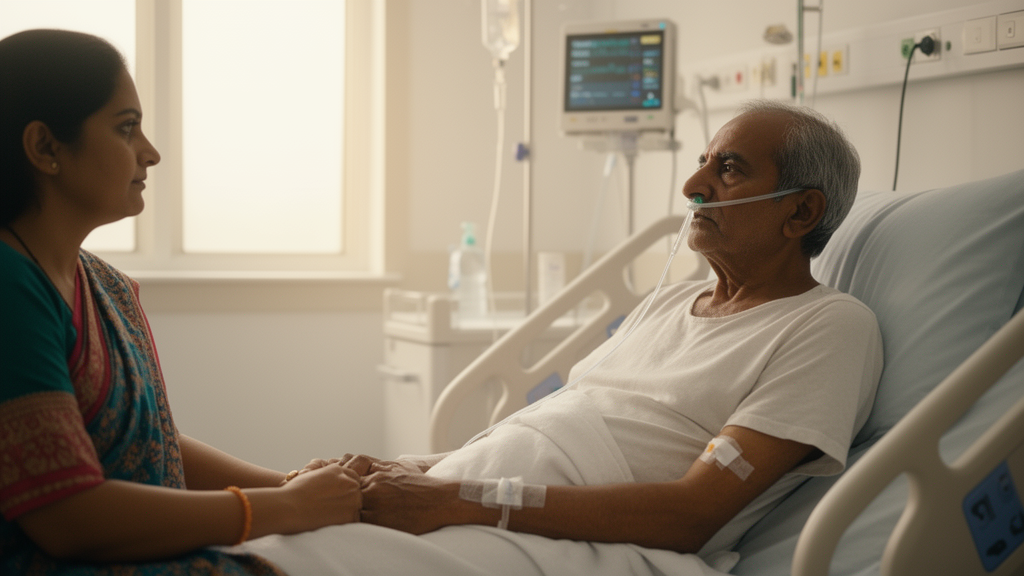
Adults who survive sepsis and leave Indian intensive care units face a heavy burden of death, repeat hospitalization and diminished quality of life in the months and years that follow, according to a multicenter follow-up study published in Critical Care. Among 608 sepsis survivors tracked for up to 39 months after discharge, 251 patients — 41.9 percent — died during follow-up.
The study, known as the LOSS study, drew its participants from the SEPSIS INDIA registry, a multicenter database of patients treated in Indian ICUs. The investigators enrolled adult patients who had survived to hospital discharge after an episode of sepsis and then followed them using structured telephone interviews. Baseline demographic, clinical and comorbidity information came from the registry itself, and follow-up continued for as long as 39 months after each patient was discharged alive.
The cohort was predominantly middle-aged and elderly. Median age at enrollment was 65 years, with an interquartile range of 54 to 75 years, and 58.1 percent of the patients were male. Because the study was observational, it describes patterns and associations among survivors rather than testing any treatment or intervention.
Comorbidity burden emerged as the study’s central finding. A higher Charlson score recorded on the index admission independently predicted long-term mortality, with an odds ratio of 1.403 per point (95 percent confidence interval 1.249 to 1.577; p < 0.0001). In other words, the more chronic illness a patient carried before sepsis, the greater the risk of dying in the follow-up period, even after accounting for other factors in the analysis.
Hospital readmission was also common. A total of 202 patients — 33.2 percent of the cohort — returned to the hospital after their index discharge. Higher Charlson Comorbidity Index scores were associated with an increased risk of readmission, and the study’s take-away message notes that higher comorbidity burden was associated with earlier readmission as well.
Quality of life told a similar story. Among survivors with available quality-of-life data, deterioration in physical quality of life was observed in 19.1 percent of patients, and deterioration in mental quality of life was observed in 16.9 percent.
Comorbidity again proved decisive. A high Charlson Comorbidity Index independently predicted worse physical and worse mental quality-of-life outcomes in the analysis. The authors summarize the implication in their take-away message: chronic comorbidity burden may be more important than acute illness severity in determining what happens to sepsis survivors after they leave the hospital.
The findings address a recognized gap in the literature. As the study’s background states, sepsis remains a major cause of mortality and long-term morbidity worldwide, but data on long-term outcomes among Indian ICU survivors with sepsis have remained limited.
The study was registered with the Clinical Trials Registry of India under registration number 2022/07/044516, and it was conducted as a multicenter observational cohort and follow-up study. As with any observational design, the reported associations between comorbidity and outcomes do not by themselves establish causal mechanisms, and the quality-of-life figures apply only to the subset of survivors for whom data were available.
For clinicians and health systems, the message is that surviving sepsis is not the end of the story. The authors conclude that sepsis survivors in Indian ICUs experience substantial long-term mortality, recurrent hospitalization and impaired quality of life, and that comorbidity burden strongly influences these long-term outcomes — a pattern that may help identify which discharged patients need the closest follow-up.
Subject of Research: Long-term mortality, readmission and quality of life among sepsis survivors in Indian intensive care units
Article Title: Long-term outcomes of sepsis survivors in Indian sepsis registry: the LOSS study
Article References: Todi, S., Mehta, Y., Zirpe, K., Dixit, S., Gurav, S., Chandankhede, S. R., Govil, D., Saha, A., Arunachala, S., Borawake, K., Bhosale, S., Ray, S., Gupta, R., Kuragayala, S. D., Samavedam, S., Shah, M., Hegde, A., Gopal, P., Ansari, A. S., … Pandit, R. (2026). Long-term outcomes of sepsis survivors in Indian sepsis registry: the LOSS study. Critical Care. https://doi.org/10.1186/s13054-026-06427-6
Image Credits: AI Generated
DOI: 10.1186/s13054-026-06427-6
Keywords: sepsis, sepsis survivors, long-term outcomes, intensive care unit, Charlson Comorbidity Index, mortality, hospital readmission, quality of life, India, observational cohort study, SEPSIS INDIA registry, SF-36
News Source: Ophelia Keating. (October 27, 2026). Sepsis survivors in Indian ICUs face high long-term mortality and impaired quality of life. Scienmag.