• HOME
  • NEWS
  • EXPLORE
    • CAREER
      • Companies
      • Jobs
    • EVENTS
    • iGEM
      • News
      • Team
    • PHOTOS
    • VIDEO
    • WIKI
  • BLOG
  • COMMUNITY
    • FACEBOOK
    • INSTAGRAM
    • TWITTER
Wednesday, April 1, 2026
BIOENGINEER.ORG
No Result
View All Result
  • Login
  • HOME
  • NEWS
  • EXPLORE
    • CAREER
      • Companies
      • Jobs
        • Lecturer
        • PhD Studentship
        • Postdoc
        • Research Assistant
    • EVENTS
    • iGEM
      • News
      • Team
    • PHOTOS
    • VIDEO
    • WIKI
  • BLOG
  • COMMUNITY
    • FACEBOOK
    • INSTAGRAM
    • TWITTER
  • HOME
  • NEWS
  • EXPLORE
    • CAREER
      • Companies
      • Jobs
        • Lecturer
        • PhD Studentship
        • Postdoc
        • Research Assistant
    • EVENTS
    • iGEM
      • News
      • Team
    • PHOTOS
    • VIDEO
    • WIKI
  • BLOG
  • COMMUNITY
    • FACEBOOK
    • INSTAGRAM
    • TWITTER
No Result
View All Result
Bioengineer.org
No Result
View All Result
Home NEWS Science News Cancer

Sensitive, noninvasive platform detects circulating tumor cells in melanoma patients

Bioengineer by Bioengineer
June 12, 2019
in Cancer
Reading Time: 2 mins read
0
IMAGE
Share on FacebookShare on TwitterShare on LinkedinShare on RedditShare on Telegram

IMAGE

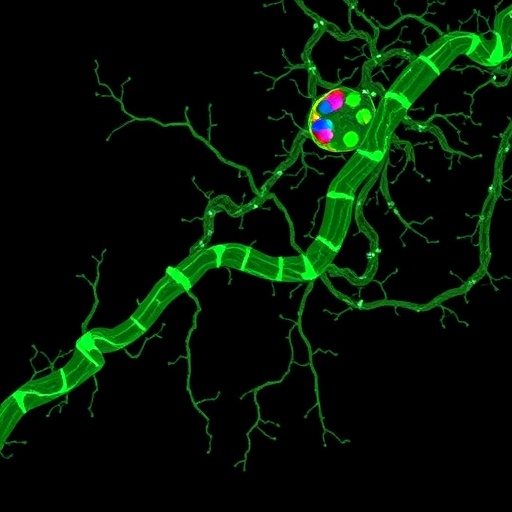
Credit: E.I. Galanzha et al., Science Translational Medicine (2019)

Scientists have created a laser-based platform that can quickly and noninvasively screen large quantities of blood in patients with melanoma to detect circulating tumor cells (CTCs) – a precursor to deadly metastases. The new system accurately sniffed out hard-to-detect CTCs in 27 of 28 patients with the cancer in as little as 10 seconds and was 1,000 times more sensitive than existing assays (detecting one CTC per liter of blood). Although more work is needed, the test could help identify patients at risk of metastasis and guide the use of laser therapies to kill melanoma cells. Researchers have attempted to assess CTCs to determine the risk of metastasis in patients, but existing assays can only examine small amounts of blood, which sometimes do not capture any CTCs. Seeking a solution, Ekaterina Galanzha and colleagues created a system called the Cytophone that uses laser pulses and focused ultrasound to noninvasively peer under the skin of patients with melanoma, revealing pigmented CTCs that pass through veins in the arm. Galanzha et al. applied their technology to 28 light-skinned patients with melanoma and 19 healthy volunteers and found that it identified CTCs in 27 (96%) of the patients between 10 seconds and 60 minutes without generating false positives in the controls. Importantly, the system’s laser could destroy the detected CTCs, resulting in a large drop in CTC numbers. It also uncovered circulating blood clots – the second leading cause of death in cancer patients. The Cytophone was able to account for other variables such as patient skin pigmentation and movement, but future studies should investigate and expand on the range of skin tones for which the technology could be used.

###

Media Contact
Press Package Team
[email protected]

Related Journal Article

http://dx.doi.org/10.1126/scitranslmed.aat5857

Tags: cancerMedicine/Health
Share12Tweet8Share2ShareShareShare2

Related Posts

Unveiling the Biological Pathways Linking Pesticides to Cancer Risk: New Study Sheds Light on Environmental Health Impacts

April 1, 2026

FGFR2b Links to Biomarkers, Tumor Diversity, Survival

April 1, 2026

Early cfEBV DNA Guides Nasopharyngeal Cancer Treatment

April 1, 2026

Phase 1: Ceralasertib, Durvalumab in NSCLC and HNSCC

April 1, 2026
Please login to join discussion

POPULAR NEWS

  • blank

    Revolutionary AI Model Enhances Precision in Detecting Food Contamination

    96 shares
    Share 38 Tweet 24
  • Imagine a Social Media Feed That Challenges Your Views Instead of Reinforcing Them

    1006 shares
    Share 398 Tweet 249
  • Promising Outcomes from First Clinical Trials of Gene Regulation in Epilepsy

    51 shares
    Share 20 Tweet 13
  • Popular Anti-Aging Compound Linked to Damage in Corpus Callosum, Study Finds

    43 shares
    Share 17 Tweet 11

About

We bring you the latest biotechnology news from best research centers and universities around the world. Check our website.

Follow us

Recent News

Tracking Research on Adult Outcomes After Complex Perinatal History

Unveiling the Biological Pathways Linking Pesticides to Cancer Risk: New Study Sheds Light on Environmental Health Impacts

Inequities in Family Engagement Within the NICU

Subscribe to Blog via Email

Success! An email was just sent to confirm your subscription. Please find the email now and click 'Confirm' to start subscribing.

Join 78 other subscribers
  • Contact Us

Bioengineer.org © Copyright 2023 All Rights Reserved.

Welcome Back!

Login to your account below

Forgotten Password?

Retrieve your password

Please enter your username or email address to reset your password.

Log In
No Result
View All Result
  • Homepages
    • Home Page 1
    • Home Page 2
  • News
  • National
  • Business
  • Health
  • Lifestyle
  • Science

Bioengineer.org © Copyright 2023 All Rights Reserved.