• HOME
  • NEWS
  • EXPLORE
    • CAREER
      • Companies
      • Jobs
    • EVENTS
    • iGEM
      • News
      • Team
    • PHOTOS
    • VIDEO
    • WIKI
  • BLOG
  • COMMUNITY
    • FACEBOOK
    • INSTAGRAM
    • TWITTER
Saturday, July 4, 2026
BIOENGINEER.ORG
No Result
View All Result
  • Login
  • HOME
  • NEWS
  • EXPLORE
    • CAREER
      • Companies
      • Jobs
        • Lecturer
        • PhD Studentship
        • Postdoc
        • Research Assistant
    • EVENTS
    • iGEM
      • News
      • Team
    • PHOTOS
    • VIDEO
    • WIKI
  • BLOG
  • COMMUNITY
    • FACEBOOK
    • INSTAGRAM
    • TWITTER
  • HOME
  • NEWS
  • EXPLORE
    • CAREER
      • Companies
      • Jobs
        • Lecturer
        • PhD Studentship
        • Postdoc
        • Research Assistant
    • EVENTS
    • iGEM
      • News
      • Team
    • PHOTOS
    • VIDEO
    • WIKI
  • BLOG
  • COMMUNITY
    • FACEBOOK
    • INSTAGRAM
    • TWITTER
No Result
View All Result
Bioengineer.org
No Result
View All Result
Home NEWS Science News Health

Sensing infection, suppressing regeneration

Bioengineer by Bioengineer
March 11, 2020
in Health
Reading Time: 2 mins read
0
IMAGE
Share on FacebookShare on TwitterShare on LinkedinShare on RedditShare on Telegram

Study identifies how a DNA sensor regulates blood vessel repair
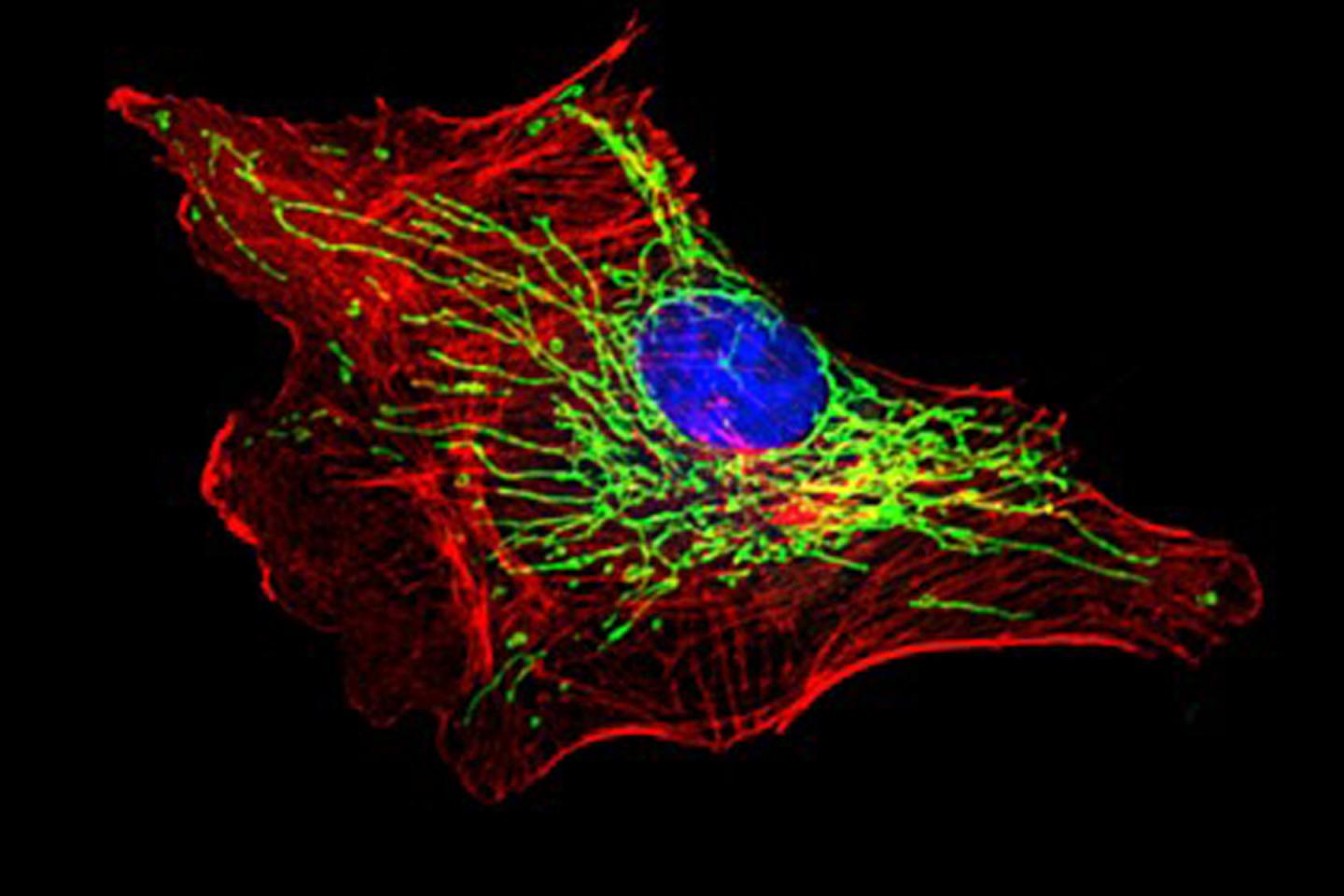
IMAGE

Credit: Jalees Rehman

In a new peer-reviewed publication, University of Illinois at Chicago researchers describe how the body’s response to inflammation, which helps to fight many kinds of infections, also can counterproductively suppress much-needed cell repair and regeneration in blood vessels.

In the study, which is published in Immunity, the researchers describe an enzyme that blocks the ability of blood vessel cells to self-heal. By studying mice with sepsis — a condition caused when the body’s inflammatory response to a bloodstream bacterial infection spirals out of control — they found that removal of the enzyme allows cells to fully regenerate.

“When cells are faced with an injury or an infection, it seems that they make a ‘fight’ or ‘fix’ choice,” said UIC’s Asrar Malik, senior author of the study and the Schweppe Family Distinguished Professor and head of pharmacology at the College of Medicine. “Inflammation is the ‘fight’ response, and the cells appear to delay regeneration while amplifying the inflammatory response.”

“We think that over time cells have evolved to favor fighting an infection over repairing damaged cells, but in some cases, this preference to fight puts the body at further risk,” said Dr. Jalees Rehman, co-senior author and UIC professor of medicine, pharmacology and bioengineering at the College of Medicine. “Especially when the immune response of the body to an infection is so excessive that it damages vital organs such as the lungs, it is absolutely vital that we learn how to help cells restore their ability to regenerate and resolve the inflammation.”

Rehman said that the enzyme — named cGAS — acts as a DNA sensor that is being activated by the DNA released by damaged mitochondria of the blood vessel cells.

“We showed that when the sensor is removed, blood vessel endothelial cells shift their balance towards restoration and regeneration,” Rehman said.

In an experimental model of bacterial sepsis, mice lacking this DNA sensor had much higher rates of survival and showed rapid regeneration of the blood vessels in the lung.

“It’s possible that the degree to which this DNA injury sensor gets activated contributes to why some individuals survive a severe condition like sepsis,” he said. “Suppression of regeneration is especially concerning in the elderly. Our study suggests that further study of this DNA sensor might provide provocative new areas for research to improve endogenous regeneration.”

###

Co-authors on the paper are UIC’s Long Shuang Huang, Zhigang Hong, Wei Wu, Shiquin Xiong, Ming Zhong and Xiaopei Gao.

The study was funded by grants from the National Institutes of Health (R01HL45638, P01HL60678, T32GL007829, R01HL118068 and R01HL90152).

Media Contact
Jackie Carey
[email protected]
312-996-8277

Original Source

https://today.uic.edu/sensing-infection-suppressing-regeneration

Related Journal Article

http://dx.doi.org/10.1016/j.immuni.2020.02.002

Tags: Medicine/Health
Share12Tweet8Share2ShareShareShare2

Related Posts

Lysine Pyruvylation Links Glycolysis to Epigenetics

July 4, 2026

Personalized Neoantigen Dendritic Cell Vaccine in Glioblastoma

July 4, 2026

Decoding Neural Timescales: A Computational Viewpoint

July 4, 2026

Uncovering C5aR2: Unique Signaling and Agonists

July 4, 2026
Please login to join discussion

POPULAR NEWS

  • Detection of EDCs in Breast Milk and Infant Urine Up to Six Months Highlights Early Exposure Risks

    77 shares
    Share 31 Tweet 19
  • Saying Goodbye to PGY-6: Pediatric Fellowship Realities

    103 shares
    Share 41 Tweet 26
  • New Drug Candidate Developed at McMaster Shows Potential for Treating Brain Cancer

    58 shares
    Share 23 Tweet 15
  • KTU Researchers Explore Ultrasound’s Role in Enhancing Blood Flow Beyond Diagnostics

    53 shares
    Share 21 Tweet 13

About

We bring you the latest biotechnology news from best research centers and universities around the world. Check our website.

Follow us

Recent News

Quasi-Bound States Boost Quantum Well Photoresponse

Lysine Pyruvylation Links Glycolysis to Epigenetics

Multiphysics Coupling: Single vs. Multiple DeepONet Branches

Subscribe to Blog via Email

Enter your email address to subscribe to this blog and receive notifications of new posts by email.

Join 83 other subscribers
  • Contact Us

Bioengineer.org © Copyright 2023 All Rights Reserved.

Welcome Back!

Login to your account below

Forgotten Password?

Retrieve your password

Please enter your username or email address to reset your password.

Log In
No Result
View All Result
  • Homepages
    • Home Page 1
    • Home Page 2
  • News
  • National
  • Business
  • Health
  • Lifestyle
  • Science

Bioengineer.org © Copyright 2023 All Rights Reserved.