• HOME
  • NEWS
  • EXPLORE
    • CAREER
      • Companies
      • Jobs
    • EVENTS
    • iGEM
      • News
      • Team
    • PHOTOS
    • VIDEO
    • WIKI
  • BLOG
  • COMMUNITY
    • FACEBOOK
    • INSTAGRAM
    • TWITTER
Sunday, October 4, 2026
BIOENGINEER.ORG
No Result
View All Result
  • Login
  • HOME
  • NEWS
  • EXPLORE
    • CAREER
      • Companies
      • Jobs
        • Lecturer
        • PhD Studentship
        • Postdoc
        • Research Assistant
    • EVENTS
    • iGEM
      • News
      • Team
    • PHOTOS
    • VIDEO
    • WIKI
  • BLOG
  • COMMUNITY
    • FACEBOOK
    • INSTAGRAM
    • TWITTER
  • HOME
  • NEWS
  • EXPLORE
    • CAREER
      • Companies
      • Jobs
        • Lecturer
        • PhD Studentship
        • Postdoc
        • Research Assistant
    • EVENTS
    • iGEM
      • News
      • Team
    • PHOTOS
    • VIDEO
    • WIKI
  • BLOG
  • COMMUNITY
    • FACEBOOK
    • INSTAGRAM
    • TWITTER
No Result
View All Result
Bioengineer.org
No Result
View All Result
Home NEWS Science News Chemistry

Self-healing DNA nanostructures

Bioengineer by Bioengineer
May 29, 2019
in Chemistry
Reading Time: 2 mins read
0
IMAGE
Share on FacebookShare on TwitterShare on LinkedinShare on RedditShare on Telegram

IMAGE

Credit: Adapted from Nano Letters, 2019, DOI: 10.1021/acs.nanolett.9b00888

DNA assembled into nanostructures such as tubes and origami-inspired shapes could someday find applications ranging from DNA computers to nanomedicine. However, these intriguing structures don’t persist long in biological environments because of enzymes called nucleases that degrade DNA. Now, researchers have designed DNA nanostructures that can heal themselves in serum. They report their results in ACS’ journal Nano Letters.

Someday, doctors could introduce DNA nanostructures to the human body to diagnose diseases or deliver medications, among other applications. But first, they must find a way to protect or repair the molecules when nucleases attack. Researchers have developed several approaches to stabilize the structures in serum, such as chemically modifying or coating the DNA. However, making this stabilized DNA can be expensive and time-consuming, and the modifications could affect the nanostructures’ biocompatibility or function. So, Yi Li and Rebecca Schulman wanted to develop a self-repair process that could substantially extend the lifetime of DNA nanostructures.

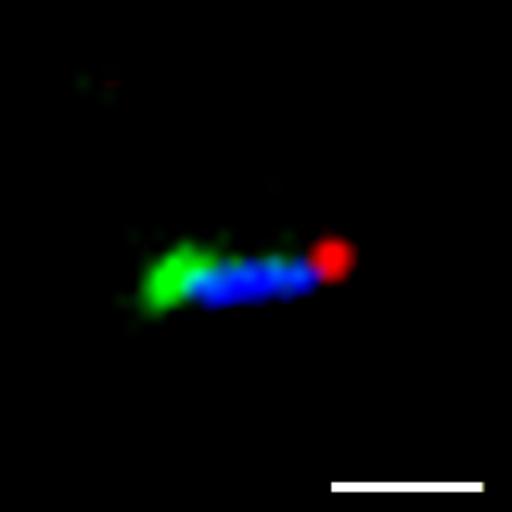
The researchers designed DNA nanotubes that self-assemble from smaller DNA “tiles.” In serum at body temperature, the nanostructures degraded within only 24 hours. However, when the researchers added extra tiles to serum containing the nanotubes, the building blocks repaired damaged structures, extending their lifetimes to more than 96 hours. By labeling the original nanotubes and the extra tiles with differently colored fluorescent dyes, the team determined that the additional small DNA pieces repaired the degrading structures both by replacing damaged tiles and by joining to the nanotube ends. The researchers developed a computer model of the process that indicated DNA nanostructures could be maintained for months or longer using the self-healing method.

###

The authors acknowledge funding from the Defense Advanced Research Projects Agency.

The paper’s abstract will be available on May 29 at 8 a.m. Eastern time here: http://pubs.acs.org/doi/abs/10.1021/acs.nanolett.9b00888

The American Chemical Society, the world’s largest scientific society, is a not-for-profit organization chartered by the U.S. Congress. ACS is a global leader in providing access to chemistry-related information and research through its multiple databases, peer-reviewed journals and scientific conferences. ACS does not conduct research, but publishes and publicizes peer-reviewed scientific studies. Its main offices are in Washington, D.C., and Columbus, Ohio.

To automatically receive news releases from the American Chemical Society, contact [email protected].

Follow us: Twitter | Facebook

Media Contact
Katie Cottingham
[email protected]

Tags: Biomedical/Environmental/Chemical EngineeringBiotechnologyChemistry/Physics/Materials SciencesDiagnosticsGenesGeneticsNanotechnology/Micromachines
Share12Tweet8Share2ShareShareShare2

Related Posts

Banana Peels Turn Into Catalysts That Boost Bio-Oil From Sewage Sludge

Banana Peels Turn Into Catalysts That Boost Bio-Oil From Sewage Sludge

October 4, 2026
Squeezing Polypropylene Flips Its Insulation From Rubbery to Glassy Conduction

Squeezing Polypropylene Flips Its Insulation From Rubbery to Glassy Conduction

October 4, 2026

Sulfated Seaweed Polymer Helps Gels Protect Anthocyanins Until the Gut

October 4, 2026

Nickel and Lithium Doping Face Off in Zinc Oxide Films for Supercapacitors

October 4, 2026
Please login to join discussion

POPULAR NEWS

  • Alloys That Shrink Their Own Grains: New PIX Mechanism Refines Metals With Heat Alone

    Alloys That Shrink Their Own Grains: New PIX Mechanism Refines Metals With Heat Alone

    29 shares
    Share 12 Tweet 7
  • Endurance Exercise Reshapes the Liver in Males and Females Through Distinct Molecular Routes

    29 shares
    Share 12 Tweet 7
  • Single Transcription Factor PU.1 Rapidly Converts Fibroblasts into Macrophage-Lineage Cells

    29 shares
    Share 12 Tweet 7
  • New Scale Measures How Ready Nurse Educators Really Are for the AI Era

    29 shares
    Share 12 Tweet 7

About

We bring you the latest biotechnology news from best research centers and universities around the world. Check our website.

Follow us

Recent News

Alloys That Shrink Their Own Grains: New PIX Mechanism Refines Metals With Heat Alone

Endurance Exercise Reshapes the Liver in Males and Females Through Distinct Molecular Routes

Single Transcription Factor PU.1 Rapidly Converts Fibroblasts into Macrophage-Lineage Cells

Subscribe to Blog via Email

Enter your email address to subscribe to this blog and receive notifications of new posts by email.

Join 85 other subscribers
  • Contact Us

Bioengineer.org © Copyright 2023 All Rights Reserved.

Welcome Back!

Login to your account below

Forgotten Password?

Retrieve your password

Please enter your username or email address to reset your password.

Log In
No Result
View All Result
  • Homepages
    • Home Page 1
    • Home Page 2
  • News
  • National
  • Business
  • Health
  • Lifestyle
  • Science

Bioengineer.org © Copyright 2023 All Rights Reserved.