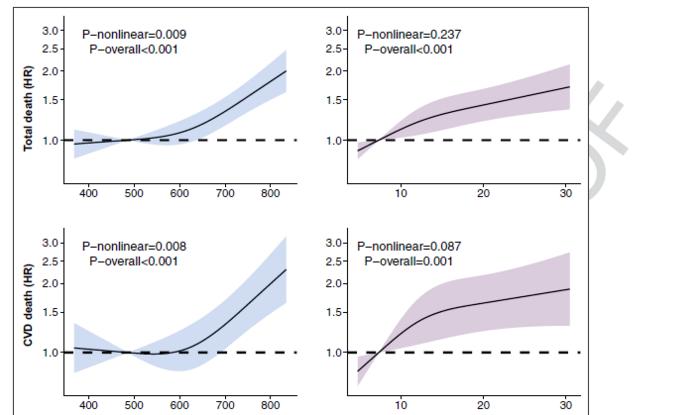
Based on decades-long observations of centenarians, author Dan Buettner (Blue Zones) conjectures that people live longer when they get up and move around after sitting for twenty minutes. Now, a rigorous new study published in the Journal of the American Heart Association (JAHA) has data showing that older women who sat for 11.7 hours or more per day increased their risk of death by 30 percent, regardless of whether they exercised vigorously.
Credit: UC San Diego Health Sciences
Based on decades-long observations of centenarians, author Dan Buettner (Blue Zones) conjectures that people live longer when they get up and move around after sitting for twenty minutes. Now, a rigorous new study published in the Journal of the American Heart Association (JAHA) has data showing that older women who sat for 11.7 hours or more per day increased their risk of death by 30 percent, regardless of whether they exercised vigorously.
Study co-author Steve Nguyen, Ph.D., M.P.H., a postdoctoral fellow at the University of California San Diego Herbert Wertheim School of Public Health and Human Longevity Science, examined measurements of sitting and daily activity collected from hip devices worn for up to seven days by 6,489 women, aged 63 to 99, who were followed for eight years for mortality outcomes. This data was collected in a study led by Andrea LaCroix, Ph.D., M.P.H., Distinguished Professor at the Herbert Wertheim School of Public Health, as part of a long-term national project known as the Women’s Health Initiative (WHI), which began in 1991 and is ongoing.
Nguyen’s paper is the first to apply a novel and validated machine-learned algorithm called CHAP to examine total sitting time and length of sitting bouts in relation to the risk of death. “Sedentary behavior is defined as any waking behavior involving sitting or reclining with low energy expenditure,” explains Nguyen. “Previous techniques for calculating sedentary behavior used cut points that identified low or absent movement. The CHAP algorithm was developed using machine-learning, a type of artificial intelligence, that enhanced its ability to accurately distinguish between standing and sitting.” Fine-tuning “sitting” enabled Nguyen to parse total sitting time and usual sitting bout durations.
Sedentary behavior is a health risk because it reduces muscle contractions, blood flow and glucose metabolism. “When you’re sitting, the blood flow throughout your body slows down, decreasing glucose uptake. Your muscles aren’t contracting as much, so anything that requires oxygen consumption to move the muscles diminishes, and your pulse rate is low,” said LaCroix.
Unfortunately, exercise cannot undo these negative effects. According to the study, whether women participated in low or high amounts of moderate-to-vigorous intensity physical activity, they showed the same heightened risk if they sat for long hours.
“If I take a brisk long walk for an hour but sit the rest of the day, I’m still accruing all the negative effects on my metabolism,” said LaCroix.
Based on the research, LaCroix makes the following recommendation: “The risk starts climbing when you’re sitting about 11 hours per day, combined with the longer you sit in a single session. For example, sitting more than 30 minutes at a time is associated with higher risk than sitting only 10 minutes at a time. Most people aren’t going to get up six times an hour, but maybe people could get up once an hour, or every 20 minutes or so. They don’t have to go anywhere, they can just stand for a little while.”
However, Nguyen points out that not all sitting is the same. “Looking beyond conditions like cardiovascular disease, we start thinking about cognitive outcomes, including dementia,” he said. “There are cognitively stimulating activities that can result in sedentary behavior, like sitting while studying a new language. Is sedentary behavior in that context overall bad for a person? I think it’s hard to say.” Nguyen has recently received a National Institute of General Medical Sciences K99 award for 12 months of mentored research to look at protein signatures of physical activity and how they relate to dementia.
LaCroix is sympathetic to the challenges of modifying sedentary behavior, but she knows that the modifications are necessary, if not easy. “We’ve created this world in which it’s so fascinating to sit and do things. You can be engrossed by TV or scroll on your Instagram for hours. But sitting all the time isn’t the way we were meant to be as humans, and we could reverse all of that culturally just by not being so attracted to all the things that we do while sitting.”
Co-authors on the study include John Bellettiere, Blake Anuskiewicz and Loki Natarajan at UC San Diego, Chongzhi Di at Fred Hutchinson Cancer Center, Jordan Carlson at Children’s Mercy Kansas City and Michael J. LaMonte at University at Buffalo.
This study was funded, in part, by the National Institutes of Health (grants P01 AG052352, R01 HL105065, 75N92021D00001, 75N92021D00002, 75N92021D00003, 75N92021D00004, 75N92021D00005, 5T32AG058529‐03, R01DK114945) and the Tobacco-Related Disease Research Program
The authors declare no competing interests.
# # #
Journal
Journal of the American Heart Association
DOI
10.1161/JAHA.123.031156
Article Publication Date
27-Feb-2024