• HOME
  • NEWS
  • EXPLORE
    • CAREER
      • Companies
      • Jobs
    • EVENTS
    • iGEM
      • News
      • Team
    • PHOTOS
    • VIDEO
    • WIKI
  • BLOG
  • COMMUNITY
    • FACEBOOK
    • INSTAGRAM
    • TWITTER
Monday, May 11, 2026
BIOENGINEER.ORG
No Result
View All Result
  • Login
  • HOME
  • NEWS
  • EXPLORE
    • CAREER
      • Companies
      • Jobs
        • Lecturer
        • PhD Studentship
        • Postdoc
        • Research Assistant
    • EVENTS
    • iGEM
      • News
      • Team
    • PHOTOS
    • VIDEO
    • WIKI
  • BLOG
  • COMMUNITY
    • FACEBOOK
    • INSTAGRAM
    • TWITTER
  • HOME
  • NEWS
  • EXPLORE
    • CAREER
      • Companies
      • Jobs
        • Lecturer
        • PhD Studentship
        • Postdoc
        • Research Assistant
    • EVENTS
    • iGEM
      • News
      • Team
    • PHOTOS
    • VIDEO
    • WIKI
  • BLOG
  • COMMUNITY
    • FACEBOOK
    • INSTAGRAM
    • TWITTER
No Result
View All Result
Bioengineer.org
No Result
View All Result
Home NEWS Science News Chemistry

Secrets of fluorescent microalgae could lead to super-efficient solar cells

Bioengineer by Bioengineer
May 9, 2019
in Chemistry
Reading Time: 2 mins read
0
IMAGE
Share on FacebookShare on TwitterShare on LinkedinShare on RedditShare on Telegram

IMAGE

Credit: University of Birmingham

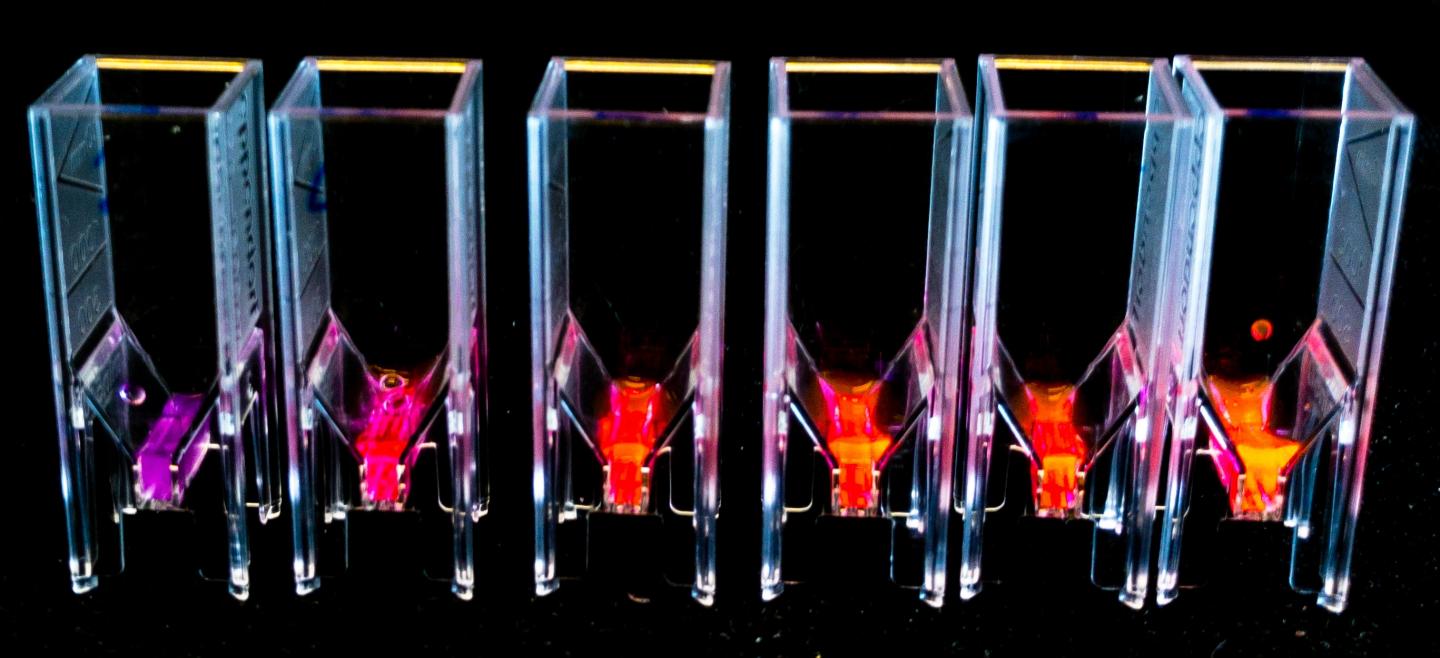
Tiny light-emitting microalgae, found in the ocean, could hold the secret to the next generation of organic solar cells, according to new research carried out at the Universities of Birmingham and Utrecht.

Microalgae are probably the oldest surviving living organisms on the planet. They have evolved over billions of years to possess light harvesting systems that are up to 95 per cent efficient. This enables them to survive in the most extreme environments, and adapt to changes our world has seen over this time-span.

Unravelling how this system works could yield important clues about how it could be used or recreated for use in new, super-efficient organic solar panels. Because of the complexity of the organisms and the huge variety of different species, however, progress in this area has been limited.

The team made use of some of the advanced methods of a technique called mass spectrometry, which enabled them to characterize individual components of the algae light-harvesting system. This approach enabled them to reveal details of distinct modules of the system that have never been seen before. This fine detail will help scientists understand why microalgae are so efficient at light harvesting.

Aneika Leney, in the School of Biosciences, at the University of Birmingham, is one lead author on the study, which is published in Cell Chem. “Microalgae are fascinating organisms that can do things so much better than systems designed by engineers,” she explains. “By applying this knowledge, we can start to make real progress towards adapting these systems for use in solar panels.”

Professor Albert Heck, Scientific Director of the Netherlands Proteomics Centre, Utrecht University, added: “Our presumption is that when you see algae, they look sluggish and certainly not very interesting. But when you look into the molecular details of their machineries that make them convert sun light into energy so efficiently, you think these are more sophisticated than the most sophisticated Swiss watch. This needs to be the product of 3 billion years of fine-tuning, called evolution.”

The next step for the team will be to study in more detail how energy is transferred through these light-harvesting systems and pinpoint why the modules they have identified are so efficient. “With most solar panels on the UK homes operating at 10-20 per cent efficiency, increasing this efficiency to 95 per cent will dramatically increase the use of solar power technology and in doing so help protect the environment,” adds Dr Leney.

###

Notes to editor:

  • The University of Birmingham is ranked amongst the world’s top 100 institutions. Its work brings people from across the world to Birmingham, including researchers, teachers and more than 6,500 international students from over 150 countries.
  • Leney, Heck et al (2019). ‘A Colorful Pallet of B-phycoerythrin Proteoforms Exposed by a Multimodal Mass Spectrometry. Cell Chem.

Media Contact
Beck Lockwood
[email protected]

Tags: BiotechnologyCell BiologyChemistry/Physics/Materials SciencesEnergy SourcesEnergy/Fuel (non-petroleum)
Share12Tweet8Share2ShareShareShare2

Related Posts

Miniature Sensor Uses Light to Detect Touch — Chemistry

Miniature Sensor Uses Light to Detect Touch

May 8, 2026
Iron Minerals Determine Whether Dissolved Organic Matter Fuels Microbes or Becomes Long-Term Carbon Storage — Chemistry

Iron Minerals Determine Whether Dissolved Organic Matter Fuels Microbes or Becomes Long-Term Carbon Storage

May 8, 2026

Kate Evans Appointed Associate Lab Director for Biological and Environmental Systems Science at ORNL

May 8, 2026

Advancing Multiscale Modeling and Overcoming Operational Challenges in Autothermal COâ‚‚-to-Methanol Reactors

May 8, 2026
Please login to join discussion

POPULAR NEWS

  • Research Indicates Potential Connection Between Prenatal Medication Exposure and Elevated Autism Risk

    840 shares
    Share 336 Tweet 210
  • New Study Reveals Plants Can Detect the Sound of Rain

    727 shares
    Share 290 Tweet 181
  • Salmonella Haem Blocks Macrophages, Boosts Infection

    61 shares
    Share 24 Tweet 15
  • Breastmilk Balances E. coli and Beneficial Bacteria in Infant Gut Microbiomes

    57 shares
    Share 23 Tweet 14

About

We bring you the latest biotechnology news from best research centers and universities around the world. Check our website.

Follow us

Recent News

New Post-Hoc Analysis Explores Daily Oral Orforglipron Use in Adults Over 65 with Obesity, Regardless of Diabetes Status

Evaluating Digoxin Use in Patients with Symptomatic Rheumatic Heart Disease

Evaluating the Effectiveness and Safety of Digitalis Glycosides in Treating Heart Failure

Subscribe to Blog via Email

Enter your email address to subscribe to this blog and receive notifications of new posts by email.

Join 82 other subscribers
  • Contact Us

Bioengineer.org © Copyright 2023 All Rights Reserved.

Welcome Back!

Login to your account below

Forgotten Password?

Retrieve your password

Please enter your username or email address to reset your password.

Log In
No Result
View All Result
  • Homepages
    • Home Page 1
    • Home Page 2
  • News
  • National
  • Business
  • Health
  • Lifestyle
  • Science

Bioengineer.org © Copyright 2023 All Rights Reserved.