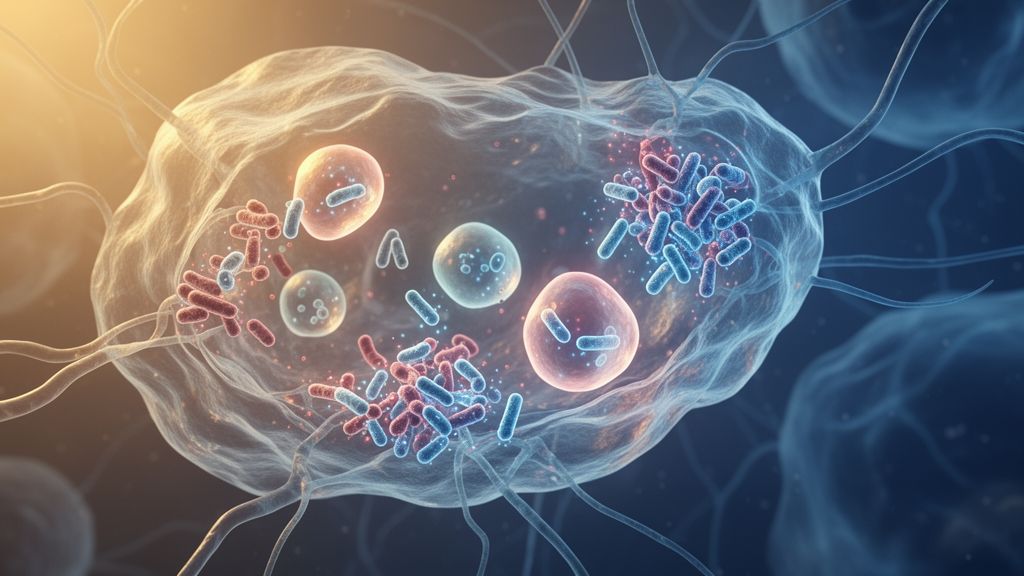
An RNA-sequencing investigation of mouse-derived macrophages has demonstrated that distinct strains of the intracellular bacterium Orientia tsutsugamushi selectively activate divergent innate immune signaling pathways and cellular inflammatory responses. Orientia tsutsugamushi is an obligate intracellular pathogen responsible for scrub typhus, an emerging and severely neglected infection associated with substantial mortality rates. In Southeast Asia, the Karp and Gilliam strains are responsible for the vast majority of documented clinical cases. Prior experimental work showed that Karp-infected outbred and inbred mice suffer markedly more severe disease outcomes than their Gilliam-infected counterparts, an outcome linked to excessive tissue injury and uncontrolled inflammatory reactions.
Macrophages represent the primary immune cell target during Orientia tsutsugamushi infection and fulfill essential functions in defending the host organism against microbial invasion. Beyond directly confronting the intracellular pathogen, these immune cells serve as pivotal mediators of immune modulation through the coordinated synthesis and production of cytokines and chemokines. Nevertheless, the precise biological processes by which direct interactions between macrophages and Orientia tsutsugamushi contribute to differential disease severity had remained unresolved, prompting researchers to analyze host transcriptional responses at the cellular level.
To characterize these strain-specific signatures, researchers utilized RNA sequencing on primary macrophages isolated from C57BL/6 mice to capture infection-associated and strain-dependent immune responses. The transcriptomic findings revealed that while Orientia tsutsugamushi exposure modulated several common canonical pathways and shared genes, each strain triggered distinct, highly selective pathway signatures. Specifically, infection with the Karp strain uniquely stimulated proinflammatory signaling cascades and pattern recognition receptors, prominent among which were C-type lectin receptors including Mincle, encoded by Clec4e, and Dectin-2, encoded by Clec4n.
By comparison, infection with the Gilliam strain initiated an entirely different cellular program within host macrophages, stimulating cellular proliferation and active DNA replication pathways. These contrasting transcriptomic profiles also corresponded with measurable differences in bacterial growth behavior across distinct cellular states. When cultured within unprimed, resting M0-like macrophages, the Gilliam strain replicated and grew markedly better than the Karp strain, demonstrating divergent bacterial adaptation and intracellular survival within naive host immune cells.
The comparative dynamics reversed substantially when macrophages were primed with interferon-gamma to induce an activated M1-like inflammatory state. Under these antimicrobial conditions, the Karp strain demonstrated significantly greater resistance against macrophage killing mechanisms than the Gilliam strain, pointing to an enhanced capacity to evade host immune defenses. The findings indicate that the Karp strain preferentially upregulates C-type lectin receptors and drives type 1-skewed inflammatory responses while concurrently resisting interferon-gamma-mediated killing, providing valuable mechanistic insights into how strain-associated immune activation influences scrub typhus disease progression and severity.
Subject of Research: Strain-dependent macrophage innate signaling and inflammatory responses to Orientia tsutsugamushi
Article Title: Selective activation of macrophage innate signaling pathways and inflammatory responses to Orientia tsutsugamushi Karp and Gilliam strains
Article References: Villacreses, D., Gonzales, C., Zhang, Y., Liang, Y., & Soong, L. (2026). Selective activation of macrophage innate signaling pathways and inflammatory responses to Orientia tsutsugamushi Karp and Gilliam strains. PLOS Neglected Tropical Diseases, 20(11), e0014302. https://doi.org/10.1371/journal.pntd.0014302
Image Credits: AI Generated
DOI: 10.1371/journal.pntd.0014302
Keywords: Orientia tsutsugamushi, Scrub typhus, Karp strain, Gilliam strain, Macrophages, C57BL/6 mice, RNA sequencing, Innate immune signaling, Pattern recognition receptors, C-type lectin receptors, Mincle, Clec4e, Dectin-2, Clec4n, Interferon-gamma, M1 macrophages, M0 macrophages, Host immune evasion
News Source: Ophelia Keating. (November 11, 2026). Scrub Typhus Bacterial Strains Trigger Divergent Inflammatory Responses in Mouse Macrophages. Scienmag.