New research reveals how patterns of mobile phone movement say a lot about your personality type
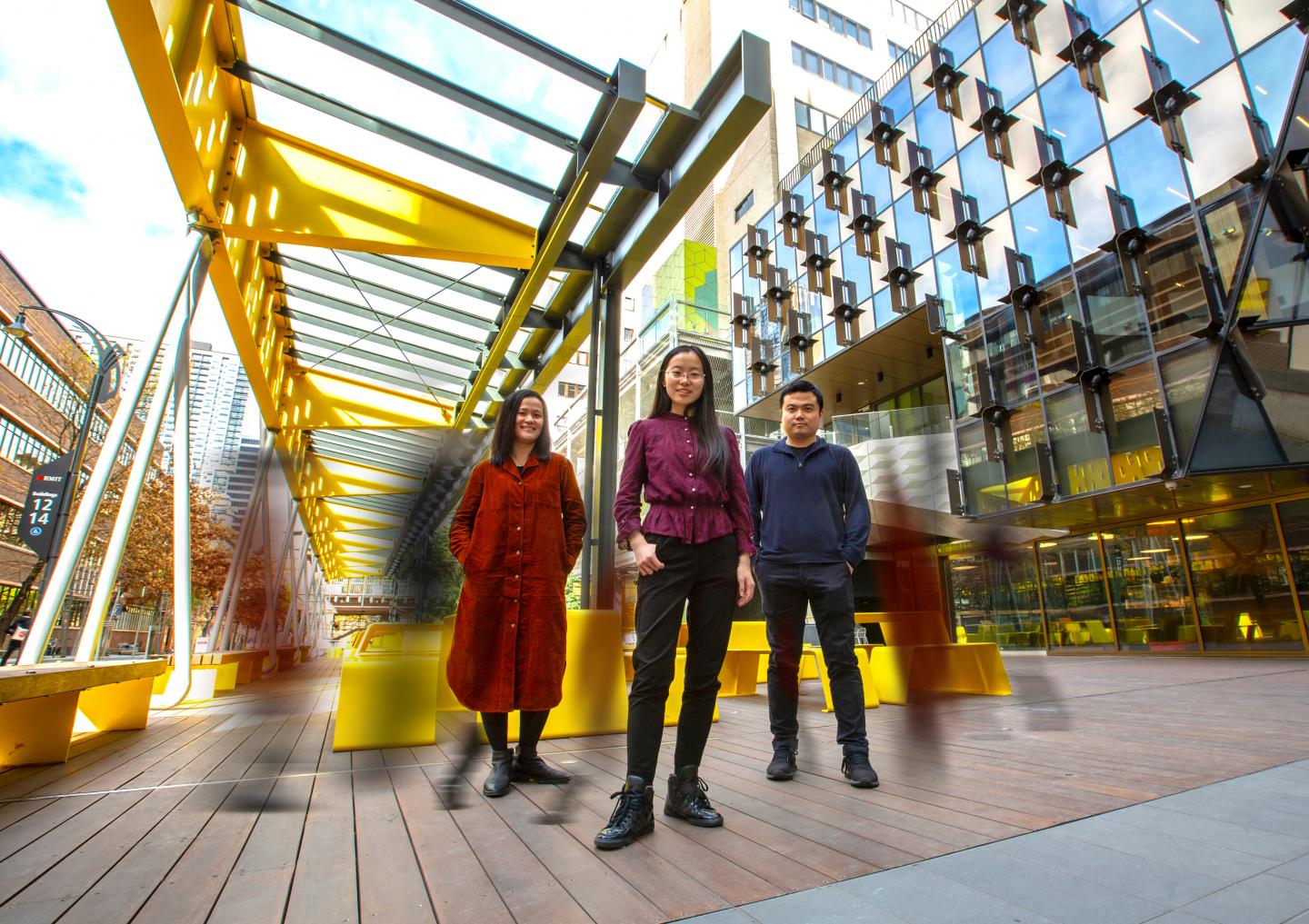
Credit: RMIT University
RMIT University researchers have used data from mobile phone accelerometers – the tiny sensors tracking phone movement for step-counting and other apps – to predict people’s personalities.
RMIT University computer scientist Associate Professor Flora Salim said previous studies had predicted personality types using phone call and messaging activity logs, but this study showed adding accelerometer data improved accuracy.
“Activity like how quickly or how far we walk, or when we pick up our phones up during the night, often follows patterns and these patterns say a lot about our personality type,” said Salim, a leading expert in human mobility data.
Physical activity is proven to have a strong correlation with human personality. Therefore, researchers analysed physical activity features from different dimensions like dispersion, diversity, and regularity.
Key findings from the study:
- People with consistent movements on weekday evenings were generally more introverted, while extroverts displayed more random patterns, perhaps meeting up with different people and taking up unplanned options.
- Agreeable people had more random activity patterns and were busier on weekends and weekday evenings than others.
- Friendly and compassionate females made more outgoing calls than anyone else.
- Conscientious, organized people didn’t tend to contact the same person often in a short space of time.
- Sensitive or neurotic females often checked their phones or moved with their phones regularly well into the night, past midnight. Sensitive or neurotic males did the opposite.
- More inventive and curious people tended to make and receive fewer phone calls compared to others.
Study lead author and RMIT University PhD student, Nan Gao, said the potential applications from this research were exciting.
“There are applications for this technology in social media with friend recommendations, online dating matches and targeted advertising, but I think the most exciting part is what we can learn about ourselves,” said Gao.
“Many of our habits and behaviours are unconscious but, when analysed, they tell us a lot about who we really are so we can understand ourselves better, resist social pressure to conform and to empathize with others. Most importantly, being who we truly are can make our experience of life richer, more exciting and more meaningful.”
“In Ancient Greece there is a saying about knowing yourself as the beginning of wisdom, applications like this can really help to reveal who we are to ourselves.”
The results were analysed in accordance with the Big Five personality traits, which are:
- Extraversion: how energetic, sociable and talkative you are.
- Openness: how curious and inventive you are.
- Agreeableness: how friendly and compassionate, rather than suspicious and hostile, you are to others.
- Conscientiousness: how organized, efficient and careful you are.
- Neuroticism: how nervous and sensitive, rather than confident and secure, you are.
###
The team’s study ‘Predicting Personality Traits from Physical Activity Intensity’ has just been published in the IEEE Computer journal.
This work was funded through an Australian Research Council Linkage project between Swinburne University of Technology, RMIT University and Aurecon.
The study was conducted on a public dataset gathered from participants at a US university. As findings may vary in a different group, the team will next collect data from Australian participants to prove the effectiveness of their research.
Media Contact
Michael Quin
[email protected]
Original Source
https:/
Related Journal Article
http://dx.