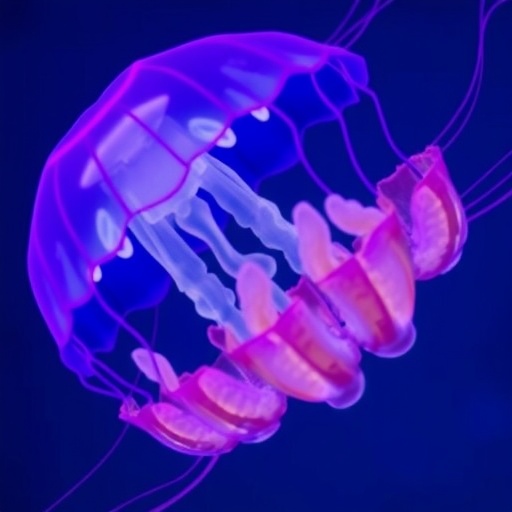
In the realm of regenerative biology, few organisms captivate scientists quite like the jellyfish species Clytia hemisphaerica. A decade ago, Jocelyn Malamy, an associate professor specializing in Molecular Genetics and Cell Biology at the University of Chicago, embarked on a journey of discovery with these translucent medusae. Thanks to specimens provided by Evelyn Houliston’s Marine Observatoire laboratory, Malamy was able to observe for the first time the striking ability of Clytia cells to migrate and close wounds, revealing a process of epithelial repair so rapid and scar-free that it challenges conventional understanding of wound healing.
The life cycle of Clytia is complex, involving alternating stages that profoundly influence its biology. While the free-swimming medusa — the familiar bell-shaped jellyfish form — often draws the spotlight, it constitutes only a brief phase analogous to a flower. These medusae arise from polyp colonies, which adhere to substrates such as rocks, wood, or underwater foliage. These polyps serve as the perennial “shrub” of the organism, enduring and generating new medusae periodically. This modular life cycle imbues Clytia with remarkable longevity and regenerative potential, with polyps capable of indefinite persistence, and medusae thriving for mere months.
What truly distinguishes Clytia medusae among basal eukaryotes is their astounding ability to effect rapid wound closure with an embryonic-like scarless outcome. Whereas mammalian systems often produce fibrotic scar tissue during healing, Clytia regenerates with remarkable finesse, restoring tissue architecture efficiently within minutes for small wounds and less than an hour for larger injuries. This scarless healing bears resemblance to embryonic wound repair processes, which lack inflammation and fibrosis, suggesting a fundamentally conserved, evolutionarily ancient mechanism.
The transparency of Clytia medusae affords researchers an unparalleled window to observe cellular dynamics in vivo. Unlike mammalian models where immune responses, inflammation, and vascular remodeling complicate the visualization of epithelial healing, Clytia’s simple body plan lacks such confounding factors. This simplicity allows direct observation of epithelial cells orchestrating tissue repair, revealing conserved processes that extend across eukaryotic life. Malamy notes that the cellular behaviors observed are indistinguishable from those in mammalian epithelial sheets, indicating a deep evolutionary conservation of wound healing pathways.
Crucial to this repair process are two sequential cellular mechanisms: first, the extension of lamellipodia and second, the contraction of an actomyosin cable. Lamellipodia are actin-rich, flat, sheet-like projections emanating from epithelial cells bordering the wound. These “foot-like” extensions dynamically explore, adhering to the basement membrane and tugging the cell bodies forward to stretch and close gaps in the tissue. Remarkably, Malamy’s recent work demonstrates lamellipodia formation even in isolated internal wounds within single cells, a novel insight that expands our understanding of epithelial plasticity.
Following lamellipodial advancement, an actomyosin cable forms at the rear edge of these protrusions. This contractile ring, composed of actin filaments and myosin motor proteins, contracts to pull the wound edges together, consolidating the closure initiated by the crawling lamellipodia. This biphasic mechanism ensures robustness and adaptability, allowing Clytia to repair wounds of varying sizes with precision and speed.
The basement membrane’s integrity emerges as a pivotal factor guiding the healing mechanism choice. When the basement membrane remains intact, lamellipodia can readily glide to close wounds. However, if injury disrupts this underlying extracellular matrix, the actomyosin cable assumes a critical role. It exerts contractile forces capable of dragging epithelial sheets across damaged basement membrane regions and even expelling debris obstructing repair, showcasing a versatile dual strategy tailored to the wound’s nature.
Larger wounds introduce additional complexity, as the reach of lamellipodia alone may be insufficient to span extensive gaps. In response, Clytia epithelium initiates collective cell migration: cohesive epithelial sheets lift and crawl en masse across the wound bed. This communal locomotion bridges the initially wide gaps until lamellipodia from opposing sides meet and the actomyosin cable completes the closure, a sophisticated hierarchy of cellular coordination that mirrors wound healing in more complex organisms.
These findings illuminate a fundamental principle: wound healing in Clytia is governed by an elegant, size-adaptive system that seamlessly integrates cellular protrusions and contractile machinery. Such an adaptive mechanism may reflect a deeply conserved evolutionary toolkit, highlighting how basal metazoans optimize tissue repair while maintaining transparency and minimal scarring.
Looking ahead, Malamy plans to delve into the enigmatic process of basement membrane repair itself. While current research elucidates how cells close wounds atop the basement membrane, the restoration of this critical extracellular matrix remains poorly understood across biological systems. Unraveling this will not only deepen understanding of Clytia’s regenerative capabilities but may also unlock insights applicable to human epithelial diseases, chronic wounds, and regenerative medicine at large.
The implications of Clytia’s wound healing extend beyond basic biology, offering a living model to dissect epithelial mechanics without the confounding complexities present in vertebrate systems. Given the evolutionary conservation of epithelial responses, this model promises to accelerate the development of therapies that harness or mimic natural scar-free healing processes, revolutionizing approaches to wound management in clinical settings.
Intriguingly, the Clytia system challenges traditional beliefs about the distinctions between embryonic and adult wound healing, as it simultaneously exhibits rapid closure and scarless repair reminiscent of developmental stages. This duality provokes new questions regarding the molecular cues and gene regulatory networks underpinning such plasticity and their potential reactivation in adult mammalian tissues.
Since Malamy’s pioneering 2017 characterization and her collaborative 2018 investigations, the evolving body of work has steadily uncovered the choreography of actin dynamics and cellular migrations fundamental to epithelial repair. The latest study, published in Molecular Biology of the Cell, further refines this understanding by linking basement membrane status to the strategic deployment of lamellipodia and actomyosin structures, thereby clarifying discrepancies and debates about wound healing mechanisms across species and injury contexts.
As the scientific community embraces Clytia hemisphaerica as a model organism for wound healing, it becomes evident that the jellyfish’s transparent body and rapid regenerative prowess offer more than mere fascination—they provide a powerful experimental platform. Through detailed mechanistic studies, Clytia shines new light on universal principles governing tissue integrity, regeneration, and cellular coordination, holding promise for both fundamental science and translational innovations in medicine.
Subject of Research: Wound healing mechanisms and epithelial repair in Clytia hemisphaerica
Article Title: The basement membrane determines the choice of wound healing mechanism across wound scales in the basal eukaryote Clytia hemisphaerica
News Publication Date: 16-Jun-2026
Web References:
https://www.mbl.edu/news/jellyfish-model-wound-healing
http://dx.doi.org/10.1091/mbc.E26-02-0094
References:
Malamy J., Shribak M. (2026). The basement membrane determines the choice of wound healing mechanism across wound scales in the basal eukaryote Clytia hemisphaerica. Molecular Biology of the Cell.
Image Credits: Image credit: Jocelyn Malamy
Keywords: Clytia hemisphaerica, wound healing, epithelial repair, lamellipodia, actomyosin cable, basement membrane, scarless healing, regenerative biology, jellyfish, cell migration
Tags: basal eukaryote healing processescell migration in wound healingClytia hemisphaerica regenerationjellyfish life cycle stagesjellyfish longevity and regenerationjellyfish wound healing mechanismsmarine biology regenerative researchmarine regenerative organismsmolecular genetics of jellyfishpolyp colony biologyrapid epithelial repair in jellyfishscar-free wound closure