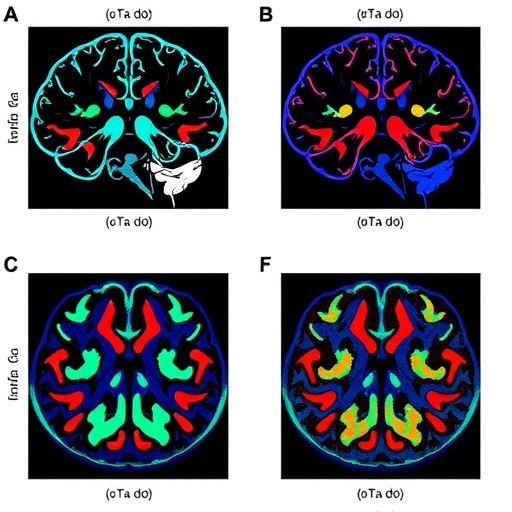
In the depths of winter, European moles face an existential problem. Their metabolisms – close to the upper limit of any mammal – require more food than is available during the coldest months. Instead of solving this seasonal dilemma through migration or hibernation, moles have dug into an unusual energy-saving tactic: shrinking their brains. In a new study, a team led by Dina Dechmann from the Max Planck Institute of Animal Behavior reports that European moles reduce their brains by eleven percent in time for winter, and regrow them by four percent by summer. They represent a new group of mammal known to reversibly shrink their brain through a process known as Dehnel’s phenomenon. But the study does more than add another species to the strange canon of brain-shrinking mammals – it gets at the evolutionary mystery of what drives them down this treacherous path. Comparing moles from different climates, the researchers find that Dehnel’s phenomenon is driven by cold conditions rather than food shortage alone. Reducing brain tissue allows the animals to reduce energy consumption and thus survive the cold.
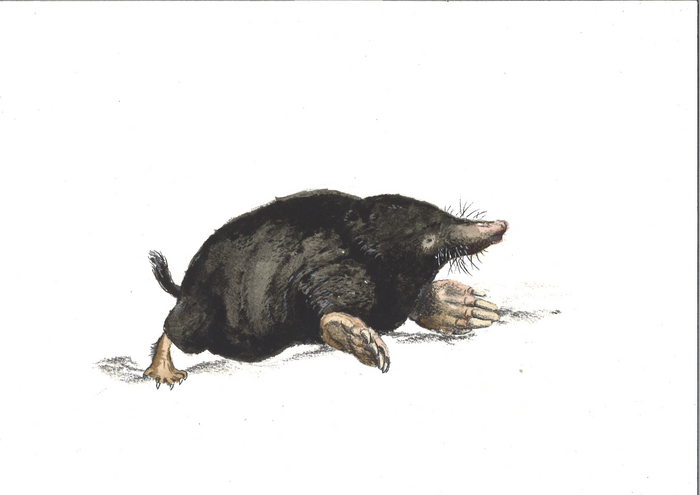
Credit: Javier Lázaro
In the depths of winter, European moles face an existential problem. Their metabolisms – close to the upper limit of any mammal – require more food than is available during the coldest months. Instead of solving this seasonal dilemma through migration or hibernation, moles have dug into an unusual energy-saving tactic: shrinking their brains. In a new study, a team led by Dina Dechmann from the Max Planck Institute of Animal Behavior reports that European moles reduce their brains by eleven percent in time for winter, and regrow them by four percent by summer. They represent a new group of mammal known to reversibly shrink their brain through a process known as Dehnel’s phenomenon. But the study does more than add another species to the strange canon of brain-shrinking mammals – it gets at the evolutionary mystery of what drives them down this treacherous path. Comparing moles from different climates, the researchers find that Dehnel’s phenomenon is driven by cold conditions rather than food shortage alone. Reducing brain tissue allows the animals to reduce energy consumption and thus survive the cold.
Identified in the 1950s, Dehnel’s phenomenon was first described in the skulls of shrews, which were observed to be smaller in winter and larger in summer. In 2018, Dechmann and colleagues provided the first evidence that that these unusual changes in shrew skulls occurred over the course of an individual’s life. Since then, Dechmann and colleagues have shown that Dehnel’s phenomenon also occurs in stoats and weasels. What these mammals have in common is a lifestyle that puts them on an energetic knife edge.
“They have extremely high metabolisms and year-round activity in cold climates,” says Dechmann. “Their tiny bodies are like turbocharged Porsche engines that burn through energy stores in a matter of hours.”
To the scientists, it was clear that shrinking energetically costly tissue, such as the brain, allows the animals to reduce their energetic needs. “We understood that Dehnel’s phenomenon helps these animals survive when times are tough. But we still didn’t understand what were the real pressure points, the exact environmental triggers, driving this process.”
Now, the team have answered this by studying a new mammal on the metabolic extreme. Measuring skulls in museum collections, the researchers documented how two species of mole – the European mole and the Spanish mole – changed across seasons. They found that the skulls of the European mole shrank by eleven percent in November and regrew by four percent in spring, but those of the Spanish mole didn’t change throughout the year.
Because the species live in vastly different climates, the researchers could pinpoint that weather, not food availability, was responsible for brain change. “If it was just a question of food, then we should see European moles shrinking in winter when food was scarce and Spanish moles shrinking in summer when harsh heat made food scarce,” says Dechmann.
The study findings go beyond answering questions of evolution, offering insights into how our bodies can regenerate after sustaining significant damage. “That three distantly related groups of mammals can shrink and then regrow bone and brain tissue has huge implications for research into diseases such as Alzheimer’s and osteoporosis,” says Dechmann. “The more mammals we discover with Dehnel’s, the more relevant the biological insights become to other mammals, and perhaps even to us.”
Journal
Royal Society Open Science
DOI
10.1098/rsos.220652
Method of Research
Meta-analysis
Subject of Research
Animals
Article Title
Winter conditions, not resource availability alone, may drive reversible seasonal skull size changes in moles
Article Publication Date
7-Sep-2022