• HOME
  • NEWS
  • EXPLORE
    • CAREER
      • Companies
      • Jobs
    • EVENTS
    • iGEM
      • News
      • Team
    • PHOTOS
    • VIDEO
    • WIKI
  • BLOG
  • COMMUNITY
    • FACEBOOK
    • INSTAGRAM
    • TWITTER
Sunday, May 17, 2026
BIOENGINEER.ORG
No Result
View All Result
  • Login
  • HOME
  • NEWS
  • EXPLORE
    • CAREER
      • Companies
      • Jobs
        • Lecturer
        • PhD Studentship
        • Postdoc
        • Research Assistant
    • EVENTS
    • iGEM
      • News
      • Team
    • PHOTOS
    • VIDEO
    • WIKI
  • BLOG
  • COMMUNITY
    • FACEBOOK
    • INSTAGRAM
    • TWITTER
  • HOME
  • NEWS
  • EXPLORE
    • CAREER
      • Companies
      • Jobs
        • Lecturer
        • PhD Studentship
        • Postdoc
        • Research Assistant
    • EVENTS
    • iGEM
      • News
      • Team
    • PHOTOS
    • VIDEO
    • WIKI
  • BLOG
  • COMMUNITY
    • FACEBOOK
    • INSTAGRAM
    • TWITTER
No Result
View All Result
Bioengineer.org
No Result
View All Result
Home NEWS Science News Biology

Scientists uncover route for finding out what makes individuals nice or nasty

Bioengineer by Bioengineer
February 13, 2018
in Biology
Reading Time: 2 mins read
0
Share on FacebookShare on TwitterShare on LinkedinShare on RedditShare on Telegram

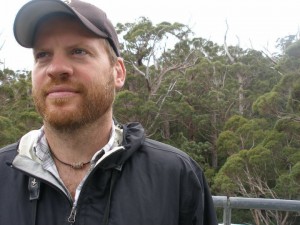
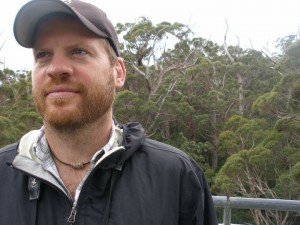
Dr-Sasha-Dall

A University of Exeter scientist has helped develop an innovative mathematical model for exploring why some individuals evolve to be genetically programmed to be nice, while others stay nasty.

Dr Sasha Dall, Senior Lecturer in Mathematical Ecology, and a team of international colleagues have designed a new mathematical framework for examining social behaviour in a range of different species that will help advance our understanding of the evolution of sociality.

The theory of kin selection has for some time allowed biologists to explain why some animals and other organisms adopt altruistic behaviour, at their own expense, for the benefit of their relatives- worker bees laying down their lives to promote the welfare of their mother, the Queen, for example. But up until now scientists have not been able to explain the role of genetic polymorphism, or why some individuals appear to be genetically programmed to help others whilst living side-by-side with others who tend to exploit their generosity.

Using colony-living microbes as inspiration to explore why some individuals are by nature generous and others less so, the researchers produced an innovative model of social evolution that allows them to understand how far this is likely to be influenced by conditioning or the surrounding environment.

They found that the behaviour of individuals can often evolve to be determined by a set of inherited genetic tendencies that accurately predict social relationships, including their likely relatedness to other members of their community, and their surroundings rather than in direct response to what they sense or experience.

Dr Dall, a co-author on the paper, which is published in the journal PLOS Computational Biology, said: “As humans our behaviours are flexible and we base what we are meant to do on what we see after processing information about our world. However, some species rely on inherited instructions on what to do – individuals behave differently according to which specific genetic variants they are born with. What we have been able to show is how you can get a situation where you end up with distinct levels of genetically determined niceness coexisting within populations.”

Lead author on the paper Professor Olof Leimar, of Stockholm University, said: “Social evolution theory hasn’t previously addressed genetic polymorphism. We have developed a model that allows us to explore this within a general framework alongside other behavioural influences. Our hope and aim is to do further work in this area to test our model experimentally.”

###

Genes as Cues of Relatedness and Social Evolution in Heterogeneous Environments by Olof Leimar, Sasha Dall, Peter Hammerstein and John. McNamara is published in PLOS Computational Biology. This work was funded by a Leverhulme Trust International Network Grant to the team.

Media Contact

Louise Vennells
[email protected]
@uniofexeter

http://www.exeter.ac.uk

Share13Tweet8Share2ShareShareShare2

Related Posts

Uncovering C. elegans Immunity via Genetic Screens — Biology

Uncovering C. elegans Immunity via Genetic Screens

May 16, 2026
Single mother must adapt swiftly — the survival of her colony depends on it — Biology

Single mother must adapt swiftly — the survival of her colony depends on it

May 15, 2026

Why Are Nearly Everyone Right-Handed? It Might Be Linked to How We Learned to Walk

May 15, 2026

Excessive Neuronal Activity Initiates Severe Autoimmune Brain Disorder

May 15, 2026
Please login to join discussion

POPULAR NEWS

  • Research Indicates Potential Connection Between Prenatal Medication Exposure and Elevated Autism Risk

    844 shares
    Share 338 Tweet 211
  • New Study Reveals Plants Can Detect the Sound of Rain

    730 shares
    Share 291 Tweet 182
  • Salmonella Haem Blocks Macrophages, Boosts Infection

    62 shares
    Share 25 Tweet 16
  • Breastmilk Balances E. coli and Beneficial Bacteria in Infant Gut Microbiomes

    58 shares
    Share 23 Tweet 15

About

We bring you the latest biotechnology news from best research centers and universities around the world. Check our website.

Follow us

Recent News

Detecting Illicit Bitcoin Transactions with Temporal Graph Learning

New Study Reveals the Massive Economic Impact of Tuberculosis

Age Discrimination Affects Healthcare Use in India

Subscribe to Blog via Email

Enter your email address to subscribe to this blog and receive notifications of new posts by email.

Join 82 other subscribers
  • Contact Us

Bioengineer.org © Copyright 2023 All Rights Reserved.

Welcome Back!

Login to your account below

Forgotten Password?

Retrieve your password

Please enter your username or email address to reset your password.

Log In
No Result
View All Result
  • Homepages
    • Home Page 1
    • Home Page 2
  • News
  • National
  • Business
  • Health
  • Lifestyle
  • Science

Bioengineer.org © Copyright 2023 All Rights Reserved.