• HOME
  • NEWS
  • EXPLORE
    • CAREER
      • Companies
      • Jobs
    • EVENTS
    • iGEM
      • News
      • Team
    • PHOTOS
    • VIDEO
    • WIKI
  • BLOG
  • COMMUNITY
    • FACEBOOK
    • INSTAGRAM
    • TWITTER
Wednesday, September 23, 2026
BIOENGINEER.ORG
No Result
View All Result
  • Login
  • HOME
  • NEWS
  • EXPLORE
    • CAREER
      • Companies
      • Jobs
        • Lecturer
        • PhD Studentship
        • Postdoc
        • Research Assistant
    • EVENTS
    • iGEM
      • News
      • Team
    • PHOTOS
    • VIDEO
    • WIKI
  • BLOG
  • COMMUNITY
    • FACEBOOK
    • INSTAGRAM
    • TWITTER
  • HOME
  • NEWS
  • EXPLORE
    • CAREER
      • Companies
      • Jobs
        • Lecturer
        • PhD Studentship
        • Postdoc
        • Research Assistant
    • EVENTS
    • iGEM
      • News
      • Team
    • PHOTOS
    • VIDEO
    • WIKI
  • BLOG
  • COMMUNITY
    • FACEBOOK
    • INSTAGRAM
    • TWITTER
No Result
View All Result
Bioengineer.org
No Result
View All Result
Home NEWS Science News Biology

Scientists tackle major challenges to sending astronauts to search for life on Mars

Bioengineer by Bioengineer
March 6, 2019
in Biology
Reading Time: 2 mins read
0
IMAGE
Share on FacebookShare on TwitterShare on LinkedinShare on RedditShare on Telegram

IMAGE

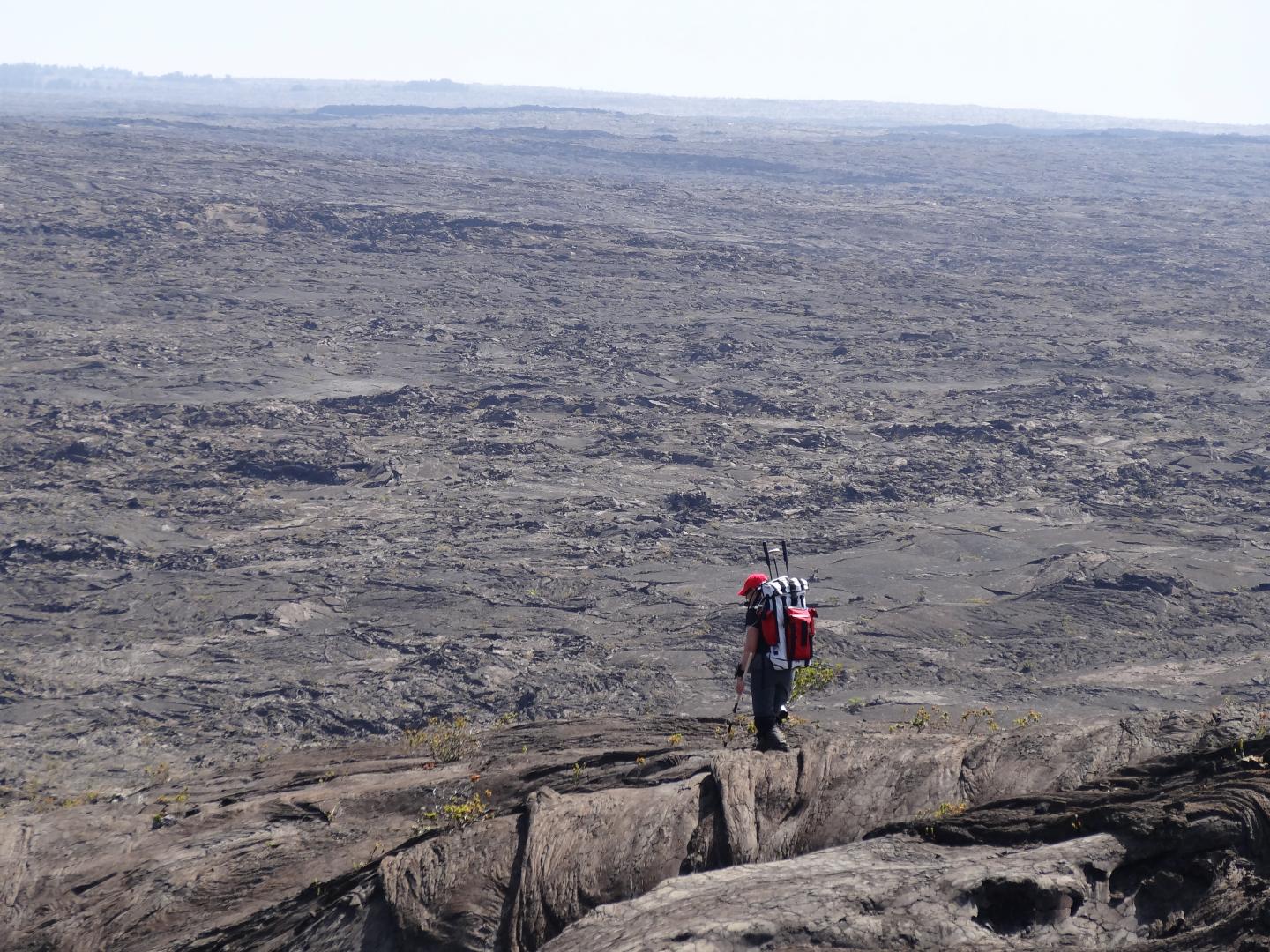
Credit: Mike Miller

An international team of researchers, which includes scientists from McMaster’s School of Geography & Earth Sciences, NASA, and others, is tackling one of the biggest problems of space travel to Mars: what happens when we get there?

A series of articles published today in a special edition of the journal Astrobiology, focuses on the scientific, logistical, operational and communications challenges of sending astronauts to deep space.

It is the culmination of years of work in NASA’s BASALT research program, or the Biologic Analog Science Associated with Lava Terrains, which involves geologists, microbiologists, geneticists, engineers and astrobiologists from all over the world.

One of the biggest challenges the team is investigating is how best to conduct meaningful science in such harsh and dangerous conditions–where time and resources are highly restricted–and how to send valuable information back to Earth to enable input from an Earth-based science support team.

Researchers simulated mission conditions on Mars in several scenarios which included conducting field work in the unforgiving, Mars-like terrain of Craters of the Moon National Park Monument and Preserve in Idaho and the Hawaii Volcanoes National Park.

These regions are rich in basalt, a fine-grained rock similar to rock found on Mars. Scientists hope samples can provide important clues in the ongoing search for life on Mars.

Supported by funding from the Canadian Space Agency, Allyson Brady, a post-doctoral fellow in McMaster’s School of Geography & Earth Sciences, who is working with her advisor Greg Slater on the project, is investigating organic biomarkers of microbial life associated with the rocks.

“When astronauts finally go to Mars, we need to identify the best place to potentially find evidence of life and to target the kind of basalt rock samples which may contain a lot of organic material, for example,” explains Brady. “There will be many, many limitations on Mars so we need to consider the best way to conduct research and gather samples including getting timely feedback from science experts on Earth.”

Brady and NASA scientists are also considering the challenges of sharing information when teams are millions of kilometres apart. For example, they tested different forms of communications–video and photo transmissions, voice messaging, texting using specialized software–between field researchers, who wore communications packs as an astronaut might, and mission control.

“There can be a significant delay, as long as 20 minutes, between an astronaut on Mars and the team on earth,” explains Brady. “So we are working to optimize operations so astronauts don’t have idle time and the flow of information continues,” she says.

###

NASA plans to establish a series of crewed missions to Mars in the 2030s, culminating with a surface landing.

Allyson Brady’s work is supported by funding from the Canadian Space Agency.

The BASALT research program is led by NASA’s Ames Research Center, in California’s Silicon Valley.

Media Contact
Michelle Donovan
[email protected]

Tags: Earth ScienceExperiments in SpaceGeographyMicrobiologyPlanets/MoonsSpace/Planetary Science
Share12Tweet8Share2ShareShareShare2

Related Posts

When Microbial Worlds Collide: Legacy and Constraints Shape the Rhizosphere

When Microbial Worlds Collide: Legacy and Constraints Shape the Rhizosphere

September 23, 2026
Hidden Mosquito Diversity Surfaces in Mexico’s Celestún Mangrove Reserve

Hidden Mosquito Diversity Surfaces in Mexico’s Celestún Mangrove Reserve

September 23, 2026

Tiny Moss Frogs Reveal How Skin and Thyroid Evolve Together for Life on Land

September 23, 2026

New Genetic Factor Analysis Method Reveals Hidden Shared Roots of Disease

September 23, 2026
Please login to join discussion

POPULAR NEWS

  • When Microbial Worlds Collide: Legacy and Constraints Shape the Rhizosphere

    29 shares
    Share 12 Tweet 7
  • Soft Robotic Sleeves Could Restore Bladder Control and End Catheter Dependence

    29 shares
    Share 12 Tweet 7
  • Mimicking Cell Membranes With Tiny Polymers to Regrow Blood Vessels

    29 shares
    Share 12 Tweet 7
  • How Daily Environmental Swings Shape the Brain: Inside the Day2Day Environment Study

    29 shares
    Share 12 Tweet 7

About

We bring you the latest biotechnology news from best research centers and universities around the world. Check our website.

Follow us

Recent News

When Microbial Worlds Collide: Legacy and Constraints Shape the Rhizosphere

Soft Robotic Sleeves Could Restore Bladder Control and End Catheter Dependence

Mimicking Cell Membranes With Tiny Polymers to Regrow Blood Vessels

Subscribe to Blog via Email

Enter your email address to subscribe to this blog and receive notifications of new posts by email.

Join 85 other subscribers
  • Contact Us

Bioengineer.org © Copyright 2023 All Rights Reserved.

Welcome Back!

Login to your account below

Forgotten Password?

Retrieve your password

Please enter your username or email address to reset your password.

Log In
No Result
View All Result
  • Homepages
    • Home Page 1
    • Home Page 2
  • News
  • National
  • Business
  • Health
  • Lifestyle
  • Science

Bioengineer.org © Copyright 2023 All Rights Reserved.