• HOME
  • NEWS
  • EXPLORE
    • CAREER
      • Companies
      • Jobs
    • EVENTS
    • iGEM
      • News
      • Team
    • PHOTOS
    • VIDEO
    • WIKI
  • BLOG
  • COMMUNITY
    • FACEBOOK
    • INSTAGRAM
    • TWITTER
Thursday, May 14, 2026
BIOENGINEER.ORG
No Result
View All Result
  • Login
  • HOME
  • NEWS
  • EXPLORE
    • CAREER
      • Companies
      • Jobs
        • Lecturer
        • PhD Studentship
        • Postdoc
        • Research Assistant
    • EVENTS
    • iGEM
      • News
      • Team
    • PHOTOS
    • VIDEO
    • WIKI
  • BLOG
  • COMMUNITY
    • FACEBOOK
    • INSTAGRAM
    • TWITTER
  • HOME
  • NEWS
  • EXPLORE
    • CAREER
      • Companies
      • Jobs
        • Lecturer
        • PhD Studentship
        • Postdoc
        • Research Assistant
    • EVENTS
    • iGEM
      • News
      • Team
    • PHOTOS
    • VIDEO
    • WIKI
  • BLOG
  • COMMUNITY
    • FACEBOOK
    • INSTAGRAM
    • TWITTER
No Result
View All Result
Bioengineer.org
No Result
View All Result
Home NEWS Science News Biology

Scientists tackle breeding challenges of land mine-finding rats

Bioengineer by Bioengineer
January 24, 2019
in Biology
Reading Time: 3 mins read
0
IMAGE
Share on FacebookShare on TwitterShare on LinkedinShare on RedditShare on Telegram

IMAGE

Credit: Aubrey Kelly


ITHACA, N.Y. – Thousands of people – many of them children – are hurt or killed by land mines each year, so finding these devices before they explode is critical.

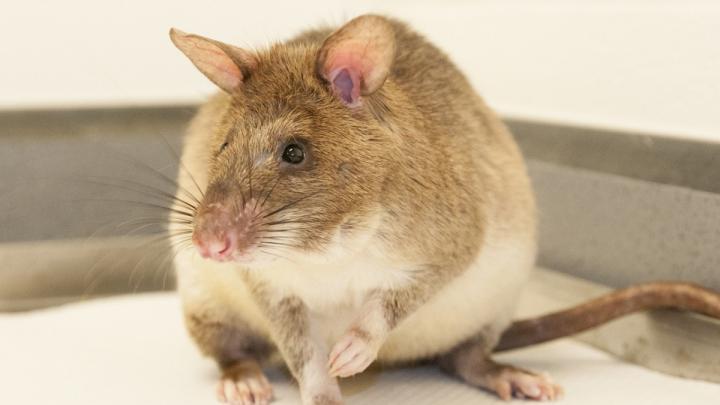
There is a surprising champion of detection: the African giant pouched rat. Native to sub-Saharan Africa, the pouched rats are large – they can grow up to 3 feet long, including the tail – but are still too small to set off the land mines. They have an exceptional sense of smell – they are also used to detect tuberculosis – but scientists know very little about their biology or social structure, and they’re difficult to breed in captivity.

“We wanted to understand their reproductive behaviors and olfactory capabilities, because they have been so important in humanitarian work,” said Alex Ophir, assistant professor of psychology in the College of Arts and Sciences.

Cornell University researchers have found that the pouched rats’ reproductive system is unlike any other species. They report their findings in a study, “Anogenital Distance Predicts Sexual Odour Preference in African Giant Pouched Rats,” published Jan. 17 in Animal Behaviour. Co-authors were Ophir, postdoctoral researcher Angela Freeman and Michael Sheehan, assistant professor of neurobiology and behavior.

For male rats searching for a mate, identifying which adult females are reproductively available, or patent, is critical. Female pouched rats have extremely delayed sexual development. When the researchers looked at whether male pouched rats have a preference for the scent of females who are patent, they found something unexpected.

Males with longer anogenital distances (AGD) could detect the difference between patent and non-patent females and preferred the scent of patent females. AGD, an indirect marker of masculinization, is determined by developmental exposure in utero to sex hormones like testosterone. Males with shorter AGD showed no preference for patent females. Similarly, patent females showed a preference for the scent of masculinized males, while non-patent females did not.

This is the first time it’s been shown that longer AGD is associated with more efficient communication and signal processing, according to Freeman, first author of the paper.

Ophir noted that being able to distinguish viable from non-viable partners in a split second has long-term repercussions for reproductive success among the species.

“It is amazing to think that in utero experiences can lock in the ability of these males to detect differences in female reproductive availability,” Ophir said. “Our results raise interesting evolutionary questions, like how does natural selection operate on characteristics that are largely determined by chance features of the uterine environment?”

In other rodent species, patency is dictated by the estrous cycle. But that does not seem to be the case with pouched rats.

“This kind of patency change is different from basically every other rodent that’s been studied up until this point,” said Freeman. “Further studies to understand this process will help explain why breeding pouched rats is so difficult in captivity.”

###

The study was supported by funding from the Army Research Office and DARPA and the College of Arts and Sciences.

Cornell University has dedicated television and audio studios available for media interviews supporting full HD, ISDN and web-based platforms.

Media Contact
Lindsey Hadlock
[email protected]
607-269-6911

Original Source

http://news.cornell.edu/stories/2019/01/scientists-tackle-breeding-challenges-land-mine-finding-rats

Related Journal Article

http://dx.doi.org/10.1016/j.anbehav.2018.12.010

Tags: BiologyDevelopmental/Reproductive BiologyZoology/Veterinary Science
Share12Tweet8Share2ShareShareShare2

Related Posts

“‘Last Titan’: Discovery of Southeast Asia’s Largest Dinosaur Unveiled” — Biology

“‘Last Titan’: Discovery of Southeast Asia’s Largest Dinosaur Unveiled”

May 14, 2026
Study Offers In-Depth Analysis of Changes in Toxin-Producing Phytoplankton Populations — Biology

Study Offers In-Depth Analysis of Changes in Toxin-Producing Phytoplankton Populations

May 14, 2026

UMass Chan Scientists Pioneer Gene Editing Technology That Rewrites Entire Genome Chapters

May 13, 2026

Scientists Observe Rice Plants Capturing and Eliminating Fall Armyworm Caterpillars

May 13, 2026
Please login to join discussion

POPULAR NEWS

  • Research Indicates Potential Connection Between Prenatal Medication Exposure and Elevated Autism Risk

    842 shares
    Share 337 Tweet 211
  • New Study Reveals Plants Can Detect the Sound of Rain

    729 shares
    Share 291 Tweet 182
  • Salmonella Haem Blocks Macrophages, Boosts Infection

    62 shares
    Share 25 Tweet 16
  • Breastmilk Balances E. coli and Beneficial Bacteria in Infant Gut Microbiomes

    57 shares
    Share 23 Tweet 14

About

We bring you the latest biotechnology news from best research centers and universities around the world. Check our website.

Follow us

Recent News

Revolutionizing Healthcare: The Future of Medicine Lies in Advancing Perioperative Care

EU regulations may drive up costs and energy use for fossil-free aviation fuels

Scientists Discover the Genetic Key Behind Stevia’s Sweetness

Subscribe to Blog via Email

Enter your email address to subscribe to this blog and receive notifications of new posts by email.

Join 82 other subscribers
  • Contact Us

Bioengineer.org © Copyright 2023 All Rights Reserved.

Welcome Back!

Login to your account below

Forgotten Password?

Retrieve your password

Please enter your username or email address to reset your password.

Log In
No Result
View All Result
  • Homepages
    • Home Page 1
    • Home Page 2
  • News
  • National
  • Business
  • Health
  • Lifestyle
  • Science

Bioengineer.org © Copyright 2023 All Rights Reserved.