


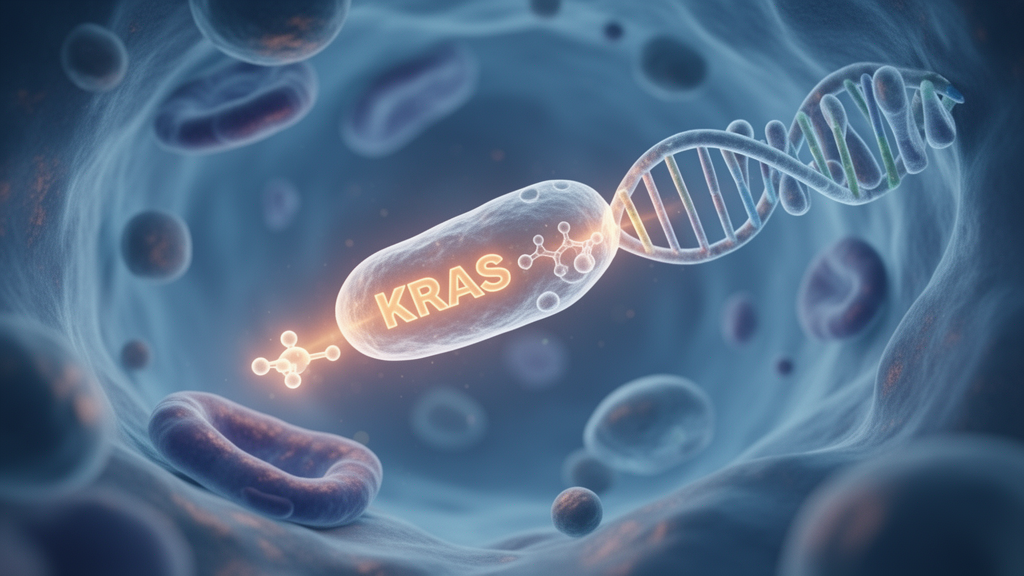
Scientists at St. Jude Children’s Research Hospital have identified how a chemical modification on a key protein in mRNA decoding can reshape protein synthesis in cancer cells, offering new clues to the origins of tumors and to resistance against KRAS-targeted therapies. The findings, published in Nature Cell Biology, center on eEF1A, a translation elongation factor that governs the speed and accuracy with which ribosomes read messenger RNA, and on METTL13, the enzyme that decorates it with a methyl tag at a specific site known as lysine 55.
Translation is the vital cellular process that builds proteins, and decoding of messenger RNA occurs during this process. Errors in decoding are known to drive cancer growth. To add the correct building block to a growing protein, the ribosome, the molecular machine that makes proteins, reads codons, groupings of three nucleotides, in a process called mRNA decoding during translation elongation. eEF1A influences how fast and how accurately this decoding happens. It was already known that in certain tumors the METTL13 enzyme modifies eEF1A at lysine 55, a mark abbreviated eEF1AK55me2, thereby increasing protein synthesis and promoting tumor growth. What remained unknown was precisely how this methylated form of eEF1A affects translation elongation and contributes to tumor development.
The St. Jude team, working with collaborators, created cell lines that lacked METTL13 and then recombinantly expressed eEF1A with and without the METTL13-mediated methylation. Co-corresponding author Scott Blanchard, PhD, of the St. Jude Department of Structural Biology, explained that the collaboration allowed the group to leverage parallelized single-molecule imaging experiments. These experiments demonstrated that eEF1AK55me2 affects mRNA decoding in a way that rationalized the collaborators’ observations in quantitative, kinetic and structural terms, he said. The work built on a 2023 study the same team published in Nature, in which they used cryo-electron microscopy to determine the atomic structure of human ribosomes bound to eEF1A and compared mRNA decoding in human and bacterial translation, creating a foundation for examining the eEF1AK55me2-METTL13 axis.
Through proteomic profiling and single-molecule imaging, the researchers found that the axis promotes efficient translation of a subset of codons that are enriched in oncogenes such as KRAS. Because KRAS is an oncogenic driver present in many tumor types, understanding how it is expressed and how it develops resistance to standard-of-care treatments is of intense interest in oncology. The team further examined METTL13 disruption as a potential strategy to overcome KRAS-related treatment resistance and observed stymied growth of KRAS-inhibitor-resistant tumors in animal models. These results point toward future treatment strategies in which METTL13 could serve as a target to inhibit KRAS production in tumors.
Notably, in healthy pre-clinical models, knocking out METTL13 did not cause toxic effects, a feature the researchers describe as significant for potential clinical use. Blanchard noted that the methyltransferase stimulates the translation of KRAS and other proliferation-promoting proteins, and that reducing KRAS production, a known driver of many cancers, could be achieved by knocking down METTL13 with a drug or some other mechanism, so that patients with KRAS-driven cancers might have a better chance of survival. The findings remain pre-clinical, and any therapeutic application would require extensive further development and testing.
The study also revealed that the speed of translation elongation varies across the messenger RNA, with critical impacts on protein production. Blanchard pointed to a growing understanding that protein synthesis occurs at rates that are not uniform. In the team’s findings, even two related codons encoding the same amino acid but differing at the third nucleotide position showed different decoding speeds depending on eEF1A K55 methylation. When METTL13 is present and eEF1A K55 is methylated, the two related codons are decoded at very similar rates; when METTL13 is absent, the codons are decoded at different rates. This methylation-dependent shift in decoding kinetics provides a mechanistic explanation for how a single methyl mark on a translation factor can selectively shape the proteome of a cancer cell.
Beyond its mechanistic insights, the work suggests a possible prognostic application. To examine how METTL13 influenced other aspects of cancer development, the team compared pre-clinical models in which METTL13 disruption prevented tumor growth with outcome data from patients with lung adenocarcinoma and pancreatic ductal adenocarcinoma, tumor types in which METTL13 is often amplified. They observed that increased methyltransferase activity correlated with poor prognosis. Co-first author Aaron Cruz-Navarrete, PhD, also of the St. Jude Department of Structural Biology, said the team found that the activity of this methyltransferase can be looked for in cancer, because high METTL13 activity seems to correlate with aggressive cancer and lower survival, and that the results show potential to use the activity of this methyltransferase as a prognostic tool.
The research is an experimental study conducted in cells and animal models, and its conclusions about human disease rest on correlations with patient outcome data rather than on direct therapeutic trials. Nevertheless, the convergence of single-molecule biophysics, proteomics and cancer genetics offers a unusually detailed picture of how translation regulation contributes to malignancy. By showing that a methyl mark on eEF1A selectively accelerates the decoding of codons enriched in oncogenes, the study connects a precise molecular event to the broader biology of tumor growth and to the practical problem of treatment resistance in KRAS-mutant cancers.
The study’s other co-corresponding authors are Ola Larsson of the Karolinska Institute, Ivan Topisirovic of McGill University, Or Gozani of Stanford University and Pawel Mazur of The University of Texas MD Anderson Cancer Center. Co-first authors alongside Cruz-Navarrete were Shuo Liu and Sabeen Ikram of Stanford University, Simone Hausmann of MD Anderson and Krzysztof Szkop of the Karolinska Institute, with additional contributors from St. Jude, MD Anderson, Stanford, the Karolinska Institute and Washington University School of Medicine. The work was supported by the National Institutes of Health, the Terry Fox Foundation, the Swedish Cancer Society, the Wallenberg Academy Fellows program, the Cancer Research Funds of Radiumhemmet, DoD PRCRP, CPRIT, the American Cancer Society and ALSAC, the fundraising and awareness organization of St. Jude.
Subject of Research: How METTL13-mediated methylation of the translation elongation factor eEF1A regulates mRNA decoding to promote cancer development and KRAS-related treatment resistance
Article Title: Study identifies translation regulation mechanisms involved in cancer development and treatment resistance
Article References: Study identifies translation regulation mechanisms involved in cancer development and treatment resistance. Original publication (Bibliographic details unavailable.)
Image Credits: AI Generated
DOI: Not provided
Keywords: translation, eEF1A, METTL13, mRNA decoding, KRAS, oncogenes, treatment resistance, lung adenocarcinoma, pancreatic ductal adenocarcinoma, prognosis, protein synthesis, St. Jude Children's Research Hospital
News Source: Nathaniel Bowman. (October 30, 2026). Scientists reveal how a methyl tag on eEF1A speeds KRAS translation and fuels cancer drug resistance. Scienmag.



