


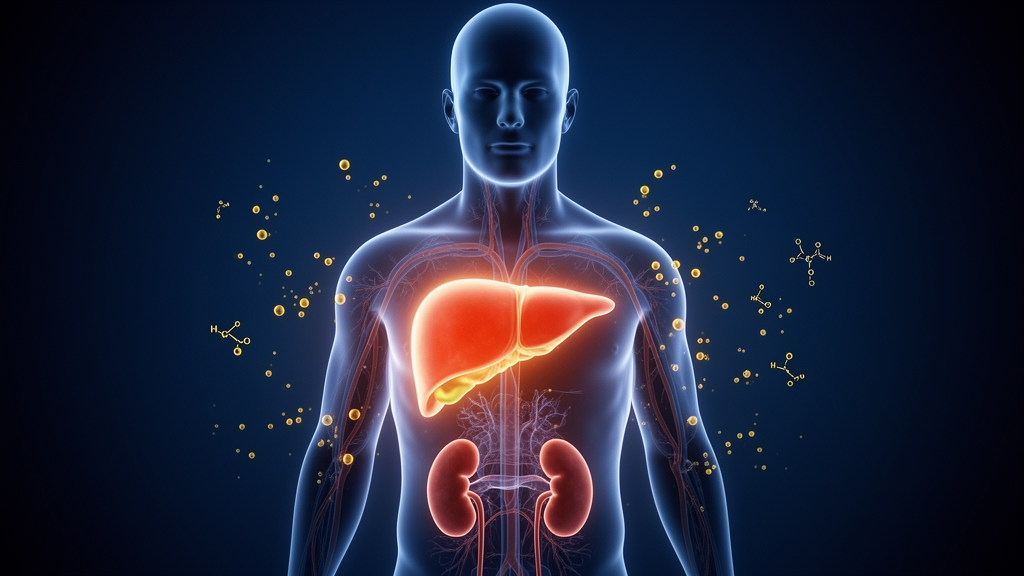
A new review published in Cardiovascular Diabetology – Endocrinology Reports proposes an expanded clinical framework, the metabolic disorder-MASLD-cardiovascular disease-kidney disease (MMCK) syndrome, designed to make liver disease an explicit, scored component of cardiometabolic-renal risk assessment. The paper, authored by Yan Guo, Ying Zhang, Suxuan Liu and Dajin Zou and published on 31 July 2026, positions MMCK as an operational extension of the American Heart Association’s Cardiovascular-Kidney-Metabolic (CKM) syndrome framework rather than a replacement for it.
The core problem the authors identify is that although the CKM framework already acknowledges metabolic dysfunction-associated steatotic liver disease (MASLD) as a major organ manifestation, hepatic involvement is not formally built into its risk stratification. MASLD, formerly called nonalcoholic fatty liver disease, affects roughly 25 to 30 percent of adults worldwide, a figure that rises to about 70 percent among people with type 2 diabetes. Beyond liver complications, MASLD is linked to cardiovascular disease, chronic kidney disease and diabetes, and its underlying biology—involving systemic inflammation, oxidative stress and dysregulated lipid metabolism—contributes to endothelial dysfunction and accelerated atherosclerosis.
To close this gap, the review introduces a quantitative scoring instrument called the Multi-Organ Risk Score, or MORS. It sums four component scores, each graded from 0 for normal function to 3 for severe disease: an hepatic L-Score, a cardiovascular C-Score, a cerebrovascular B-Score and a renal K-Score, giving a total range of 0 to 12. The L-Score is the distinctive element. It mandates hepatic fibrosis assessment using a two-step algorithm: first the FIB-4 index, a blood-test-based calculation, and then vibration-controlled transient elastography (VCTE), an ultrasound-based liver stiffness measurement, for people with indeterminate or high FIB-4 values. A score of 2 corresponds to advanced fibrosis, triggered for example by FIB-4 above 2.67 or liver stiffness of 8 to 12 kilopascals, while a score of 3 indicates cirrhosis, with stiffness of at least 12 kilopascals or evidence of portal hypertension.
The cardiovascular score integrates coronary artery calcium imaging, cardiac function measures such as left ventricular ejection fraction, NT-proBNP levels, heart rhythm and clinical history. The cerebrovascular score draws on carotid imaging, cognitive testing, prior stroke or transient ischemic attack and cumulative risk factors. The renal score maps estimated glomerular filtration rate and urine albumin-to-creatinine ratio onto the KDIGO risk classification, with kidney replacement therapy automatically assigning the highest tier. MMCK stages 0 through 4 are then assigned from the total MORS and derived parameters, with special rules: any single organ scoring 3 places a patient at minimum in Stage 3, and two organs scoring 3 assigns Stage 4, the decompensated stage requiring urgent multidisciplinary co-management.
The authors argue that explicit fibrosis staging carries practical value for cardiovascular prediction. They cite observational evidence, including a cohort of 18,358 people, in which incorporating MASLD fibrosis stages into CKM-style staging transformed an unstable hazard ratio of 2.41 (95 percent confidence interval 0.34 to 17.4) for Stage 3 risk into a more precise estimate of 2.56 (95 percent confidence interval 1.66 to 3.95), enabling identification of a high-risk subgroup that CKM staging alone left ungradable. However, the review is candid that the incremental discrimination index in that analysis was modest at 0.001, below conventional thresholds for clinical meaningfulness, and that companion studies using fibrosis markers combined with established risk scores showed larger net reclassification improvements, such as an NRI of 0.32 when FIB-4 was added to the CHA2DS2-VASc score.
The pathophysiological section of the review describes a cascade in which metabolic dysregulation—driven by nutrient excess, obesity, insulin resistance and hyperuricemia—initiates chronic low-grade inflammation that then damages the heart, kidneys and liver through bidirectional organ crosstalk. Adipose tissue macrophages secrete inflammatory cytokines such as IL-1β and TNF-α that perpetuate insulin resistance. Hepatokines, proteins secreted by hepatocytes, act as endocrine links between liver and other organs: fetuin-A promotes insulin resistance and vascular calcification, while fibroblast growth factor 21 supports insulin sensitivity and, in mouse models of heart failure with preserved ejection fraction, its absence worsened diastolic dysfunction. Elevated uric acid promotes endothelial dysfunction, kidney tubulointerstitial fibrosis and hepatic steatosis. Genetic susceptibility also modifies risk, with the PNPLA3 rs738409 variant showing an odds ratio of 1.91 for hepatic steatosis and 2.54 for steatohepatitis in analyses covering more than 100,000 individuals, and gene-environment interactions such that physical activity effects on liver fat appear stronger in carriers of the high-risk genotype.
The proposed management model pairs the staging system with stage-specific therapeutic thresholds and a multidisciplinary team structure.
Subject of Research: A proposed MMCK syndrome framework integrating MASLD liver fibrosis staging into cardiometabolic-renal risk assessment
Article Title: Metabolic disorder-MASLD-cardiovascular disease-kidney disease (MMCK) syndrome: an expansion of the Cardiovascular-Kidney-Metabolic (CKM) framework
Article References: Guo, Y., Zhang, Y., Liu, S., & Zou, D. (2026). Metabolic disorder-MASLD-cardiovascular disease-kidney disease (MMCK) syndrome: an expansion of the Cardiovascular-Kidney-Metabolic (CKM) framework. Cardiovascular Diabetology – Endocrinology Reports, 12(1), Article 48. https://doi.org/10.1186/s40842-026-00317-0
Image Credits: AI Generated
DOI: 10.1186/s40842-026-00317-0
Keywords: MMCK syndrome, CKM framework, MASLD, liver fibrosis, FIB-4, Multi-Organ Risk Score, cardiometabolic risk, chronic kidney disease, cardiovascular disease, SGLT2 inhibitors, GLP-1 receptor agonists, narrative review
News Source: Ophelia Keating. (October 30, 2026). Scientists Propose MMCK Syndrome to Put the Liver at the Heart of Cardiometabolic Risk. Scienmag.



